


It's 7:45 AM on a Saturday. There's a line out the door. Your best baker is pulling trays of croissants from the oven, the espresso machine is screaming, and a customer just asked for a dozen assorted pastries to take to a brunch. You grab a box, start loading it up, and the lid won't stay closed. The box feels flimsy. The grease from the almond croissants is already bleeding through the bottom. And you're standing there thinking, "Why is this so hard?"
That moment right there is why bakery packaging solutions matter. Not in a theoretical, let's-design-something-beautiful-for-Instagram way. In a real, practical, I-need-this-to-work-right-now way. The best packaging in the world is useless if it fails when you're in the weeds.
I've spent years working with bakeries and food brands on their packaging, and I've learned that the right bakery packaging solutions solve specific problems. They anticipate the grease, the heat, the stacking, the frantic morning rush. They make your staff's job easier and your customers' experience better. Let's talk about what that actually looks like.
Here's the thing about bakery packaging: it gets tested under pressure. Not in a showroom, not in a photoshoot, but at 7:45 AM when you've got ten customers waiting and your hands are covered in flour.
The failures are predictable. Boxes that buckle when you pick them up by one corner. Lids that pop open when stacked. Windows that fog up from warm pastries. Grease stains that appear within minutes. These aren't random defects—they're the result of packaging that wasn't designed for real bakery conditions.
Good bakery packaging solutions account for all of this. They use board thick enough to hold weight without flexing. They have locking mechanisms that stay secure even when the box is full. They include grease-resistant barriers that prevent oil from ruining the exterior. They're engineered for the realities of a working bakery, not for a product catalog.
The other thing that trips people up: speed. Your staff doesn't have time to wrestle with complicated assembly. Packaging that requires origami-level folding or precise alignment slows everything down. The best bakery packaging solutions assemble in seconds and close reliably on the first try. If your team is fighting with the boxes, you've got the wrong boxes.
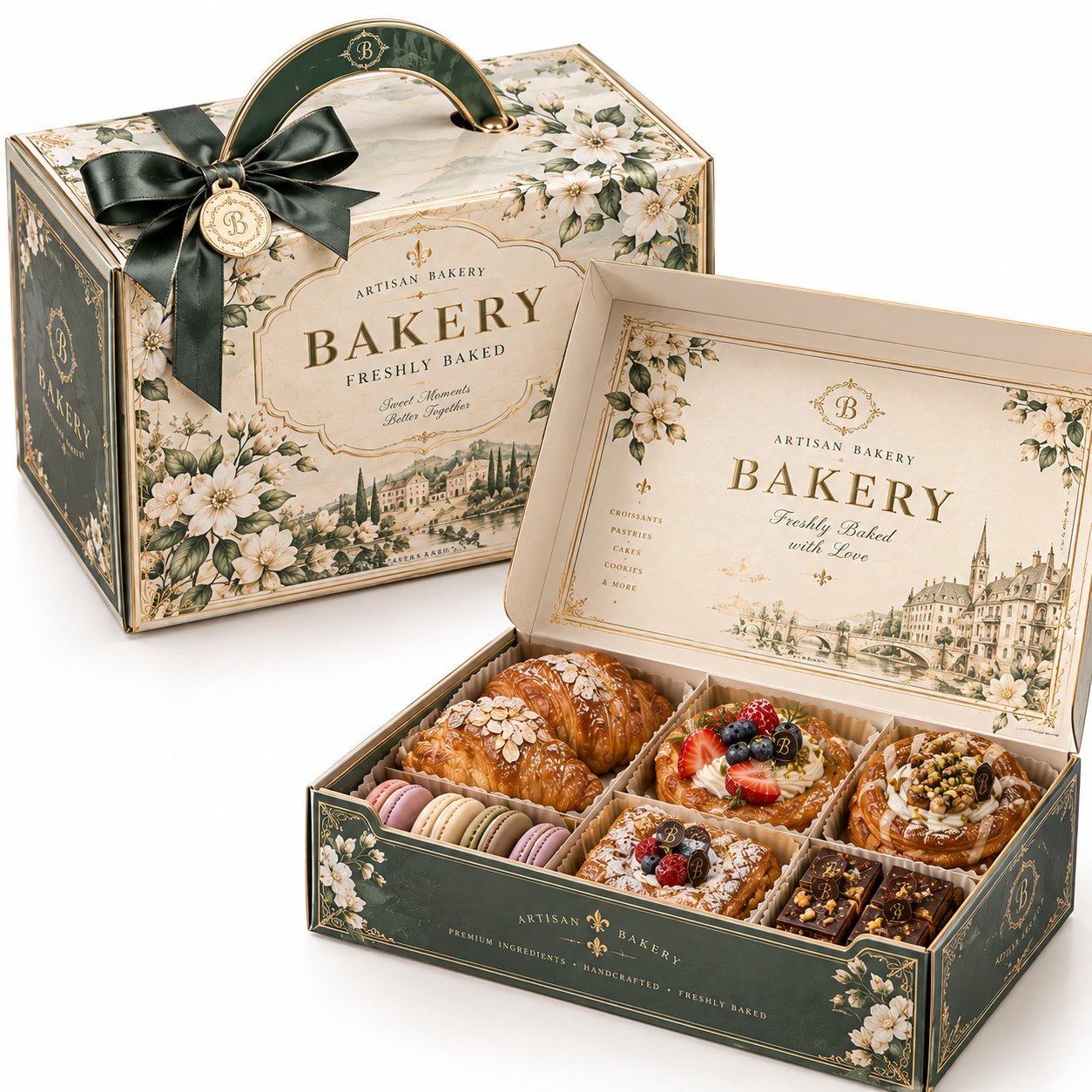
Not all baked goods are the same, and neither are their packaging needs. One of the biggest mistakes I see is bakeries using a one-size-fits-all approach when their product range is anything but uniform.
Croissants and danishes are greasy and flaky. They need boxes with strong grease barriers and enough structure to prevent crushing. A flimsy box will leave you with a pile of crumbs and a disappointed customer. Rigid boxes or heavy-gauge folding cartons with grease-resistant coatings are the standard here.
Cakes are heavy and fragile. They need boxes with reinforced bases, tall enough sides to protect frosting, and a window so customers can see the decoration. The box needs to hold its shape during transport—a cake that shifts and smears against the side is a disaster. Look for bakery packaging solutions with sturdy platforms and secure lids.
Cookies and biscotti are more forgiving. They're dry, relatively sturdy, and stack well. Folding cartons with clear windows work beautifully here. You can go lighter on the board since there's no grease or moisture to worry about. This is where you can save money without sacrificing quality.
Breads are a different beast entirely. Sourdough, baguettes, and artisan loaves need packaging that allows them to breathe. Trapped moisture makes crusty bread soggy. Paper bags with windows, kraft boxes with ventilation holes, or breathable films are the right call. Plastic bags are the enemy here—they trap steam and ruin the crust.
The point is this: your bakery packaging solutions should be as varied as your product line. Don't force a croissant into a cookie box. Don't put a cake in a bread bag. Match the packaging to the product, and everything gets easier.
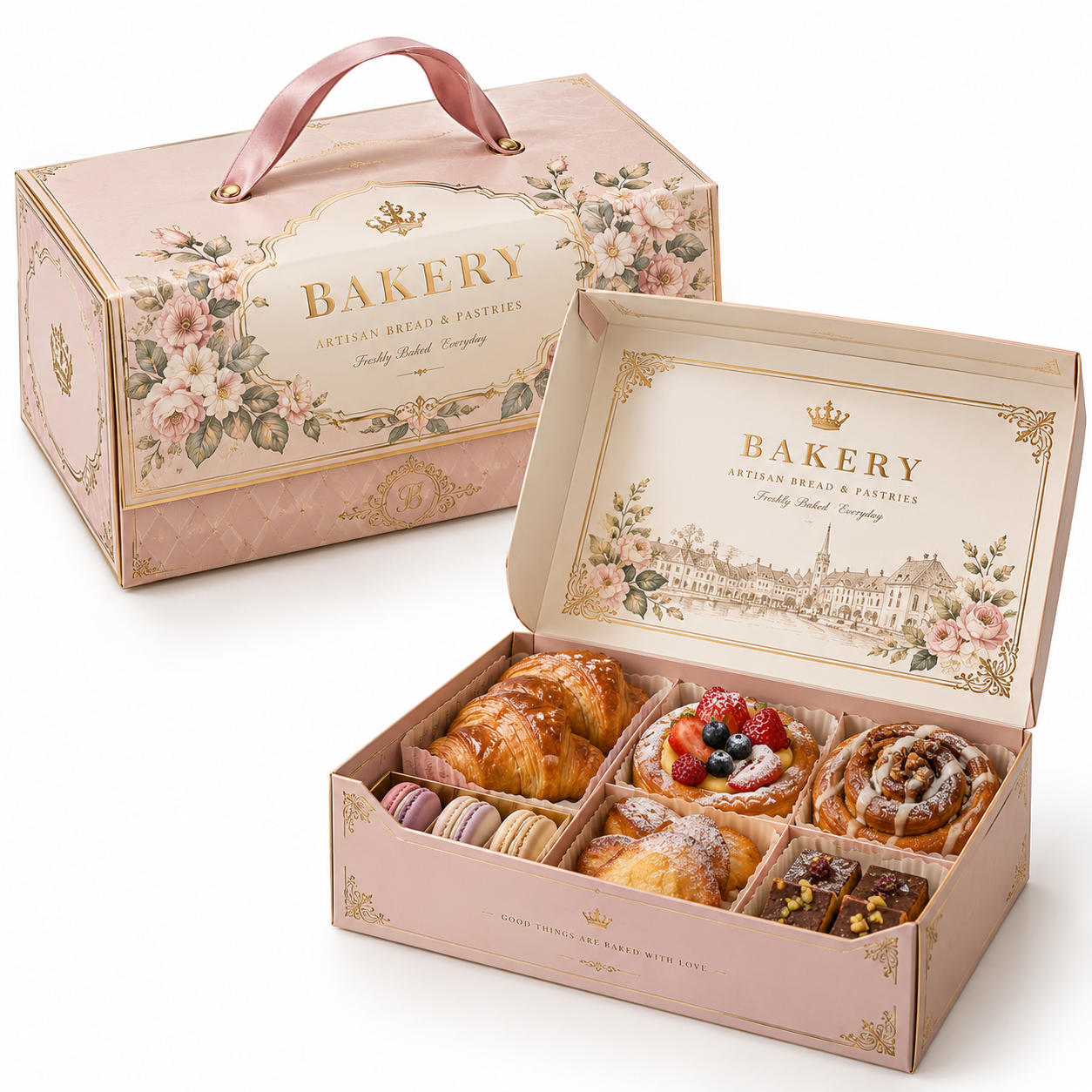
We are also offering finishing options such as glossy and matte look which gives the custom printed candy boxes a final touch. They can add sparkle to your design and also give added protection.
| Feature | Application | Cost Impact |
| Printing: Digital | Small quantities, complex color layouts | Low setup cost, high per-unit cost |
| Printing: Offset | High quantities, precise color matching | High setup cost, low per-unit cost |
| Finish: Gloss Lamination | For a bright, eye-catching look; it also protects | Low-Medium |
| Finish: Matte Lamination | For an elegant, classy, modern look | Low-Medium |
| Finish: Spot UV | To show a logo or highlight a specific design | Medium |
| Finish: Foil Stamping | For products with luxury and a premium feel (gold, silver) | High |
| Finish: Embossing/Debossing | Creating the feel of texture and the 3D effect | Medium-High |
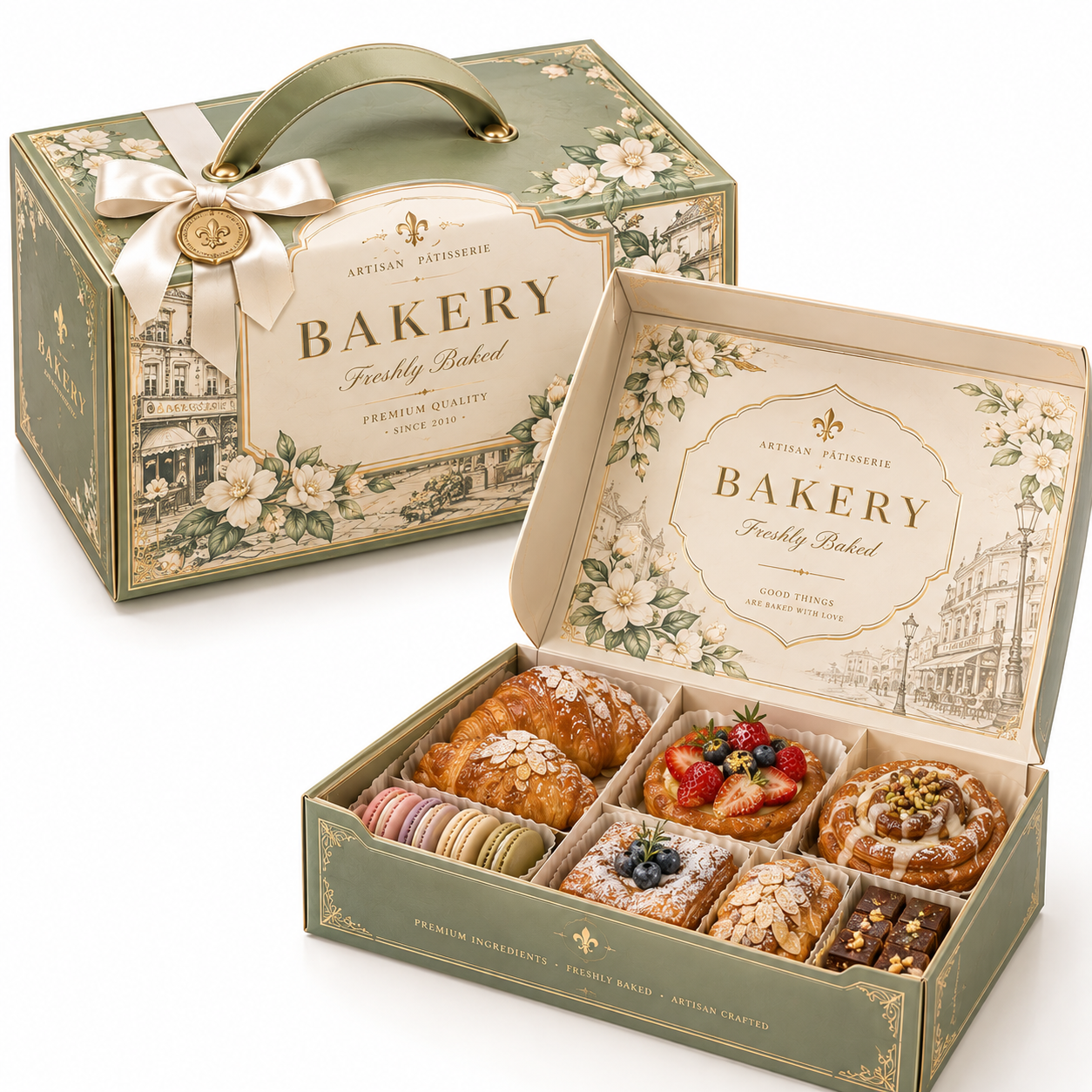
Here's where things get interesting. Packaging isn't just functional—it's one of your most powerful branding tools. Every box that leaves your bakery is a tiny ambassador for your brand. It travels through streets, sits on desks, gets photographed and shared. The question is whether it's saying what you want it to say.
The most effective bakery packaging solutions for branding are consistent. Same color palette across every box. Same logo placement. Same typography. When a customer sees your packaging from across the room, they should know it's yours instantly. This consistency builds recognition, and recognition builds trust.
But consistency doesn't mean boring. You can have a unified brand identity while still differentiating between product lines. Maybe your cake boxes are a different color than your cookie boxes, but they share the same design language. Maybe your seasonal items get a special edition sleeve that fits over the standard box. This approach keeps your brand fresh without fragmenting your identity.
The details matter more than you might think. A printed message inside the lid—"Baked fresh this morning" or "Thanks for supporting our family bakery"—creates a moment of connection. A custom sticker sealing the box adds a touch of care. A branded tissue paper liner makes even a simple cookie feel like a gift. These touches cost pennies but generate disproportionate goodwill.
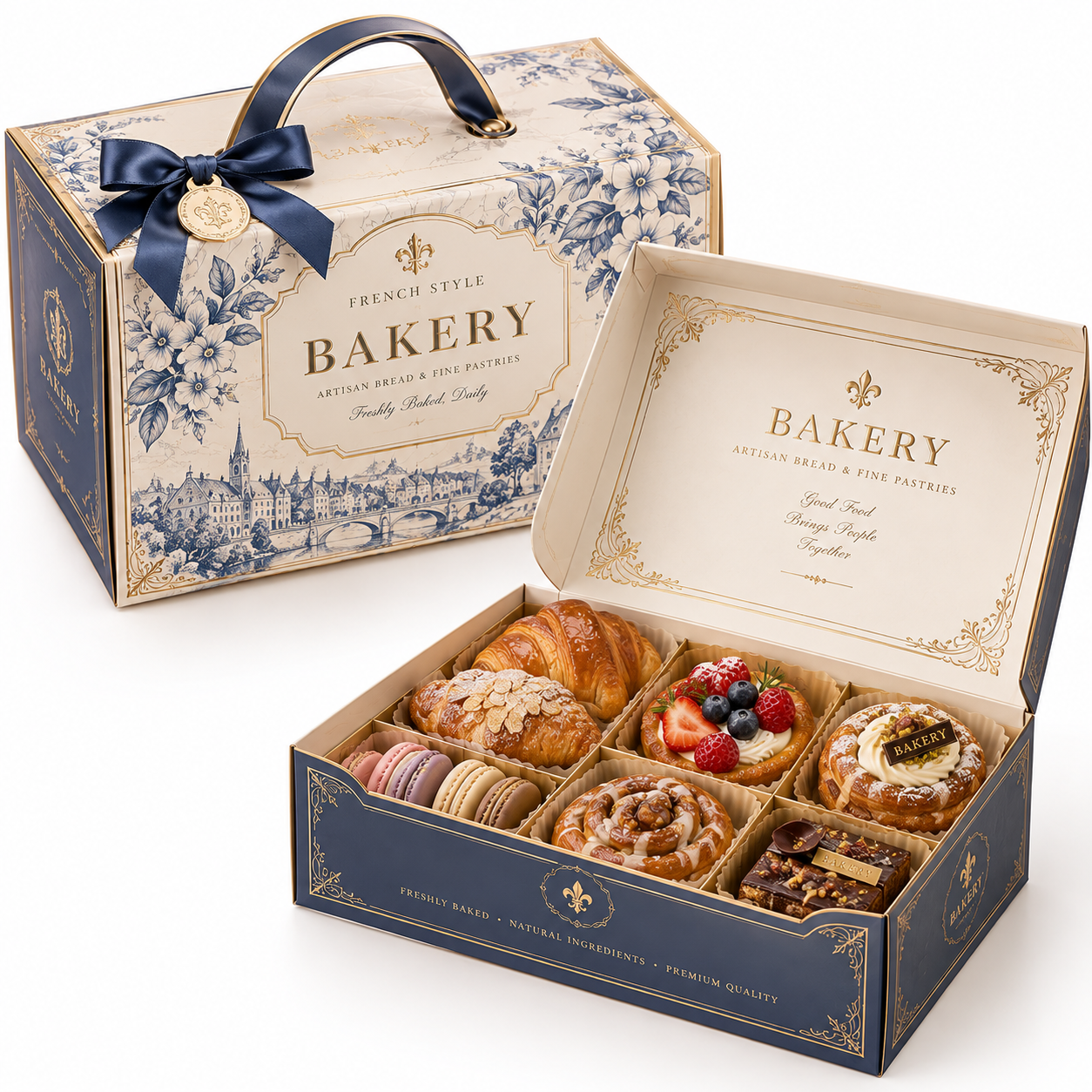
Sustainability is no longer optional. Customers expect it, and increasingly, regulations require it. The good news is that sustainable bakery packaging solutions have come a long way. They're no longer limited to ugly brown boxes that feel like a compromise.
The foundation of sustainable packaging is material choice. FSC-certified paperboard ensures your packaging comes from responsibly managed forests. Recycled content reduces demand for virgin materials. Water-based coatings replace plastic lamination, allowing the entire box to be recycled in standard curbside programs.
For windows, the options have expanded dramatically. Traditional PVC film is recyclable almost nowhere. PLA film, made from plant starches, is industrially compostable. Glassine paper—translucent and grease-resistant—can replace plastic windows entirely and is fully recyclable. Some bakeries are ditching windows altogether and using beautiful product photography on the box instead.
The key is communicating your choices to customers. A small note on the box—"This packaging is recyclable" or "Made from recycled materials"—turns your sustainability into a visible brand value. Customers who care about the environment will notice, and they'll reward you with loyalty.
Cost is always a concern, but the gap between conventional and sustainable packaging is narrowing. In some cases, sustainable options are actually cheaper—especially when you factor in reduced material usage. A well-designed box that uses less board but maintains strength is both cheaper and greener. Good bakery packaging solutions find these win-wins.
Finding a supplier who actually gets bakeries is harder than it should be. Plenty of companies sell boxes. Far fewer understand the specific challenges of bakery packaging.
Start with samples. Not digital mockups—physical samples you can hold and test. Put a warm pastry in the box. Stack it. Carry it by one corner. See how it holds up. A supplier who's confident in their product will happily send samples. A supplier who hesitates is telling you something.
Ask about their bakery clients. A supplier who serves other bakeries understands grease, heat, stacking, and display cases. A general packaging supplier might make beautiful boxes that fail in a bakery setting. The questions they ask reveal their experience. If they don't ask about your products and how they're used, that's a yellow flag.
Check their certifications. If your packaging touches food, you need food-safe materials. ISO 22000 or BRCGS certification ensures consistent quality and safety standards. Low-migration inks and food-grade adhesives are non-negotiable. A reputable supplier provides documentation without being asked.
Communication quality is the final piece. During the inquiry phase, are they responsive? Do they answer your specific questions? Do they proactively suggest solutions you hadn't considered? A supplier who communicates well before the sale will communicate well when issues arise. A supplier who's slow or vague now will be a source of stress forever.
Grease resistance, structural strength, and ease of assembly. Grease resistance prevents oil from ruining the exterior of your boxes. Structural strength ensures boxes hold their shape when stacked or carried by one corner. Ease of assembly means your staff isn't wasting time fighting with packaging during a rush. If you prioritize these three, you'll avoid most common packaging headaches.
Ventilation is key. Trapped steam from warm pastries softens crusts and makes boxes soggy. Look for boxes with small vent holes or use breathable materials like kraft paper. If you're packaging fully cooled items, this is less of a concern, but for anything packed warm, ventilation makes a huge difference. Plastic bags and non-vented boxes are the enemy here.
Yes, and the options have never been better. FSC-certified kraft boxes are affordable and look great. Water-based coatings replace plastic lamination at minimal cost. PLA windows are more expensive than PVC but increasingly competitive. The trick is prioritizing where sustainability matters most—often the box itself—and being flexible on less critical elements. Many sustainable options are actually cheaper when you factor in reduced material usage.
Start with three or four core sizes that cover most of your products. A small box for single pastries, a medium box for small assortments, a large box for cakes or big orders, and a specialized cake box. You can expand from there as you grow. Having too many sizes complicates inventory and storage. The goal is enough variety to serve customers well without drowning in options.
There are trade-offs. Local suppliers offer faster delivery, lower minimum orders, and easier communication. Importing offers lower unit prices at higher volumes but requires longer lead times and more planning. For small bakeries just starting out, local is usually the better choice. As volume grows, importing becomes more attractive. Many bakeries use a hybrid approach—local for urgent needs, imported for bulk orders.
Post time: Sep-19-2026


