


Selling baklava in the US retail market can be a great opportunity, but getting your products onto store shelves is not always easy. Retail buyers expect more than delicious pastries. They also want packaging that protects the food, meets labeling requirements, survives transportation, and looks attractive on display. A beautiful box may catch a customer's eye, but if it arrives damaged or fails a retailer's packaging requirements, the entire shipment could be rejected.
That is why choosing the right Baklava Boxes matters so much. Whether you supply supermarkets, specialty food stores, Middle Eastern grocery chains, or premium gift shops, your packaging needs to work from the production line all the way to the retail shelf. From food-contact materials and product protection to barcode placement and shipping strength, every detail deserves attention. Let's explore how custom packaging can help baklava brands reduce retail compliance risks, avoid costly shipment problems, and build a stronger presence in the US market.
Getting a product accepted by a US retailer starts long before the first shipment leaves your factory. Retail buyers usually have detailed requirements for packaging, product information, case quantities, and delivery conditions. If your packaging does not match their specifications, even high-quality baklava may face unnecessary delays.
Know Your Retailer's Packaging Specifications
Different retailers have different expectations. A national supermarket chain may require specific carton dimensions, barcode formats, pallet configurations, and labeling information. Meanwhile, an independent bakery or specialty food retailer may focus more on presentation and convenient shelf placement.
Before producing your Baklava Boxes, ask your retail partner for its packaging guidelines. Pay attention to:
- Approved packaging dimensions and materials.
- Required product information and label positions.
- Barcode size, contrast, and scanning requirements.
- Inner pack and master carton quantities.
- Shipping carton strength and pallet specifications.
These details should be confirmed before mass production. Making changes after thousands of boxes have been printed can quickly increase costs.
Understand FDA Food Packaging Requirements
Food packaging sold in the United States must comply with applicable food safety regulations. Materials that contact food should be suitable for their intended use and comply with relevant FDA requirements.
For baklava, this is particularly important because many varieties contain butter, honey, syrup, nuts, and other ingredients that can interact with packaging materials.
Choose food-contact materials from reliable suppliers and request supporting documentation where appropriate. If your packaging includes a direct-contact liner, coating, or insert, make sure its intended food-contact use is properly evaluated.
Build a Retail-Ready Packaging Checklist
A simple checklist can prevent many avoidable mistakes. Before approving a production order, confirm the artwork, dimensions, material specifications, barcode, product information, and shipping requirements.
It is also smart to request a physical sample. A sample allows your team to check whether the finished packaging matches the retailer's expectations before the full order is manufactured.
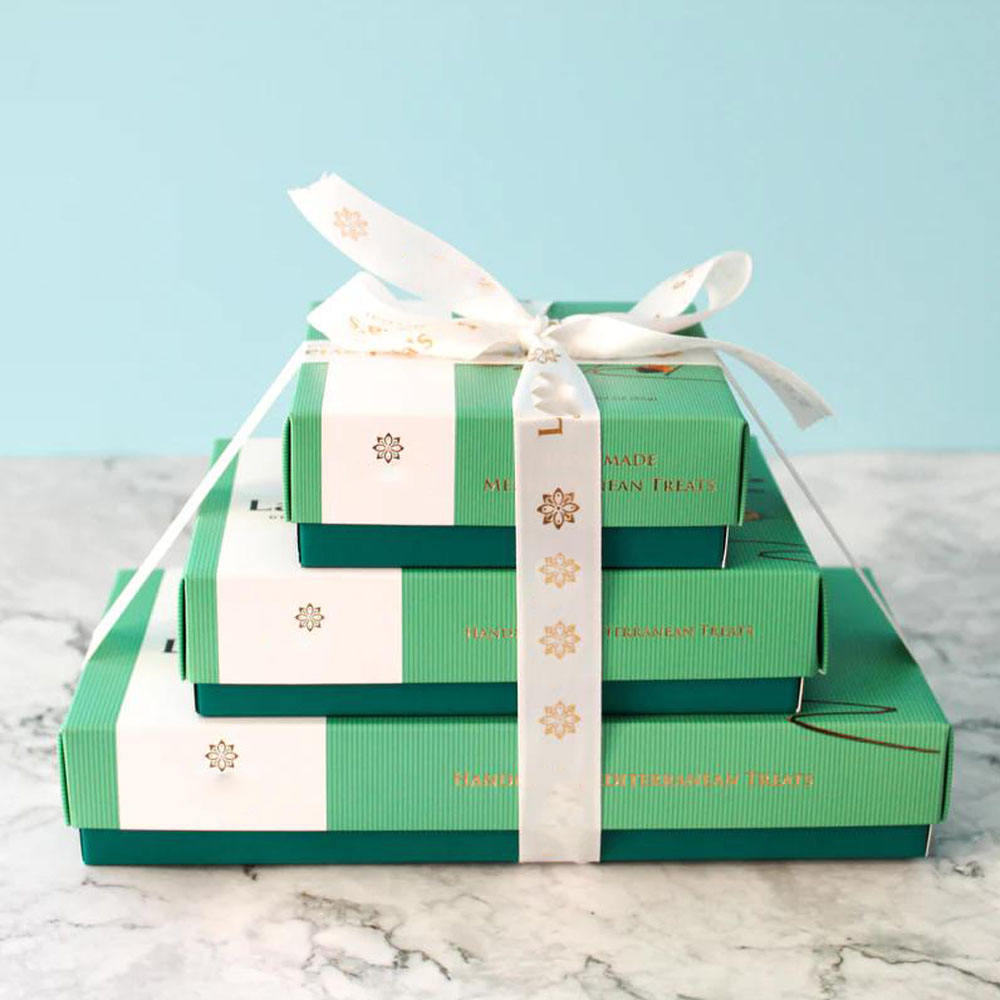
Baklava is a delicate pastry. Its layers can crack, its filling can shift, and its syrup can create a sticky mess if the packaging is poorly designed. The right material should protect the product without making the package unnecessarily expensive or difficult to handle.
Select Food-Safe Paperboard
Paperboard is a popular choice for retail bakery packaging because it offers a good balance between appearance, structure, and customization.
For premium baklava, thicker paperboard can help create a more substantial presentation. It also provides a suitable surface for high-quality printing, making it easier to display brand colors, product photography, and important product information.
However, material selection should depend on the actual product and distribution conditions. A paperboard box with an appropriate food-contact barrier or separate inner packaging may be necessary, especially for products with oily or syrup-rich ingredients.
Consider Grease and Moisture Resistance
One common packaging problem is oil or syrup transferring onto the box. Even when the product remains perfectly edible, visible stains can make the package look unprofessional.
When developing Baklava Boxes, consider grease-resistant liners, suitable barrier coatings, or food-grade inner trays. These features can help reduce direct contact between the pastry and the printed outer surface.
Moisture management also matters. Baklava should be packed according to its validated storage conditions, and packaging should not create an unsuitable environment that damages product quality.
Match the Material to the Distribution Channel
Not every baklava product needs the same packaging structure.
A small box for a local bakery may only need basic protection and an attractive design. A larger retail pack intended for nationwide distribution needs stronger structural support and more attention to stacking performance.
For premium gift products, rigid boxes can offer a more luxurious appearance. For everyday supermarket products, folding cartons may provide a more economical and practical option.
The goal is simple: choose packaging that protects the product while meeting the retailer's budget and handling requirements.
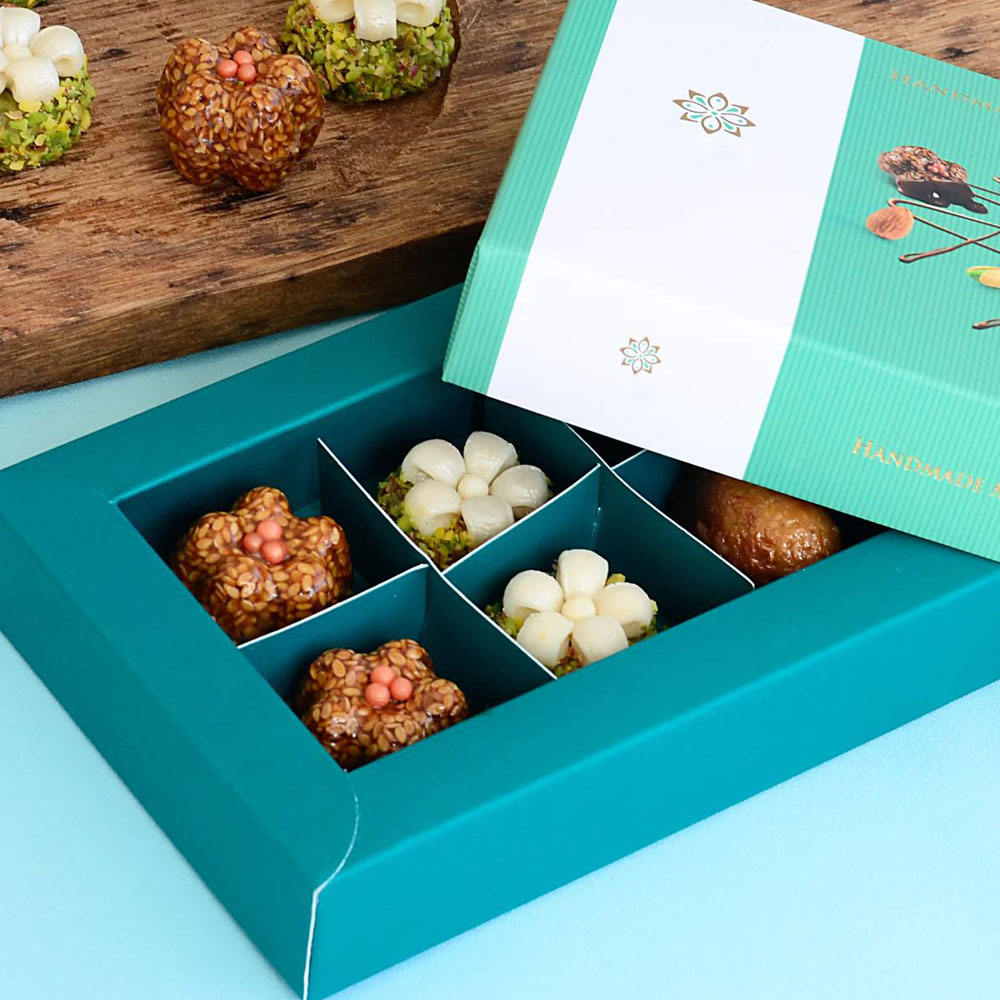
A shipment can look perfect when it leaves the factory and still arrive with crushed corners, broken pastries, or damaged cartons. Transportation creates pressure, vibration, temperature changes, and repeated handling. Packaging needs to account for all of these conditions.
Design Inserts That Keep Every Piece in Place
Baklava often comes in different shapes and sizes, including squares, diamonds, fingers, and assorted pieces. Without proper separation, these pastries may move around during delivery.
Custom inserts can help solve this problem.
Depending on the product, you can use food-contact-compatible paperboard dividers, molded inserts, or individual compartments. These structures help keep pieces separated and reduce movement inside the package.
For mixed-flavor assortments, individual cavities can also make the presentation look cleaner and more organized.
Strengthen the Outer Carton
The retail box is only one part of the shipping system. Master cartons also need enough strength to protect the products during warehousing and transportation.
Consider the following design features:
- Corrugated shipping cartons with suitable board strength.
- Correct carton dimensions to minimize empty space.
- Dividers for fragile retail packages.
- Secure sealing to prevent cartons from opening.
- Consistent case quantities for easier warehouse handling.
Do not assume that a thicker carton automatically provides better protection. The entire packaging system should be tested under realistic distribution conditions.
Test Packaging Before Shipping Large Orders
A few simple tests can reveal potential problems before they become expensive.
Drop testing can help identify weak corners and closures. Vibration testing can show whether pastries move excessively inside the package. Compression testing can help determine whether stacked cartons can withstand warehouse pressure.
For long-distance US distribution, simulated shipping tests are particularly useful.
The best Baklava Boxes are not simply attractive. They should protect the product throughout the supply chain, from the packing facility to the retailer's receiving dock.
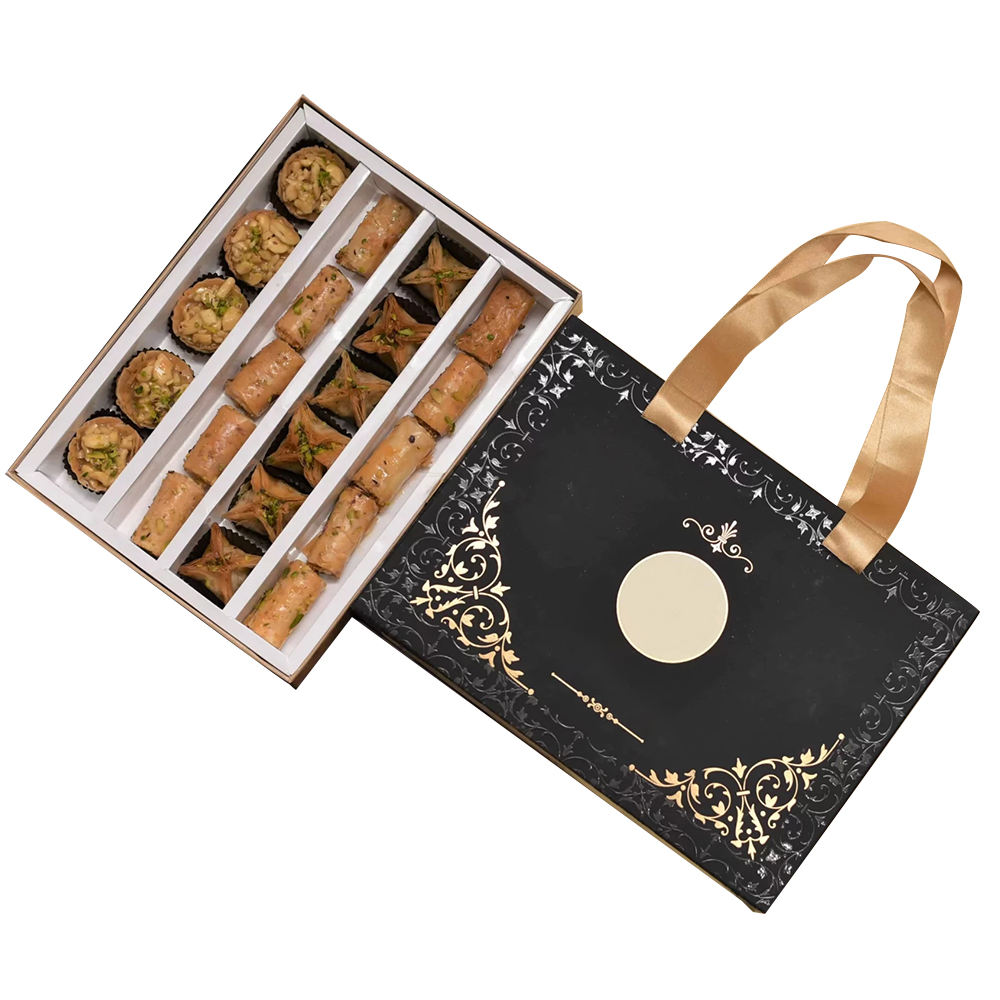
Packaging compliance is not only about the physical box. Product information plays an equally important role in retail acceptance. Missing information, unreadable barcodes, or incorrect labels can cause problems during receiving and product registration.
Include the Required Food Label Information
Packaged food sold in the United States may need specific labeling information under applicable FDA regulations.
Depending on the product, this can include:
- Statement of identity or product name.
- Net quantity of contents.
- Ingredient list in the required format.
- Allergen declarations.
- Nutrition Facts, when applicable.
- Manufacturer, packer, or distributor information.
Baklava commonly contains ingredients such as wheat, pistachios, walnuts, almonds, butter, and other potential allergens.
Under US food allergen labeling rules, major food allergens must be properly declared when applicable. Sesame is also included among the major food allergens.
If your baklava contains multiple nuts or uses shared production equipment, review the ingredient and allergen information carefully. Advisory statements should not replace proper allergen controls.
Make Barcode Scanning Easy
A barcode that looks attractive on a printed design is not necessarily easy for a scanner to read.
Keep sufficient contrast between the barcode and its background. Avoid placing it across folds, curved surfaces, seams, or areas where printing may become distorted.
Before approving your Baklava Boxes, verify the barcode artwork and test printed samples with suitable scanning equipment.
If a retailer requires GS1 identification standards, confirm the correct product identifiers and barcode format with your retail partner.
Leave Enough Space for Product Information
One mistake brands often make is filling every available space with promotional graphics.
A better approach is to create a clear information hierarchy. The front panel can focus on the product name, brand, and attractive product photography. The back or side panels can carry ingredients, nutrition information, storage instructions, and business details.
A clean layout makes the package easier to understand and helps avoid last-minute artwork changes.
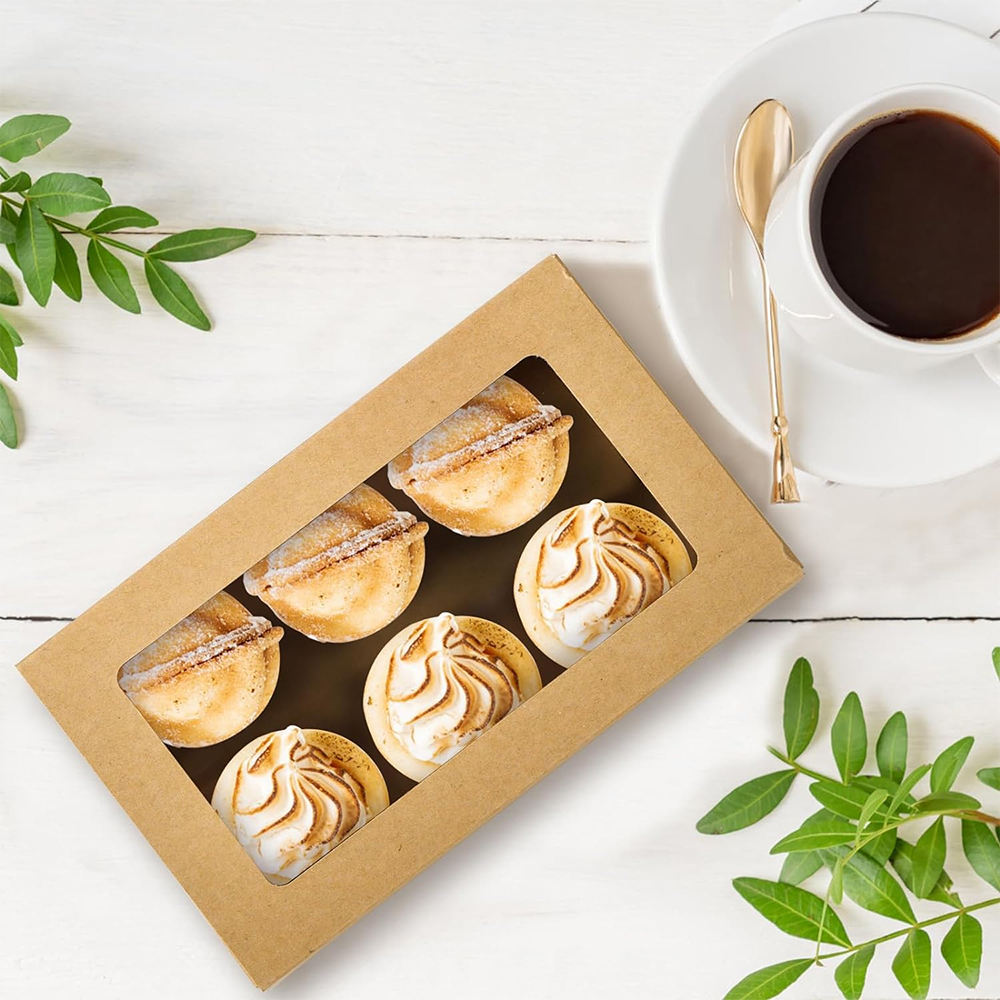
Once compliance and protection are covered, it is time to think about presentation. In US supermarkets and specialty food stores, packaging has only a few seconds to communicate quality and convince shoppers to take a closer look.
Use Visual Design to Highlight Product Quality
Baklava is naturally appealing. Its golden pastry layers, rich nut fillings, and glossy syrup create plenty of opportunities for attractive packaging.
High-resolution product photography can help shoppers understand exactly what they are buying. A clear product image is particularly useful when the box is closed and customers cannot see the actual pastries.
For premium products, consider:
- Warm gold and cream color combinations.
- Elegant typography.
- High-quality pastry photography.
- Minimalist patterns inspired by traditional designs.
- Matte lamination with selective glossy details.
The design should communicate the product's positioning without making unsupported claims about ingredients or quality.
Choose Retail-Friendly Box Structures
The structure of your packaging affects both customer experience and shelf presentation.
Window boxes are useful when customers want to see the actual baklava before purchasing. However, the window material and construction must be appropriate for the intended food packaging application.
A tuck-end box can be practical for everyday retail products, while a hinged-lid design may suit premium assortments.
For larger gift collections, a rigid box with individual compartments can create a more impressive unboxing experience.
Balance Branding with Practical Information
A successful design does not need to be complicated. Shoppers should quickly understand the flavor, quantity, and main product characteristics.
For example, if you sell pistachio baklava, make the pistachio flavor easy to identify. If the package contains an assortment, show the different varieties clearly.
Custom Baklava Boxes can also use consistent visual elements across different product sizes. This creates a recognizable product family and helps retailers organize multiple SKUs within the same category.
Entering the US retail market requires more than a delicious baklava recipe and attractive branding. Your packaging must protect delicate pastries, support food safety, display accurate product information, meet retailer specifications, and withstand transportation.
Well-designed Baklava Boxes bring all these requirements together. From food-safe paperboard and grease-resistant liners to custom inserts, scannable barcodes, and durable shipping cartons, every detail contributes to a smoother retail supply process.
For baklava manufacturers, wholesalers, and private-label brands, the smartest approach is to plan packaging around the entire supply chain rather than focusing only on appearance. Confirm retailer requirements early, test physical samples, maintain consistent production quality, and work with an experienced custom packaging manufacturer.
The result is packaging that looks professional, protects your products, and helps reduce avoidable shipment rejections. When your baklava reaches US retail shelves in excellent condition, your brand has a much better chance of earning customer trust and building long-term retail relationships.
Food-grade paperboard is a popular choice because it offers good durability, print quality, and customization options. Grease-resistant liners or suitable barrier coatings can help protect boxes from oil and syrup stains.
Depending on the product and applicable FDA requirements, packaging may need a product name, net weight, ingredient list, allergen declarations, Nutrition Facts, and manufacturer or distributor information.
Custom inserts, individual compartments, sturdy paperboard, and protective corrugated shipping cartons can reduce product movement and crushing. Shipping tests can help identify weak points before mass production.
Yes. Custom packaging manufacturers can offer different sizes, shapes, printing designs, window options, inserts, and finishing effects to accommodate individual baklava pieces, assorted flavors, and premium gift sets.
Confirm retailer packaging specifications before production. Check barcode readability, product labeling, box dimensions, carton strength, and pallet requirements. Always approve physical samples and conduct quality inspections before shipping large orders.
Post time: Nov-09-2026


