


In e-commerce, your package is the first physical expression of your brand that you customers will be receiving. This is this very second you get to decide. Custom Cargo Boxes Printed cargo boxes do much more than simply pack your item. They are effective marketing and brand-building devices.
In the following guide, you’ll find all those little bits of info you’re looking for. We will go from the advantages of branded boxes to the important decisions you have to take. Then, we will again be lost in budgets, good designing and finding a supplier you can truly trust. We have you ready to get well on your way of impressing your customers with an awesome box.
When you are thinking about cost, it is wise to think about your return on Investment (ROI) too. A good box is not just a cost; it is a brand investment. In this section of the article, we will help you budget your money with a focus on value.
Custom Printed Shipping Box Cost Drivers
- Size: Bigger boxes are more expensive than smaller ones which means they cost to create.
- Box Style: Mailer boxes are typically fancier to construct than standard shippers.
- Material: Premium white material is costlier compared to standard Kraft.
- Print Coverage: Ink covering a bigger area of the box results in a higher cost.
- Quantity: The more you purchase, the better the cost per box you get.
How to Calculate the ROI of Your Custom Box
Your custom box is really a marketing tool. A superior unboxing experience can also increase customer loyalty. This results in more repeat buyers and a higher CLV. The greater experience is likely to boost repeat customers by 10 to 20 percent, he said.
Also, a box that's too small for the content won't get ruined. Cutting those losses by 1% could save you and your business a significant number of dollars. That will pay for the boxes. Ultimately, compare the cost of a single printed box to that of an internet ad. Your box is a tangible advertisement that your customer can see and touch.
Tiered Budgeting Strategies
You do not have to do everything at once. A simple way to think about your budget in levels is as follows.
| Tier | Description | Main Focus |
| Starter Tier | One-color logo printed on a standard Kraft box. | Simple brand recognition and a professional look. |
| Growth Tier | A two-color or a full-color design on the outside of a white box. | Creating a strong, memorable brand statement. |
| Premium Tier | Full-color printing on the inside and outside, with custom inserts. | A complete luxury unboxing experience. |
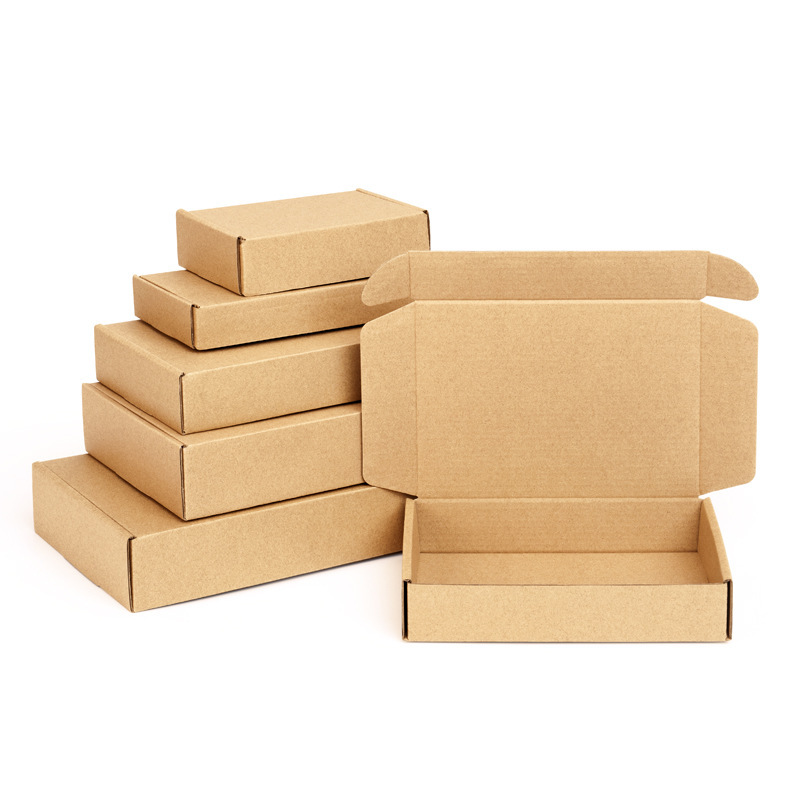
Breaking from the standard brown box is a bold commercial move. Custom printed shipping boxes have several distinct advantages that will enable both you and your brand to grow, and your buyers’ senses of appreciation for you to flourish. They are the next stage beyond bringing you product to your brand making a moment.
Here are the reasons that matter for investing in custom boxes:
-
Convey the Brand in a Cool Way.
It’s in your hands whether you change that box visit to a memorable one. Wowing box presentation takes it a step further, just as with tearing open a present.
-
Boost the Brand Recognition.
This wasn't just any old box to carry something in. Thus, before the postal workers, pedestrians or even your customers open it, your brand is visible.
-
Your Storage Product Gets an Upgrade.
The elegant packaging matches the product inside, and this is a POSH statement. As a result, your brand isn’t premium; it is more powerful.
-
The Item Inside Is More Secure.
Even when it’s just a fraction of an inch, that little bit of movement allows fitted boxes to do their jobs as damage reducers and drivers toward the use of filler.
-
Generate Social Media Buzz.
A cool well presented box is Instagram gold, the customer will want to take a photo and tag your brand which is essentially free advertising.
Complete the puzzle of your printed custom shipping boxes by making some key decisions. Understanding the best decisions will make you create such a box that is going to be attractive and useful at the same time. We will break down the buzzwords for you and make everything easy that a lot of technical sounding nonsense, will become easy.
Choosing the Right Box Style
There are different styles of box to consider and they each have a look as well as an effect on how your box will keep its contents safe. The two popular styles are as follows for online shopping customers.
A Mailer Box, or Retf is great to give as a gift. It resembles a treasure chest that lifts from the top. This one’s a subscription box, a gift set and an online shopping kit. it’s this style that is supposed to be the damn epicenter of the focus around unboxing experience, for certain.
The Ship Box, or Regular Slotted Container (RSC) is durable and efficient. It is wrapped tight and constructed for long usage. The style is a good choice to pack larger or heavy items which require extra packaging stability. But it doesn’t unfold as sumptuously as a mailer, and this is great.
Selecting Material and Strength
The materials you use to create your box will influence the design, print, and longevity of the packaging. The exact make of paper that you pull out to cover your box might matter.
Types of materials:
- Kraft is the brown cardboard you see the most. It's a natural-looks material that's considered eco-friendly by many.
- Standard White is a paper that guarantees a bright and clean surface. Colors printed on it will appear more vibrant, and it's a perfect canvas for your design.
- Premium White is the kind of paper that has a layer that makes the surface even more glossy. Thus the printing is the highest quality possible and the feel is more luxurious.
The strength of the custom printed shipping boxes comes from the inner wavy paper which is known as flute.
Common Corrugated Flute (The Flute):
- B-Flute is 1/8 inch thick. It offers the best of both worlds-strength and a smooth surface to print. It is the most popular choice for online shopping boxes.
- E-Flute is a smaller flute with a thickness of about 1/16 inch. Its compact shape fits smaller boxes well and allows for fine printing.
One specific method of determining strength is the Edge Crush Test (ECT). This test concentrates on the amount that the box walls can bear before they are ruptured. A standard box adds up to 32 ECT. So it should be able to support up to 65 pounds. But for security reasons, you should ship that well below.
Understanding Printing Options
The second important option is the design printing on the box. The little decent decision for you entirely depends on your design, copy run and budget.
- Digital Printing is great for small quantities, and these designs with so many colors. It operates directly, like a desktop printer, with no expensive setup costs. This is great for startups or promo packs.
- Flexographic (Flexo) Printing is from a flexible plate that presses the design onto the box. (One or two colors, that is; the more monochrome ink affairs are among the first to sell out.) It's low-priced for mass production, less-so artisanally because of its straightforward designs.
- Lithographic (Litho) Lamination provides the most superior finish, photo-realistic quality. A design is printed first on a paper, which is then adhered to the corrugated board. It’s the most expensive way to do things, and it is why high-end products need a DAC chip.
The correct decision will mostly depend on your product type and target customer. You may check for examples of cases by industries that are similar to yours.
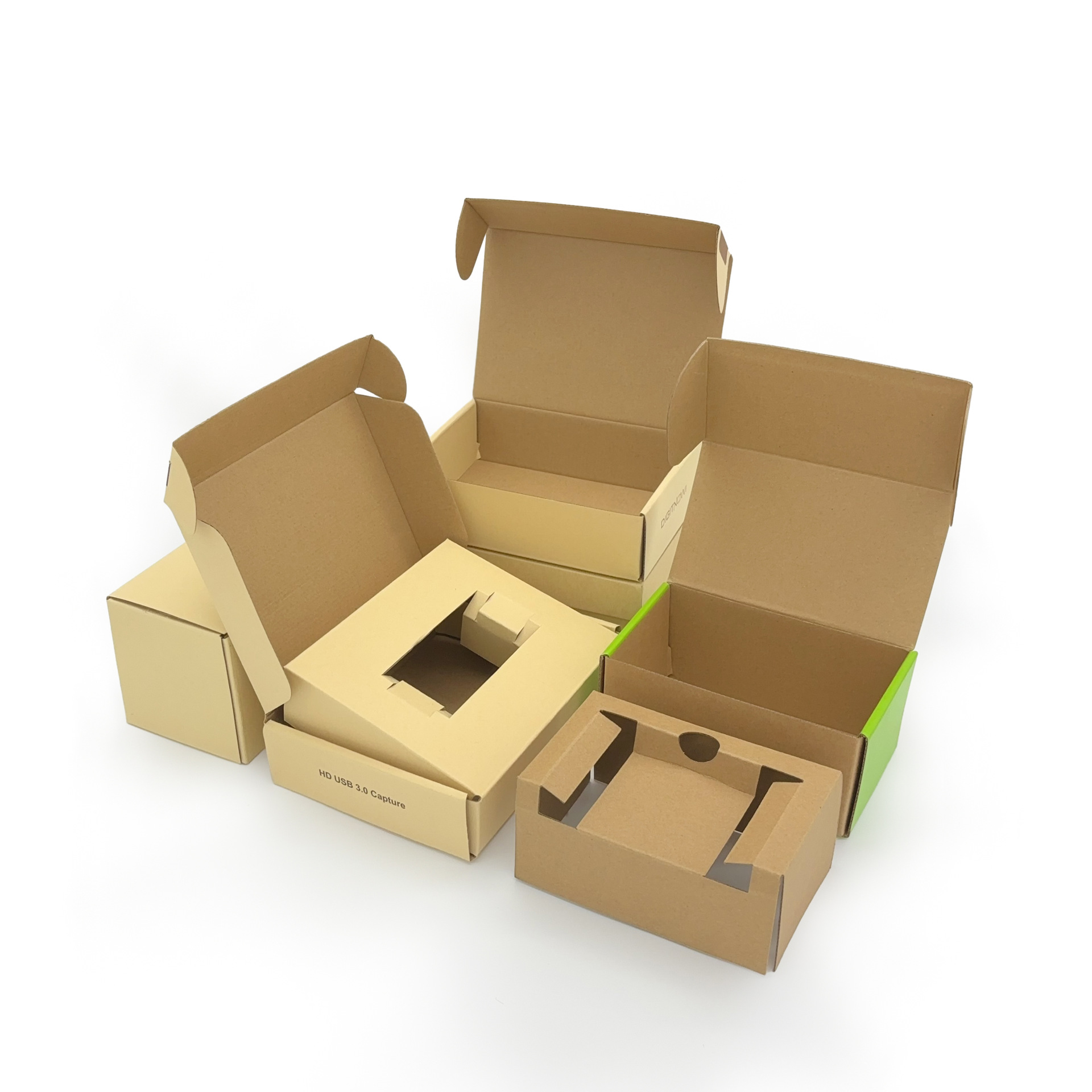
The most elegant design also looks good on the screen and makes sense in real life as well. By following the four steps below, you can avoid mistakes and create custom printed shipping boxes that get the job done.
Step 1: Work Out Your Information Hierarchy
Determine what information on customers you think is most critical. What will be the first thing they see? Mostly, it is your logo.
Then consider the next most essential matters. It can be your tagline, website URL or social media handles. You have a clear information hierarchy that tells your customers how to read the information.
Step 2: Design That's Useful and Usable
We get it: In our many years, we have realized that certain things are worth dealing with if they contribute to a more comfortable life.
Pro-Tip: The Shipping Label Zone. Always save a "safe zone" on your box for a 4x6" shipping label. Somewhere on the top panel is usually a good spot. Don’t place the spot with your logo or key design elements, which the label will obstruct.
Pro-Tip: Scuff-Resistance. Solid dark colors can hide scuffs and scratches better from the shipping process. You can also try patterns or lighter shades, especially around the edges of the box, to cover up any surface wear and tear.
Pro-Tip: The "Wow" Moment. Make the inner part of your box a delight to open. Whether you include a printed piece with a pattern, a thank you note or your brand story – it all gives that little extra joy to your customers when they open the package.
Step 3: Prepare Your Artwork for Flawless Printing
The first step for your design to print well is to set up your artwork properly.
- Vector vs. Raster: Your logo should always be vector (files like AI, EPS, or SVG). It can be stretched without the distortion of blurring. Photos are raster images.
- Resolution: For any bitmap images such as photographs, the resolution should be at least 300 DPI. This will ensure that they come out sharp and clear when printed.
- Dielines: Your printer will provide you with a template, known as dieline. The flat outline of your box. Make sure to always put your design nice and CENTER in this template, so it prints right!
A lot of modern suppliers have an online 3D design facility. Services like Packlane and large carriers like FedEx Office help you visualize your artwork on the product before ordering it.
Choosing the right vendor is as important as the cloths themselves. An appropriate recipient will help you make your dream come true easily. Look for a provider that will fit well with the specifics of your business.
Key Criteria for Vetting a Supplier
Below is a checklist to consider when selecting your custom printed shipping boxes supplier:
- MOQ: Is the minimum order that they have the one that fits you? Suppliers can be for big companies or they can be for startups.
- Turnaround Times: When will they produce the boxes and ship them? You need to be sure that their timeline will fit your schedule.
- Sample Program: Are you allowed to order a single sample box before a big shipment? It is necessary to see and touch a box.
- Customer Support: Are they helpful and responsive? Quality support is the bedrock of your needs, especially if you need help with designing.
- Capabilities: Can they deliver the box type, material, and printing you look for?
Check the supplier's website for intuitive information. For example, a provider like UPrinting generally lets you know if you can make an order for a single sample box. This is a very good credibility indicator.
Your Next Steps to an Unforgettable Unboxing
You have a step-to-step guide now. So words like defining your goals, deciding your box specs, and designing with care to finding the right partner now are an easy pie.
Whether you want a standard one to explore or desire a wholly unique package, the branding is worth it. If your vision needs a custom solution, then consider checking a custom solution. For an all-embracing range of products a packaging partner like Fuliter Paper Box can help you in creating your design.
Wholesalers might sell them by a case, usually 500 or 1,000 cups. On custom printed cups the manufacturers minimum starts at 10,000 - 50,000 pieces based on your design and type of cup.
Yes, definitely! Ask at least for samples that you can test the quality (and taste, in my case), check lid sizes and test how good a grip the cup has. You’d in no way want to spend too much without giving a sample a try.
It's a complicated question. The paper is made from trees and you can plant more. These days, many of those paper cups are lined with plant-based PLA, the stuff that turns them into industrial compost when it is compost time. On the downside, there is no assuarance of treatment at all. They also typically carry a more positive public image than their foam- and plastic-based cups.
If you buy your paper cups in large number, then keep them in a dry, clean and cool area. For extra moisture protection, set them up off the floor. The straight up plastic sleeves and cardboard box it came with are the easiest way to store the pasties as they will prevent dust/pets if you do anything but crushing.
The structural and the thick differences, that's all. Hot cups are made for hot. frequently thicker paperboard,or else with double wall or ripple wall for heat protection. Both have a waterproof lining, but the type and thickness of that covering is determined by the temperature of the drink.
Post time: Jan-27-2026


