


Understanding the Natural Oil in Dates
Dates contain natural sugars and moisture, while certain varieties also have a soft, oily surface. Medjool dates, for example, are often larger and softer than many other varieties. Their sticky texture can create challenges when they are packed tightly or stored for extended periods.
When dates touch the packaging directly, natural oils and sticky residue may transfer to the paper surface. Heat and pressure during transportation can make this issue even more noticeable.
How Grease Affects Printed Packaging
Grease can change the appearance of printed colors, especially on light-colored paper. Dark patches may appear around product contact areas, while some coatings may lose their original appearance.
The problem becomes more obvious with premium packaging that uses white backgrounds, delicate patterns, metallic details, or bright brand colors.
Protecting the Customer Experience
Well-designed Date Boxes help keep the product looking attractive while protecting the printed exterior. A suitable grease-resistant structure also reduces the risk of packaging damage during handling.
For food businesses, investing in better packaging means fewer complaints, a more consistent presentation, and a stronger brand image.
Material selection is one of the most important decisions when developing grease-resistant packaging. Not all paperboards offer the same level of protection. Some absorb oil quickly, while others have specially designed surfaces that slow down grease penetration.
The best material depends on the type of dates, packaging structure, storage conditions, and printing requirements.
Food-Grade Paperboard for Better Protection
Food-grade paperboard is a popular choice for custom date packaging. It provides a clean surface for printing and can be manufactured in different thicknesses.
However, standard paperboard is not automatically grease-proof. If the dates have a high oil content, an additional protective barrier may be necessary.
Brands should consider paperboard with suitable grease-resistant treatments or an inner food-contact layer. This helps prevent natural oils from reaching the decorative exterior.
Barrier Coatings That Reduce Oil Penetration
Protective coatings can improve the resistance of paper packaging to grease and moisture. Depending on the intended application, manufacturers may use water-based barrier coatings or other suitable functional treatments.
These coatings help create a protective surface without necessarily making the packaging look or feel like plastic.
The important thing is to select a coating that matches the actual product conditions. A barrier designed for light contact may not perform well when soft dates remain inside the box for several weeks.
Choosing the Right Paper Thickness
Paper thickness also affects the overall performance of the packaging. Thicker paperboard generally offers better structural support, although thickness alone does not guarantee grease resistance.
A well-designed box combines suitable paper weight, protective treatment, and an effective internal structure.
For premium retail products, this combination helps maintain both product protection and an attractive appearance.
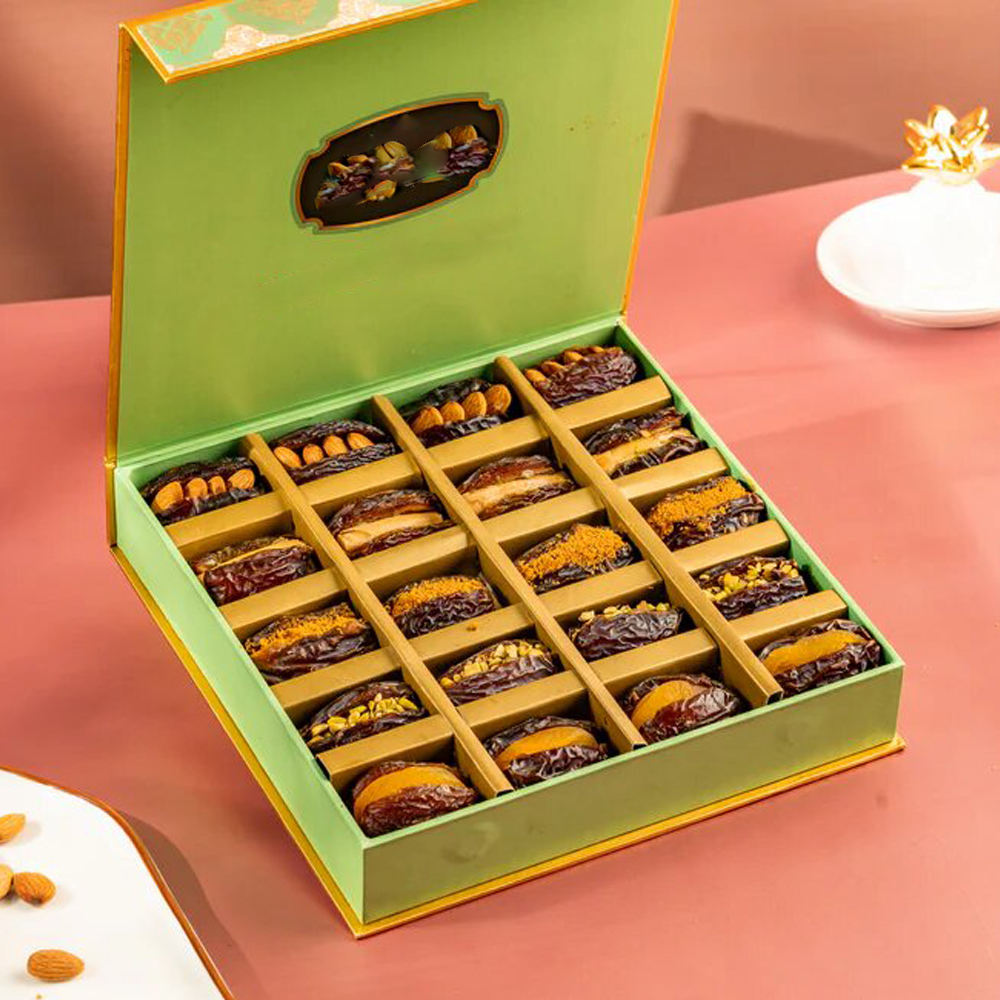
Printing is often the first thing customers notice when they see a food package. A beautiful design can communicate quality, freshness, and brand personality before the customer even opens the box.
Unfortunately, oil stains can quickly ruin that visual effect. This is why printing protection should be considered during the packaging design process rather than added as an afterthought.
Keep Ink Away From Direct Oil Contact
One practical solution is to separate the printed outer surface from the dates inside the package.
An inner liner, grease-resistant insert, or protective food-contact layer can reduce direct contact between the fruit and the printed paperboard.
This approach is especially useful for gift boxes containing soft or sticky dates. It helps preserve the appearance of the outer packaging even when the fruit releases natural oils during storage.
Select Suitable Printing and Finishing Techniques
Different printing methods and finishes perform differently depending on the paper surface and environmental conditions.
Offset printing is commonly used for detailed packaging designs, while digital printing can be useful for smaller production runs and customized artwork.
After printing, suitable finishing options may provide additional surface protection.
For example:
- Matte lamination creates a smooth, understated appearance.
- Gloss lamination offers a brighter and more reflective finish.
- Protective varnish can improve surface durability.
- Foil stamping adds decorative metallic details.
However, these finishes should not be treated as substitutes for an effective internal grease barrier. The exterior finish protects the printed surface from handling and abrasion, while the inner barrier helps prevent oil from reaching it.
Test Colors and Finishes Before Mass Production
A packaging sample is worth the extra time. Brands should test their actual artwork on the selected material and inspect the finished box after exposure to realistic storage conditions.
Pay special attention to white areas, fine text, dark color blocks, and decorative elements.
A successful sample should maintain its original appearance without visible oil marks, peeling, or unexpected color changes.
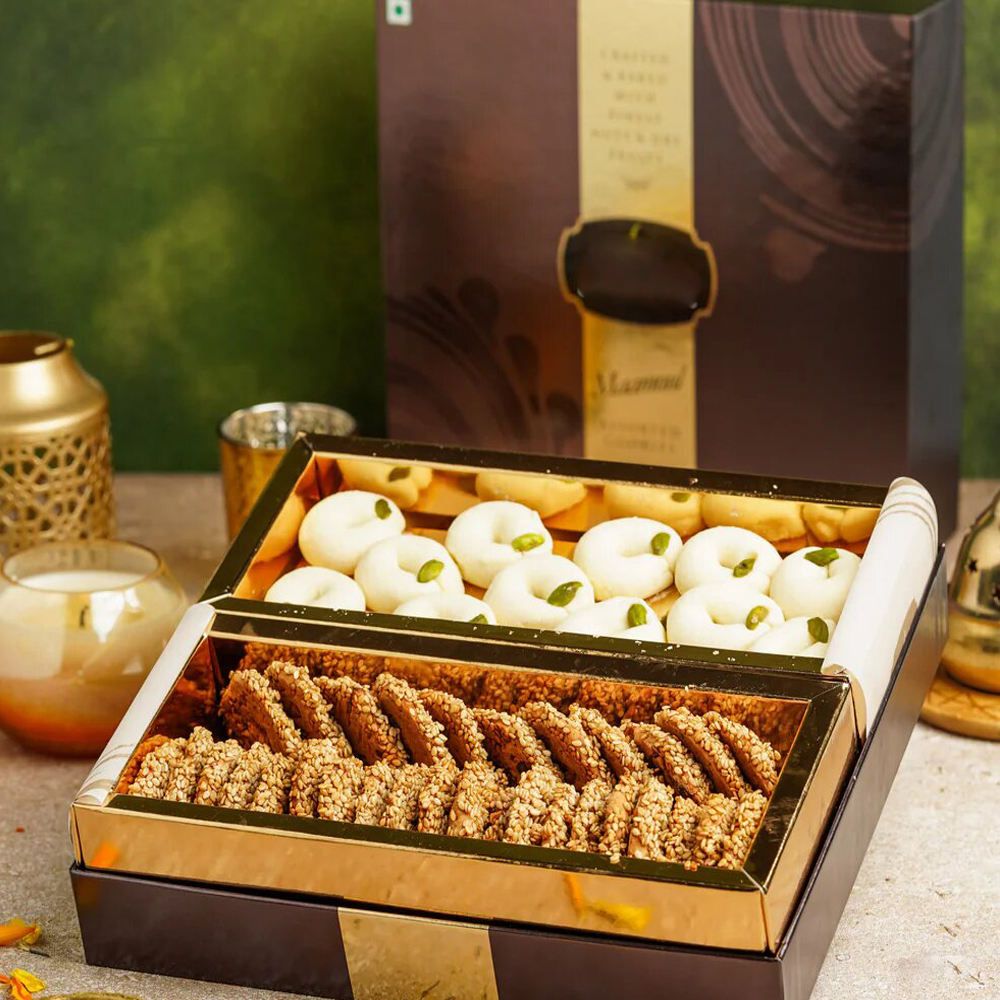
Good packaging needs to do two jobs at once: protect the food and make the product appealing. A box that looks beautiful but cannot handle sticky dates will create problems for the business. On the other hand, packaging that offers excellent protection but looks ordinary may struggle to attract customers.
The goal is to balance practical performance with visual appeal.
Use Inserts to Keep Dates in Position
Internal inserts are particularly useful for premium date collections. They help separate individual pieces, prevent unnecessary movement, and reduce direct contact between the fruit and the outer box.
Depending on the product, manufacturers can create paperboard dividers, molded-pulp trays, or food-contact-compatible inner trays.
For mixed date collections, separate compartments also make it easier to organize different varieties.
A well-designed insert can improve the unboxing experience while providing an additional layer of protection.
Choose a Structure That Matches the Product
Different date products need different packaging structures.
For example, a small tuck-end box may work well for everyday retail packs, while a rigid magnetic box may be more suitable for luxury gifting.
Other popular options include:
- Drawer-style boxes for premium date assortments.
- Folding cartons for lightweight retail packaging.
- Two-piece rigid boxes for holiday gifts.
- Window boxes for products that benefit from visibility.
The structure should match the product weight, quantity, and distribution method.
Make the Design Work for Your Brand
Colors, typography, and graphics can help communicate the personality of a date brand.
Gold, cream, brown, and deep green are common choices for premium date packaging. However, brands do not need to follow traditional color combinations to stand out.
A clean minimalist design may appeal to modern shoppers, while decorative patterns can create a stronger festive feeling.
Custom Date Boxes allow businesses to adjust dimensions, printing, finishes, and internal layouts according to their target customers.
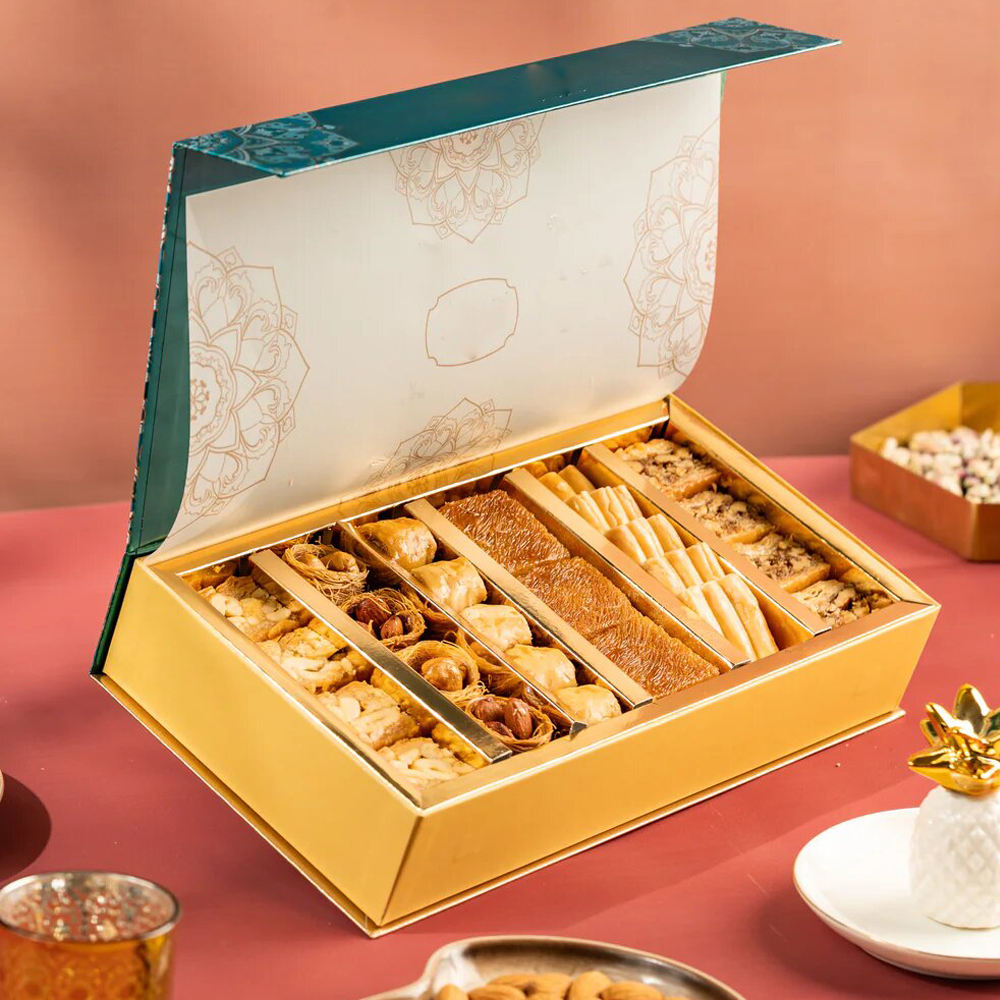
A packaging design may look perfect on a computer screen, but real-world performance is what matters. Before ordering thousands of boxes, businesses should test how the selected materials and structure perform with the actual dates.
This step helps identify potential problems before they become expensive production issues.
Conduct a Real Product Contact Test
Start by placing the actual date varieties inside a finished packaging sample.
Different varieties can behave differently, so testing only one type may not provide enough information.
Check the packaging after several storage periods. Look for oil marks, dark spots, softening, or changes in the printed surface.
The test should reflect the expected storage temperature and contact time as closely as possible.
Check Temperature and Transportation Conditions
Temperature changes can affect the texture of dates and the performance of packaging materials.
During transportation, boxes may also experience vibration, stacking pressure, and changes in humidity.
A useful packaging test should include:
- Short-term and extended product contact.
- Realistic storage temperatures.
- Stacking and compression checks.
- Vibration or transportation simulation.
- Inspection of printing and surface finishes.
These tests help businesses understand whether their packaging can maintain its appearance throughout the supply chain.
Confirm Food-Contact Requirements
Food packaging needs to meet the relevant requirements in its target market.
For example, businesses selling dates in the United States should pay attention to applicable FDA food-contact requirements for materials that directly or indirectly contact food.
The exact requirements depend on the material, intended use, and conditions of contact.
Suppliers should be able to provide relevant material specifications and supporting documentation where applicable.
Remember that grease resistance and food-contact compliance are two different things. A material may resist oil but still require additional verification before it can be used in direct food-contact applications.
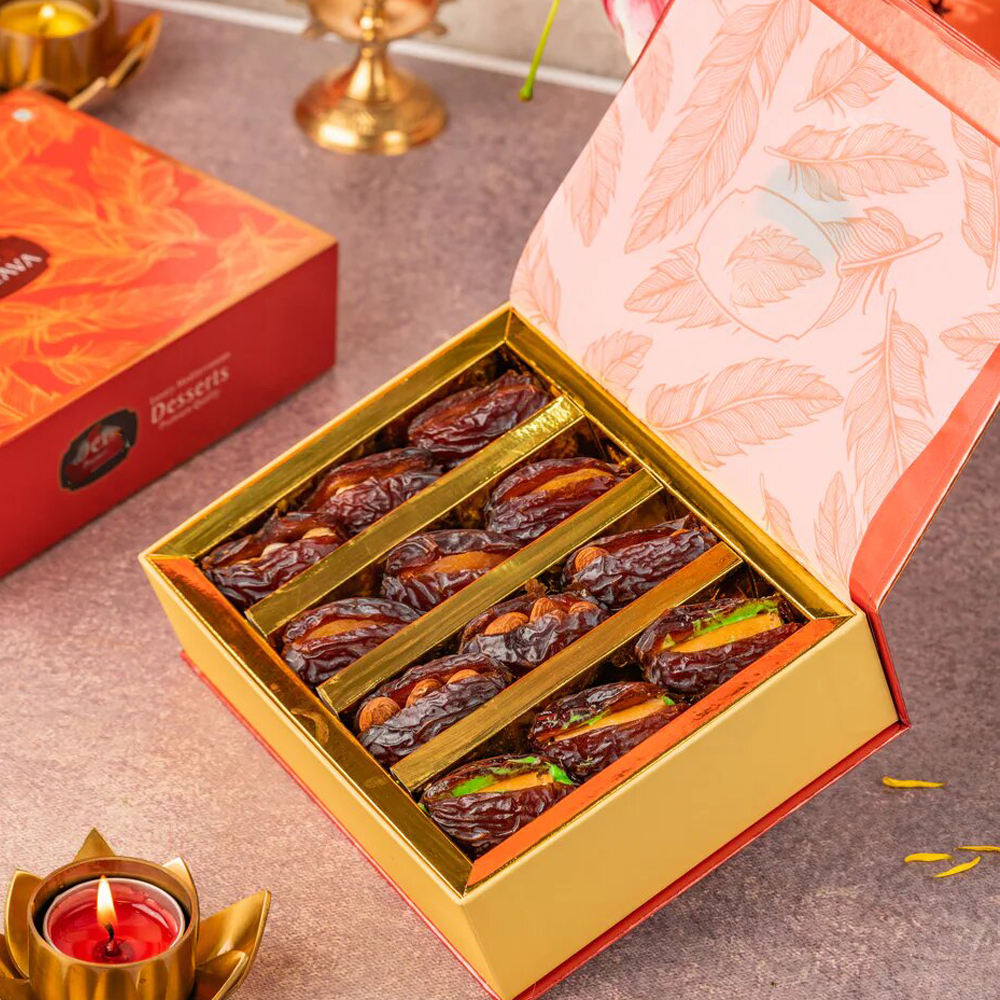
There is no single packaging solution that works for every date business. A small online seller, a supermarket supplier, and a premium gift brand may have completely different packaging priorities.
Custom packaging gives businesses more control over material selection, box dimensions, printing, and production quantities.
Retail Date Boxes for Supermarkets
Supermarket packaging needs to look attractive while remaining practical for everyday handling.
Compact folding cartons are often a good choice because they can be designed for efficient storage and display.
A suitable grease-resistant inner layer helps protect the printed exterior, while a clear product window may allow shoppers to see the dates before purchasing.
The design should also leave enough room for product information, branding, and required labeling.
Luxury Date Boxes for Gifts and Holidays
Dates are popular gifts during Ramadan, Eid, weddings, and other special occasions.
For these products, packaging needs to create a memorable first impression. Rigid boxes, magnetic closures, foil stamping, and custom inserts can help create a premium presentation.
However, luxury appearance should never come at the expense of product protection.
The internal barrier should be designed to handle the specific date varieties, while the exterior should remain clean and elegant throughout delivery.
Wholesale Packaging for Growing Brands
For wholesalers and distributors, packaging consistency and production efficiency are essential.
Custom Date Boxes can be manufactured in different sizes to accommodate small retail portions, family packs, and larger gift assortments.
Ordering suitable quantities can also help businesses control unit costs and maintain consistent branding across product lines.
When discussing a bulk order with a packaging manufacturer, ask about material options, minimum order quantities, sampling, printing capabilities, production lead times, and shipping arrangements.
A reliable supplier should help evaluate both appearance and performance instead of focusing only on the lowest unit price.
Natural oils and sticky surfaces are common challenges in date packaging, but they do not have to damage the appearance of your products. With suitable paperboard, protective inner barriers, quality printing, and carefully designed inserts, businesses can create packaging that keeps oil away from the printed exterior.
The key is to understand the characteristics of the actual dates before choosing materials and finishes. Testing real products under realistic storage and transportation conditions can prevent costly problems later.
Whether you sell everyday retail packs, premium Medjool dates, or luxury Ramadan gift assortments, well-designed Date Boxes can improve product protection and presentation at the same time.
For growing food brands, packaging is more than a container. It is part of the product experience, a reflection of quality, and an important way to build customer trust. Choose materials carefully, work with an experienced custom packaging manufacturer, and make sure every box looks as good when it reaches the customer as it did when it left the factory.
Grease-proof Date Boxes are specially designed food packaging solutions that help prevent natural oils and sticky residue from dates from penetrating the paperboard. They use protective coatings, inner liners, or barrier materials to keep the packaging clean and maintain its appearance.
Food-grade paperboard with suitable grease-resistant coatings is a popular choice. Depending on the product, brands can also use protective inner liners or food-contact-compatible inserts to reduce oil transfer and improve packaging performance.
Yes. Properly designed Date Boxes help prevent natural oils from reaching the printed exterior. Combining an effective inner barrier with suitable printing finishes, such as matte lamination or protective varnish, helps maintain clean colors and attractive graphics.
Absolutely! Custom Date Boxes can feature rigid structures, magnetic closures, foil stamping, premium printing, and customized inserts. These options create an elegant unboxing experience while helping protect dates from oil stains and transportation damage..
Yes. Many packaging manufacturers offer bulk customization, including different box sizes, paper materials, printing designs, protective coatings, and internal inserts. Before placing a large order, request samples and test them with your actual dates to ensure suitable grease resistance and packaging quality.
Post time: Nov-13-2026


