


How do you make a cardboard box
In e-commerce, storage, and moving scenarios, cardboard boxes are indispensable tools. But you may not know that as long as you master the correct method, you can easily make a sturdy and beautiful cardboard box at home. This article delves deeply into dimensions such as material selection, production steps, size measurement, and structural reinforcement, enabling you not only to create a box but also to “tailor-make” it according to your specific needs.
How do you make a cardboard box: Prepare materials and tools – Only by laying a solid foundation can you do it more solidly
Before starting to make it, prepare sufficient materials first. The seemingly simple cardboard box, in fact, each material affects the durability of the finished product.
List of Materials (It is recommended to choose higher-quality cardboard)
Corrugated cardboard: Both three-layer and five-layer are acceptable. The thicker it is, the stronger it will be
Utility knife/medium knife
Metal ruler (preferably with anti-slip pad)
A pencil or marker
Strong glue or hot melt glue gun
Transparent sealing tape
Creasing tool (if not available, a ballpoint pen can be used as a substitute)
If you need to carry heavy items, it is recommended to use five-layer corrugated cardboard and pair it with a cross reinforcement structure.

How do you make a cardboard box: The key logic of making cardboard boxes: First, “determine” the size, then “draw” the unfolding, and finally “fold” the structure
Many people like to cut cardboard boxes by feeling, but this can easily lead to inaccurate dimensions and unstable box bodies. The correct approach is: First, determine the size of the contents, and then work backward from the cardboard expansion diagram.
Step 1: Determine the box size and increase the margin
Measure the dimensions of the items to be loaded: length, width and height
At least 0.5 to 1 cm of buffer space should be added to each side
At the same time, a part of the space in the overlapping area of the folded edge should be taken into consideration
For example, if the size of the item is 20 × 15 × 10 cm, the finished size of the box can be set to 21 × 16 × 11 cm to prevent it from not being able to fit in.
How do you make a cardboard box: Drawing the cardboard expansion diagram – the core step in determining whether the box is practical or not
Whether the box you make is square and easy to fold depends on whether the unfolded drawing is standard.
Standard carton unfolded structure (tetrahedron with upper and lower cover pieces)
The general layout of cardboard usually includes:
Four side panels (front, back, left and right)
Four bottom cover pieces
Four top cover pieces
A narrow strip connecting the side for bonding
The arrangement after expansion is usually:
Side plate A → side plate B → side plate C → side plate D → connecting strip
These five sections form a long strip structure, with four cover plates at the bottom and four at the top respectively.
Precautions when drawing an expanded diagram
The heights of each side panel must be consistent; otherwise, a flat box cannot be folded out
The width of the connecting strip should be approximately 2 to 3 cm to ensure a firm bond
Draw lines with a ruler to avoid tilting
First, draw an indentation on the crease line: the more uniform the indentation, the more regular the box body will be

How do you make a cardboard box: Cutting and folding – Key processes in carton forming
The actual operation process of making cartons is not complicated, but the fineness of cutting and folding determines the final texture.
Step Two: Cut the cardboard along the lines
Use a metal ruler as an auxiliary reference
The utility knife cuts gently and repeatedly instead of cutting it in one go
The cutting edge should be vertical and not tilted; otherwise, the joint seam will be uneven
Step 3: Fold along the indentation line to form the structure
Note when folding
The indentation should be deep but not cut through
After folding the four sides, it forms a rectangular frame
The back cover has not been sealed yet. Keep it in an unfolded state for the next step
How do you make a cardboard box: Bonding molding – Making the box more stable
If cardboard boxes are just folded without being firmly bonded, they are very likely to fall apart. Proper pasting is the key to determining the lifespan of the box.
Step Four: Stick the connecting strip properly
Fold the connecting strip into the interior of the box
Apply hot melt adhesive or strong adhesive all over the connecting strips
Press firmly for about 10 to 20 seconds until fixed
Step 5: Seal the bottom cover sheet
Suggested order of the back cover
Close the short-edge cover first
The long side cover plate is pressed above the short side cover plate
The tape is reinforced along the cross and the center line, with at least three layers
The “cross sealing method” is commonly used in professional packaging, which is highly safe and suitable for load-bearing boxes.
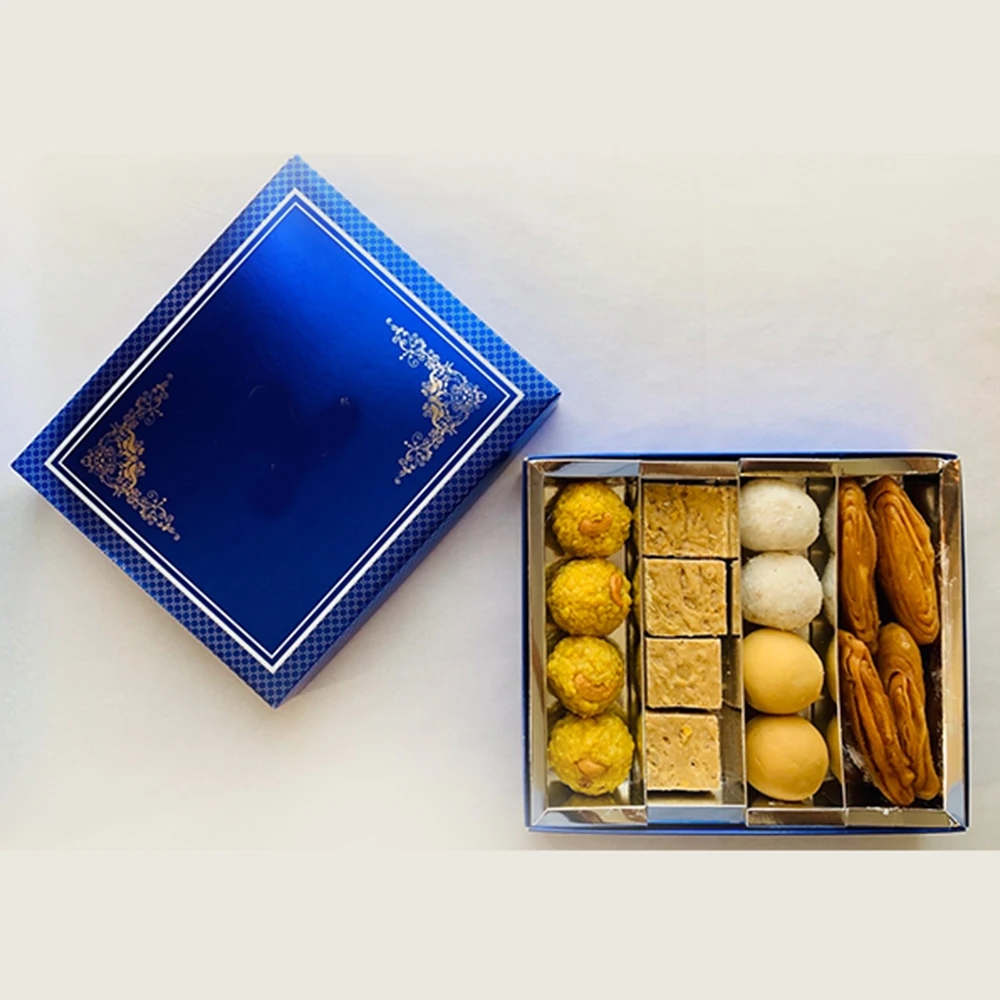
How do you make a cardboard box: Reinforcement and aesthetic treatment – Making homemade cartons more professional
In addition to being “usable”, you can also make your homemade box stronger and more attractive.
Common reinforcement schemes
Double-layer base plate: Increases load-bearing capacity
Lining inside the box: Suitable for transporting fragile items
Corner tape: To prevent side cracking
Aesthetic treatment techniques
Use cowhide sealing tape to make the overall visual more unified
Spray a single color or label the outside of the box for classification
If it is used for gift packaging, it can be wrapped with colored paper or fabric paper
How do you make a cardboard box: Applicable Scenarios and Extended Uses – More Possibilities of a Carton
Self-made cardboard boxes can not only be used for storage or mailing, but also have a highly flexible shape:
Examples of extended uses
Self-made gift boxes and festival packaging boxes
Classify storage boxes and file boxes
Children’s handicraft projects (small houses, carts, etc.)
E-commerce packaging, outer packaging for handmade products
As long as you master the methods in this article, you can make custom cardboard boxes of various sizes, shapes and thicknesses.

Conclusion: Making your own cardboard box is a practical and flexible skill
The production of cardboard boxes may seem simple, but in fact, it involves logics such as material selection, structural design, and mechanical reinforcement.
After mastering this process, you can not only make an ordinary box, but also create a customized carton that fully meets your own needs.
If you need, I can also provide:
Printable template for the unfolding of cardboard boxes
Design drawings of standard box types of different sizes (such as FEFCO)
Tutorials for making more complex structures (drawer type, flip cover type)
If necessary, let me know and I can continue to write for you.
Post time: Dec-06-2025


