


Growing Demand for Sustainable Food Packaging
Customers are becoming more aware of the environmental impact of everyday packaging. Many people prefer brands that reduce unnecessary plastic and use materials that are easier to recycle or compost. For bakeries, this creates an opportunity to show customers that quality and environmental responsibility can go hand in hand.
However, simply labeling a box as eco-friendly is not enough. Businesses should look at the materials, coatings, manufacturing process, and disposal options before making a decision.
Packaging That Matches Your Brand Values
Your packaging often creates the first impression of your product. A well-designed kraft paper box, for example, can give baklava a natural, handmade appearance. A clean white paperboard box may feel more modern and suitable for premium gifting.
The key is to select packaging that reflects your brand without adding unnecessary materials. When customers see that your packaging is both attractive and practical, it can help build trust and encourage repeat purchases.
Balancing Sustainability and Product Protection
Baklava contains oil-rich nuts, syrup, and delicate pastry layers. These characteristics make packaging selection especially important. A box that looks environmentally friendly but becomes greasy, weak, or soggy can damage the customer experience.
The best option should protect the dessert, maintain its appearance, and minimize environmental impact. In other words, sustainability should work alongside food safety and product quality, not replace them.
Kraft Paper for a Natural Look
Kraft paper is a popular choice for bakeries that want a simple, natural appearance. It works well for traditional baklava shops, artisan dessert brands, and businesses that prefer understated packaging.
Look for boxes made with recycled content or responsibly sourced paper. If the box will hold syrup-rich baklava, ask the supplier whether it has a suitable food-contact lining or grease-resistant treatment.
Keep in mind that kraft paper is not automatically recyclable or compostable in every application. Certain coatings and food contamination can affect how the packaging should be disposed of.
Recycled Paperboard for Everyday Packaging
Recycled paperboard can be a practical option for bakeries that sell baklava in large quantities. It offers a smooth surface for printing, making it suitable for logos, product information, and branded designs.
When comparing suppliers, ask about the percentage of recycled content and whether the material is appropriate for direct or indirect food contact. You should also check how well the box holds its shape during storage and delivery.
For businesses that need consistent packaging throughout the year, recycled paperboard can offer a useful balance between presentation, performance, and material efficiency.
Molded Fiber and Other Alternative Materials
Molded fiber packaging is another option worth considering, particularly when individual pieces need extra support. Its structured shape can help keep pastries from moving around during transportation.
Other alternatives include paper-based trays and appropriately certified compostable materials. The right choice depends on the product, local waste-management facilities, and the conditions under which the packaging will be used.
Before placing a large order, request samples and test them with your actual baklava. A material that performs well with dry cookies may not be suitable for syrup-heavy desserts.
Check Food-Contact Safety
Always confirm that the packaging is suitable for its intended food-contact application. Ask suppliers for relevant compliance documentation and details about any inks, adhesives, coatings, or liners used in the box.
This is particularly important if the packaging touches the baklava directly. Food-contact requirements vary by market, so businesses selling internationally should check the rules that apply to their destination countries.
Do not assume that a material is food-safe simply because it is made from paper or marketed as natural.
Look for Grease and Moisture Protection
Baklava can release oil and syrup during storage, especially in warm conditions. Without suitable protection, the bottom of a box may become stained or lose strength.
Depending on your recipe and storage needs, you may want a grease-resistant paper liner, a suitable barrier coating, or a separate food-grade tray. Ask whether the complete packaging system is recyclable or compostable under the conditions available to your customers.
A useful tip is to test the box for several hours under realistic storage conditions. Check for visible stains, soft corners, leaks, and changes in the pastry's appearance before approving the design.
Protect Freshness During Delivery
Packaging also affects how baklava travels from your kitchen to the customer. Boxes should close securely, stack neatly, and prevent individual pieces from sliding into one another.
For delivery orders, consider inserts or dividers that separate different flavors and reduce movement. If the product needs ventilation or special temperature control, test the packaging accordingly rather than assuming a completely sealed box will always work best.
Good packaging helps preserve product quality while reducing the likelihood of damaged orders and wasted desserts.
Use Simple and Recognizable Branding
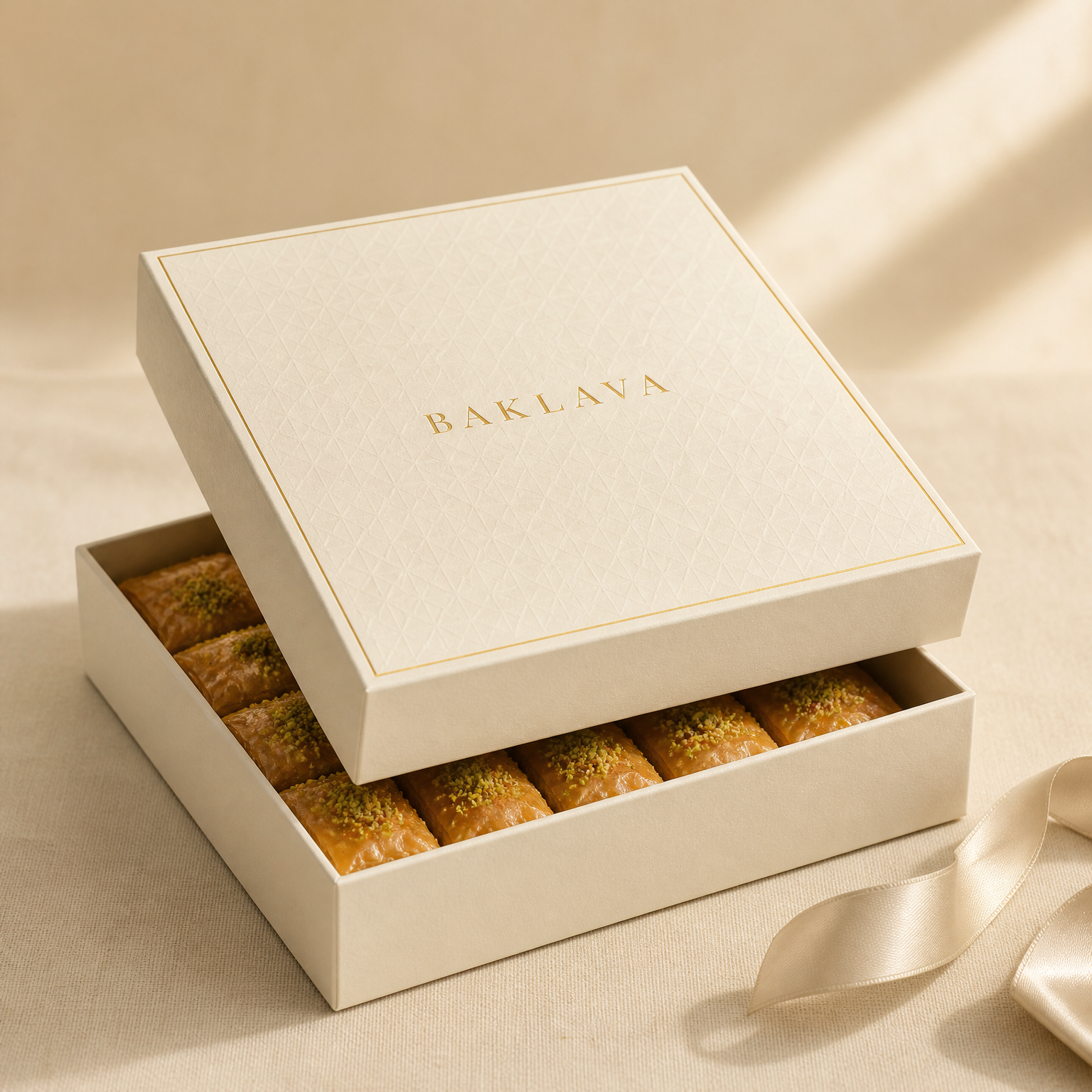
Your logo, brand colors, and product name should be easy to recognize. Kraft backgrounds, minimal typography, and small decorative patterns can create a premium appearance without requiring extensive printing.
For a traditional baklava business, subtle geometric patterns or regional design influences may communicate heritage. A contemporary dessert brand might prefer a cleaner layout with modern lettering and plenty of open space.
Choose printing methods and inks that are compatible with the packaging material and its intended disposal route. A recyclable paper box can become harder to process if it includes unsuitable finishes or mixed materials.
Consider Windows, Inserts, and Dividers
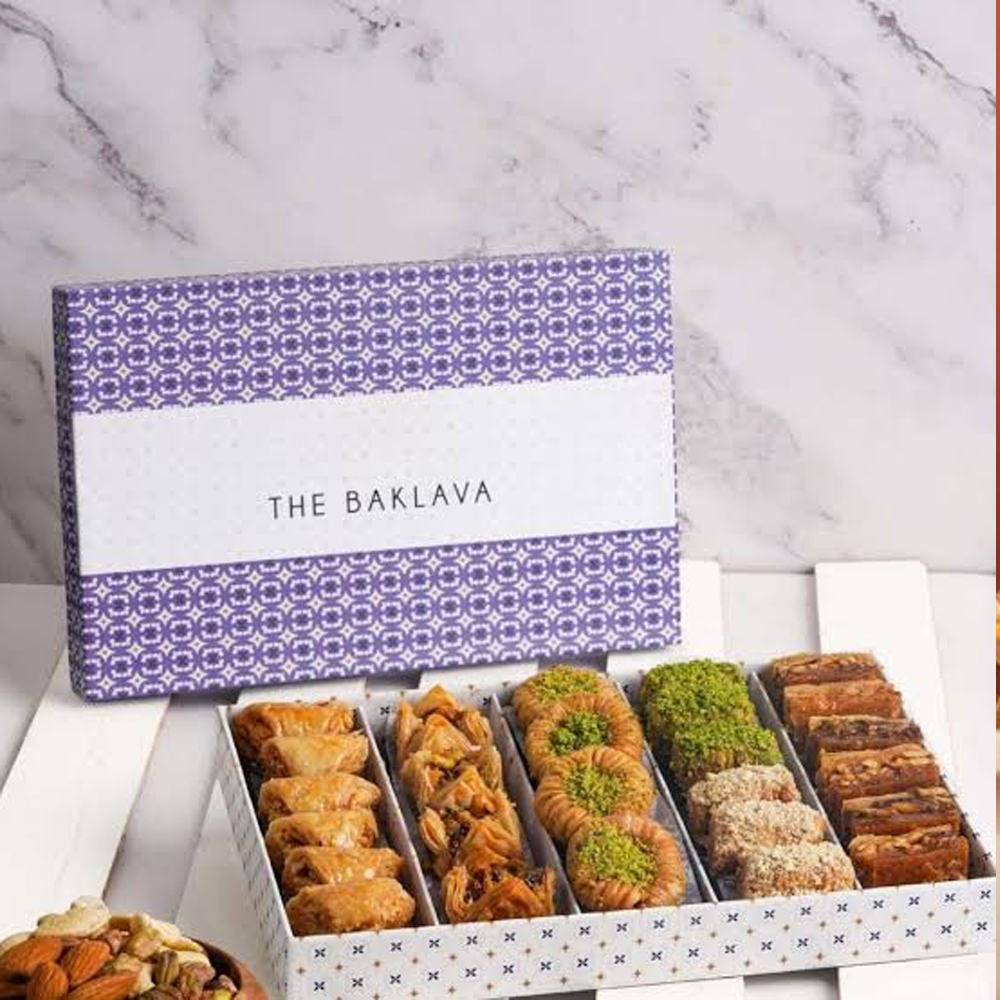
A transparent window allows customers to see the baklava before opening the box. This can be useful for gift packaging and retail displays, but the window material should be considered separately from the paperboard.
If recyclability is a priority, ask whether a windowless design could achieve the same result. A printed illustration or an opening lid may provide an attractive presentation without introducing another material.
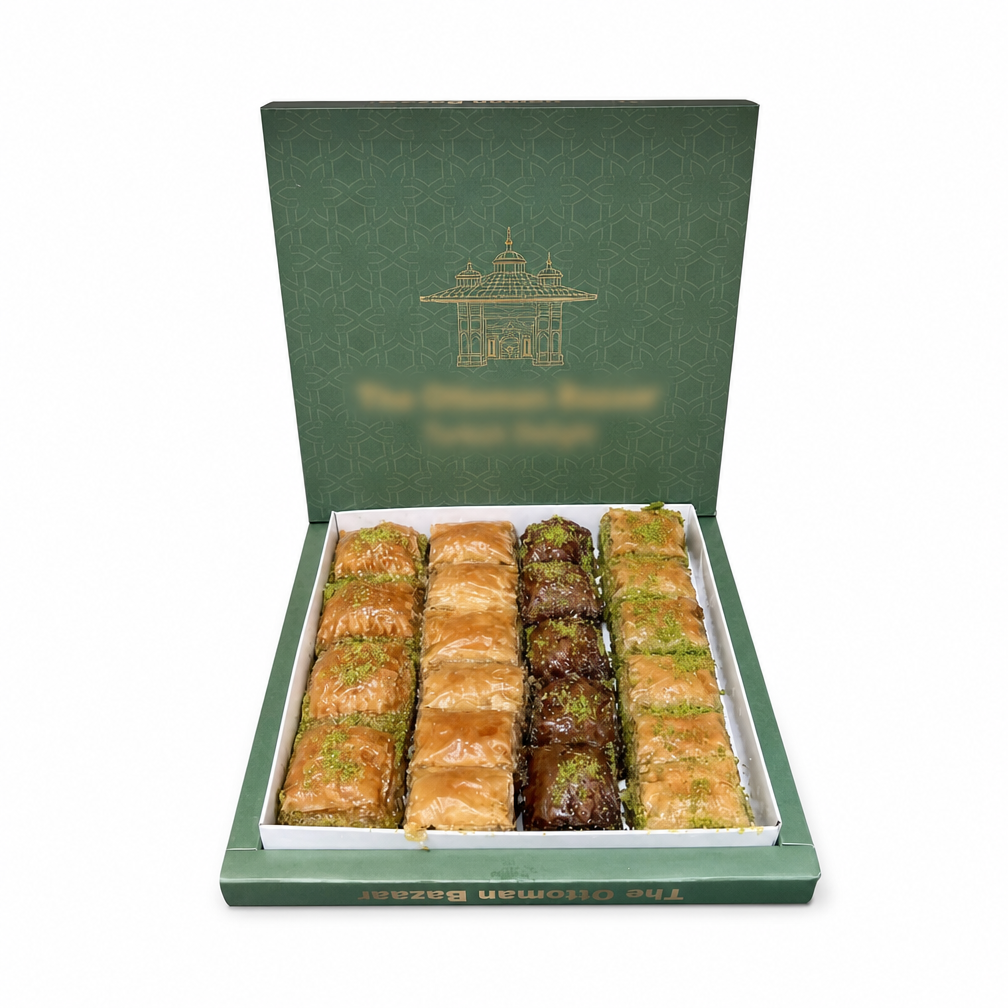
For assorted baklava boxes, dividers help keep flavors separate and pieces neatly arranged. Use only as much internal packaging as necessary to protect the product.
Create Packaging for Gifting and Special Occasions
Baklava is often purchased for holidays, weddings, family gatherings, and corporate gifts. Different box sizes and finishes can help a business serve these occasions without maintaining an unnecessarily large inventory.
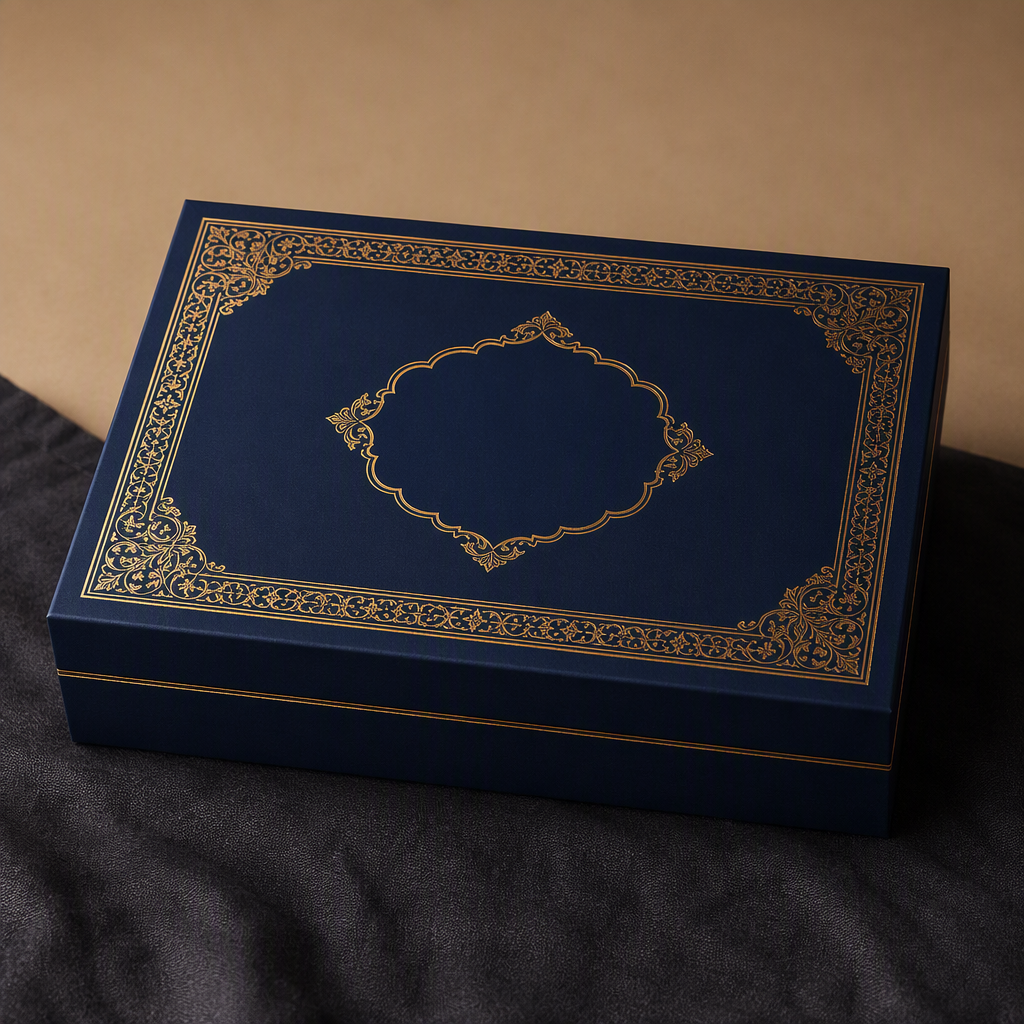
Consider offering a standard everyday box alongside a premium gift version. The gift box might include a more refined sleeve or a reusable presentation feature, provided the additional materials serve a clear purpose.
A thoughtful unboxing experience does not need to be complicated. Secure closures, clean printing, a well-arranged product, and clear product information can make a strong impression.
Calculate the Total Packaging Cost
When comparing Eco-Friendly Baklava Boxes, look beyond the price per unit. Include shipping, storage, printing plates or setup charges, minimum order quantities, and any extra liners or inserts.
For example, a slightly more expensive box may offer better stacking strength and reduce damage during delivery. On the other hand, a premium custom box may not be worthwhile for products sold mainly as everyday snacks.
Calculate the total cost per packaged order and compare it with the expected benefits. This makes it easier to select packaging that supports both sustainability goals and profit margins.
Ask Suppliers for Verifiable Information
A reliable packaging supplier should be able to explain where its materials come from and how its products are manufactured. Depending on the material, useful documentation may include recycled-content information, responsible-sourcing certifications, food-contact compliance records, and testing results for compostability.
Look for certifications relevant to the specific claim being made. For example, FSC or PEFC certification relates to responsible forest sourcing, while recognized compostability standards address particular composting conditions.
These certifications are not interchangeable. A responsibly sourced paper box is not automatically compostable, and a compostable product is not necessarily recyclable through local paper-recycling systems.
Order Samples Before Making a Bulk Purchase
Never rely entirely on product photos or a supplier's description. Request samples in the exact size, material, and finish you plan to purchase.
Test the boxes with your actual baklava, including your most syrup-heavy varieties. Check the lid fit, stacking strength, grease resistance, printing quality, and performance during delivery.
It is also worth asking about lead times, repeat-order consistency, customization options, and minimum quantities. A supplier that can maintain reliable quality is often more valuable than one offering a very low initial price.
Do Not Rely on Green Marketing Claims Alone
Terms such as "green," "natural," and "eco-friendly" can sound appealing, but they do not always explain a product's actual environmental performance.
Ask specific questions. Does the box contain recycled material? Is it certified for a particular sourcing or compostability standard? Can customers dispose of it through commonly available local facilities?
Keep environmental claims clear, accurate, and supported by evidence. This also helps your business communicate honestly with customers who want to make informed purchasing decisions.
Avoid Oversized Boxes and Excessive Packaging
A large box may look impressive, but empty space can allow baklava pieces to move during transportation. It also uses more material and occupies more room in storage and shipping.
Choose dimensions that fit your product range, leaving enough space for protective inserts where necessary. Standardizing a few useful box sizes can reduce inventory complexity and make ordering easier.
Avoid adding extra plastic bags, ribbons, and decorative layers unless they serve a clear purpose. Every additional component should be evaluated for its protective value, presentation benefits, and disposal requirements.
Consider the Local Waste System
The environmental value of packaging depends partly on what happens after the customer uses it. Compostable packaging may require access to a suitable composting facility, while recyclable packaging needs to meet local collection and processing requirements.
For example, paper packaging contaminated with significant food residue may not be accepted in every recycling program. A compostable liner may also need to be separated from the paperboard box.
Give customers simple disposal guidance when appropriate, and check local requirements before making claims about recyclability or compostability. Practical information can make sustainable packaging easier to use correctly.
Choosing the right Eco-Friendly Baklava Boxes in 2026 means finding a balance between environmental responsibility, food safety, attractive presentation, and cost. The best packaging is not necessarily the one with the most sustainability claims or the most expensive design. It is the one that protects your baklava, reflects your brand, and makes sense for your customers and local waste-management systems.
Start by selecting a suitable material, checking grease resistance and food-contact safety, and choosing a design that minimizes unnecessary components. Then compare suppliers, review relevant certifications, calculate the total cost, and test samples before committing to a large order.
Most importantly, treat sustainable packaging as an ongoing improvement rather than a one-time purchase. As your business grows, review customer feedback, packaging performance, and material options regularly. By making informed choices, your bakery can deliver delicious baklava in packaging that looks professional, performs reliably, and supports a more responsible approach to food packaging.
Eco-Friendly Baklava Boxes are commonly made from kraft paper, recycled paperboard, molded fiber, or other responsibly sourced materials. Some designs include grease-resistant coatings or food-grade liners to protect baklava from oil and syrup. The best material depends on your product, packaging requirements, and local recycling or composting facilities.
Yes, provided they are designed for oily and moisture-rich foods. Look for boxes with suitable grease resistance, strong structural support, and food-contact compliance. For particularly syrupy baklava, a compatible food-grade liner or tray may offer extra protection. Always test packaging with your actual products before placing a bulk order.
Some Eco-Friendly Baklava Boxes are recyclable, while others may be certified compostable under specific conditions. However, these terms are not interchangeable. Coatings, plastic windows, adhesives, and food residue can affect disposal options. Check the supplier's documentation and confirm which materials are accepted by local recycling or composting facilities.
Start by comparing material quality, box dimensions, minimum order quantities, printing costs, and shipping fees. Buying standard sizes in bulk may reduce the unit price, while choosing appropriately sized boxes can minimize material waste. Request samples from several suppliers and evaluate durability, grease resistance, and presentation before making a final decision.
Sustainable packaging can help bakeries communicate their commitment to responsible business practices while creating a memorable customer experience. Natural kraft finishes, simple branding, and well-designed inserts can make baklava look appealing without excessive decoration. To build customer trust, support environmental claims with verifiable information and provide clear disposal instructions when appropriate.
Post time: Oct-13-2026


