


How to create a cardboard box: A Complete Guide from Material Selection to Forming
Cardboard boxes are almost everywhere in logistics, e-commerce and daily storage scenarios. Although it is quite convenient to purchase cardboard boxes on the market, in some cases – such as when you need special sizes, want to cut costs, or wish to do some handcrafting – making your own cardboard boxes is not only practical but also brings a sense of satisfaction. This article will provide you with a detailed explanation on how to make a sturdy, beautiful and customizable cardboard box from scratch by optimizing the logical structure. The content is original and combined with more efficient production ideas, allowing you to master the most practical methods at once.
How to create a cardboard box: Preparations before making cardboard boxes
Before you start working, thorough preparation can prevent unnecessary rework and also make your cartons stronger and more neatly formed.
Prepare the necessary tools
To make a versatile cardboard box, you need the following tools:
Corrugated cardboard: It is recommended to choose three or five layers, and the thickness should be determined based on the load-bearing requirements.
Paper cutter/utility knife: Make sure the blade is sharp to ensure a smooth cutting edge.
Ruler or tape measure: used for precise measurement of dimensions.
Pencil or marker pen: used for drawing broken lines and tangent lines.
Tape (packing tape) : Used for sealing boxes and reinforcing.
Double-sided tape or white latex adhesive (optional) : Makes the interface more secure.
Cutting pad: Protects the desktop and makes cutting smoother.
Determine the size of the carton
Size determines the usage scenario and is also the core of the carton structure.Please note when determining the size:
Internal dimensions take priority: If specific items are to be stored, the length, width and height of the items should be measured first.
Appropriate redundant space: Reserve 0.5 to 1cm around the item to reduce compression damage.
Load-bearing considerations: If heavier items need to be supported, the bottom should be made of thicker cardboard or have additional reinforced structures.

How to create a cardboard box: Draw the expansion diagram and crop steps
The shape of a cardboard box may seem simple, but the unfolded drawing during its production needs to be accurate; otherwise, problems such as tilting and misalignment may occur.
Basic Understanding of Carton Structure
Most cardboard boxes are standard slotted boxes (RSC), and their structure consists of:
Four side panels
Four covers, top and bottom
A bonding sheet serving as a connection
Understanding the structure can help you draw precise development diagrams more quickly.
Steps for drawing an expanded diagram
Draw the four sides of the box on the cardboard
Draw in sequence: Side A → Side B → Side C → Side D
The widths of the four sides remain unchanged and their heights are consistent.
Leave a 2-3 cm adhesive sheet beside the last side.
Draw the upper and lower covers
Corresponding covers should be drawn above and below each side.
The width of the cover should be about half of the width of the side panel to maintain symmetry.
Mark the broken line
Use a ruler to draw lines and gently scratch with a blade (do not cut completely), so that the edges will be straighter when folded.
Cut the outer edge
Cut along the drawn image, keeping the knife vertical to make the edges smooth and beautiful.
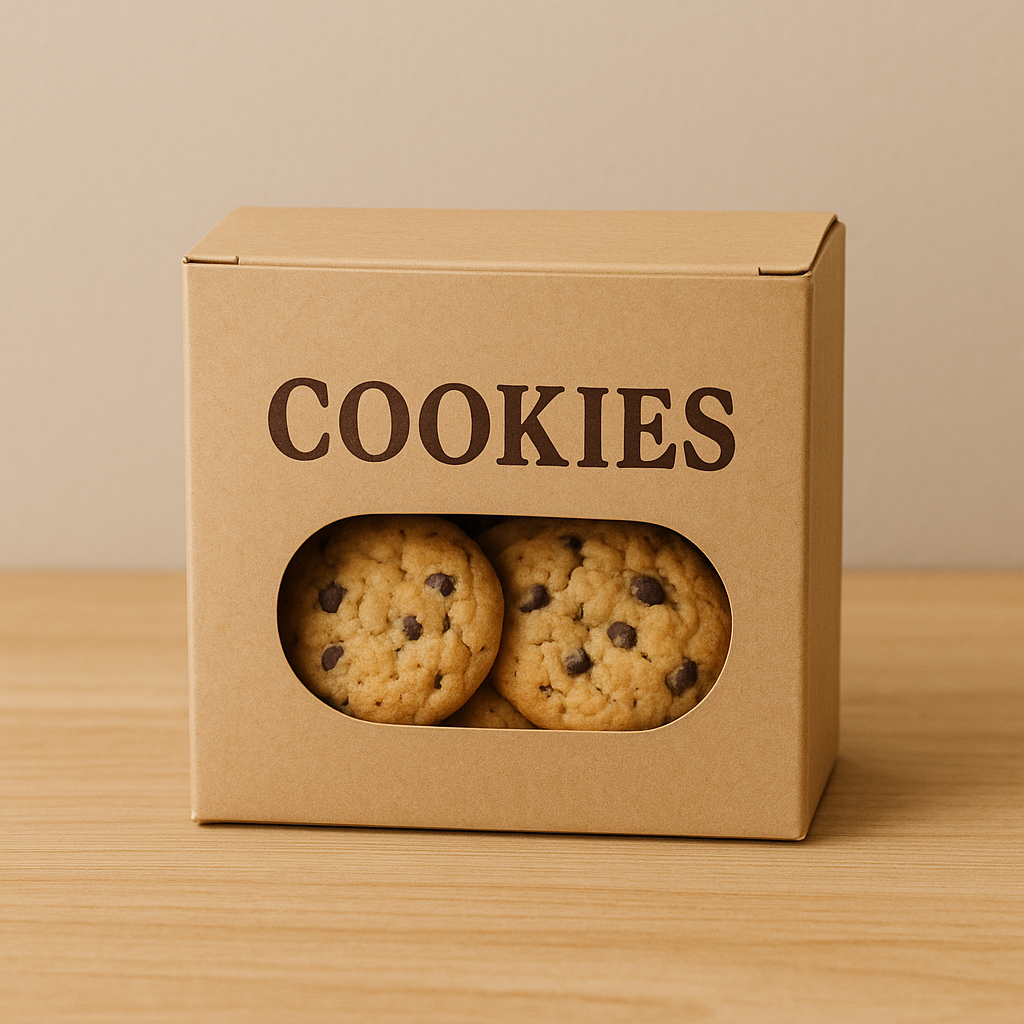
How to create a cardboard box: Folding and assembling cardboard boxes
After the drawing and cutting are completed, the actual assembly of the cartons can begin.
Folding the main body forming
Gently fold the four sides along the crease line
If the crease is carved in advance, this step will go very smoothly.
Use adhesive sheets to complete the closure
Apply white latex glue or double-sided tape to the inner side of the adhesive sheet, and then stick it onto side A or side D.
If you want it to be firm, you can also stick an additional transparent tape on the outside for reinforcement.
Cover the back and reinforce the structure
First, fold the two small caps, and then fold the large cap
The standard sealing sequence can enhance stability.
The bottom is reinforced with cross-reinforcing tape
It is recommended to use the “H-shaped bottom sealing method” : stick one piece of glue along the middle seam and one piece of glue along each of the left and right edges.
If heavy objects are to be loaded, an additional layer of cut cardboard can be added at the bottom.
How to create a cardboard box: Tips for Making cartons more perfect
Many people find that self-made cardboard boxes are prone to collapse, unattractive or have dimensional deviations. The following tips can significantly increase the success rate.
How to make cardboard boxes more durable?
Use five-layer corrugated cardboard: can bear greater weight.
Attach reinforcing strips on the inner side: especially suitable for tall boxes.
The corners are reinforced with triangular cardboard, which can significantly enhance the three-dimensionality and stability.
How to make cardboard boxes more aesthetically pleasing?
Use a metal ruler to assist in cutting and keep the edges straight
Using an indentation device instead of the back of the knife makes the crease lines smoother
If it is used for brand packaging, the appearance stickers or printed patterns can be designed in advance
How to create a cardboard box: Common Issues and Optimization Suggestions
What should I do if it gets crooked easily when cutting?
The blade is kept at a 90° Angle to the cardboard
Use a ruler as a guide and cut in two to three steps instead of cutting through all at once
Isn’t the carton square after it’s formed?
Both too shallow and too deep crease marks will affect the formation
If the edges are not aligned during assembly, they can be temporarily fixed with clips first and then bonded
What should I do if the cardboard is not big enough?
The splicing method can be used: stick a wide tape on the back of the splicing point for reinforcement
Try to place the splicing points on the side or top of the carton to avoid the bottom load-bearing position

Conclusion
Making homemade cardboard boxes may seem simple, but to truly achieve stability, refinement and customizability, one still needs to master the correct measurement, cutting and folding techniques. This article, through a logical structure, helps you master the complete process of making cartons from scratch, from preparing tools to drawing development diagrams, and then to forming and reinforcing methods.
Whether you want to make a special-sized packaging box, a DIY creative storage box, or hope to master a practical skill, we believe this article can provide you with comprehensive, practical and original references. Wish you a smooth production and feel free to keep asking me questions about other handicraft topics!
Post time: Nov-22-2025


