


I'm going to start with something that might ruffle a few feathers. Most people searching for a "gift box supplier China" are doing it wrong. They open Google, type the phrase, click the first few sponsored links, send a generic inquiry to ten factories, and wait. Then they get flooded with quotes that range from suspiciously cheap to eye-wateringly expensive, none of which they can properly compare because every supplier is quoting something slightly different. Three weeks later, they're more confused than when they started.
I've been on both sides of this equation. I've worked with Chinese packaging factories, and I've helped Western brands navigate the sourcing process. The difference between a smooth experience and a nightmare usually comes down to how you approach the search. It's not about finding the cheapest supplier. It's about finding the right one. Let me walk you through what that actually looks like.
Let's address the elephant in the room first. Why China? Why not source domestically or from another country?
The answer is a combination of factors that are hard to replicate elsewhere. First, the manufacturing ecosystem. China has spent decades building an incredibly dense network of packaging suppliers, material providers, and finishing specialists. Need a specific shade of specialty paper? There's a mill nearby. Need foil stamping in a unique metallic tone? Someone down the road does it. This ecosystem means faster production, more options, and better prices than almost anywhere else.
Second, the range of capabilities. A gift box supplier China isn't just offering one type of box. They're offering rigid boxes, folding cartons, magnetic closure boxes, drawer-style boxes, and every finishing technique you can imagine—foil stamping, embossing, debossing, spot UV, soft-touch lamination, edge painting. A single factory can handle your entire packaging line, which simplifies everything.
Third, and this is the big one, price. The same rigid gift box that costs $4.00 to produce domestically might cost $1.20 from a Chinese factory. At scale, that gap is transformative. It's the difference between a healthy margin and a struggling one. It's the difference between being able to afford premium packaging and settling for something basic.
But—and this is important—price alone shouldn't drive your decision. The cheapest supplier is often the most expensive in the long run when you factor in quality issues, delays, and communication headaches. The goal is finding a supplier who delivers the right balance of quality, reliability, and cost.
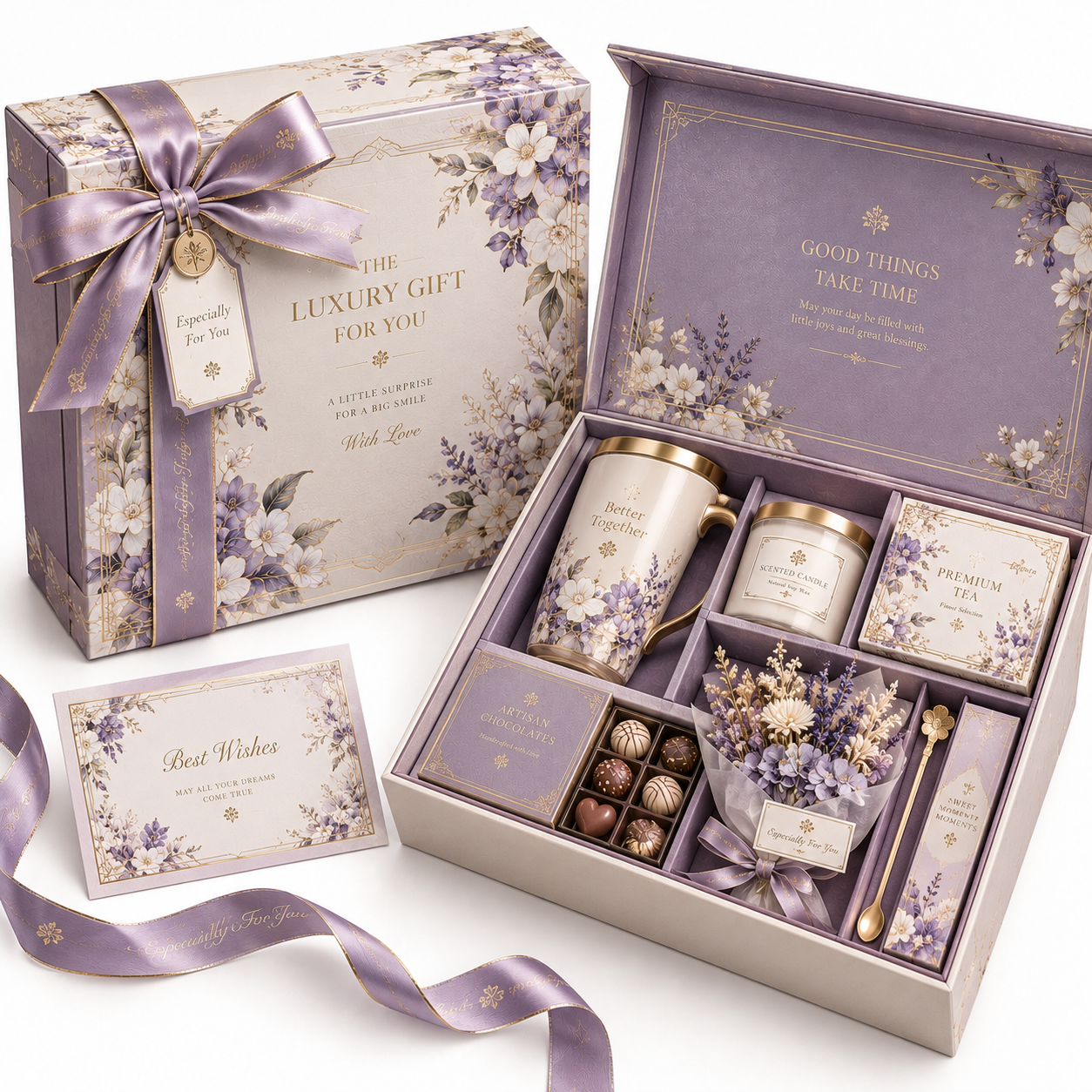
When you're evaluating potential suppliers, price is the starting point, not the finish line. Here's what separates the good ones from the pretenders.
Certifications matter enormously. If your gift boxes will touch food—chocolates, teas, specialty foods—you need food-safe materials. Look for ISO 22000 or BRCGS certification. These aren't just pieces of paper. They represent audited systems that ensure consistent quality and safety. A supplier who can't produce these documents isn't equipped to serve food brands, no matter how nice their website looks.
Manufacturing capability is the next filter. Does the factory do everything in-house—printing, die-cutting, gluing, finishing—or do they outsource some steps? In-house capability means better quality control and faster production. Outsourcing adds complexity and potential failure points. Ask directly: "What percentage of production happens in your facility?" The answer tells you a lot.
Experience with your specific product category matters too. A factory that makes gift boxes for electronics might not understand the grease-resistance requirements for food packaging. A factory that specializes in luxury rigid boxes might struggle with high-volume folding cartons. Look for a supplier whose portfolio aligns with your needs. Ask for references from clients in your industry.
Communication quality is the intangible factor that often makes or breaks the relationship. During the inquiry phase, pay attention to how they respond. Are they answering your specific questions, or giving generic reassurances? Are they flagging potential issues proactively, or just telling you what you want to hear? A supplier who communicates well during sales will communicate well when problems arise. A supplier who's vague now will be a nightmare later.
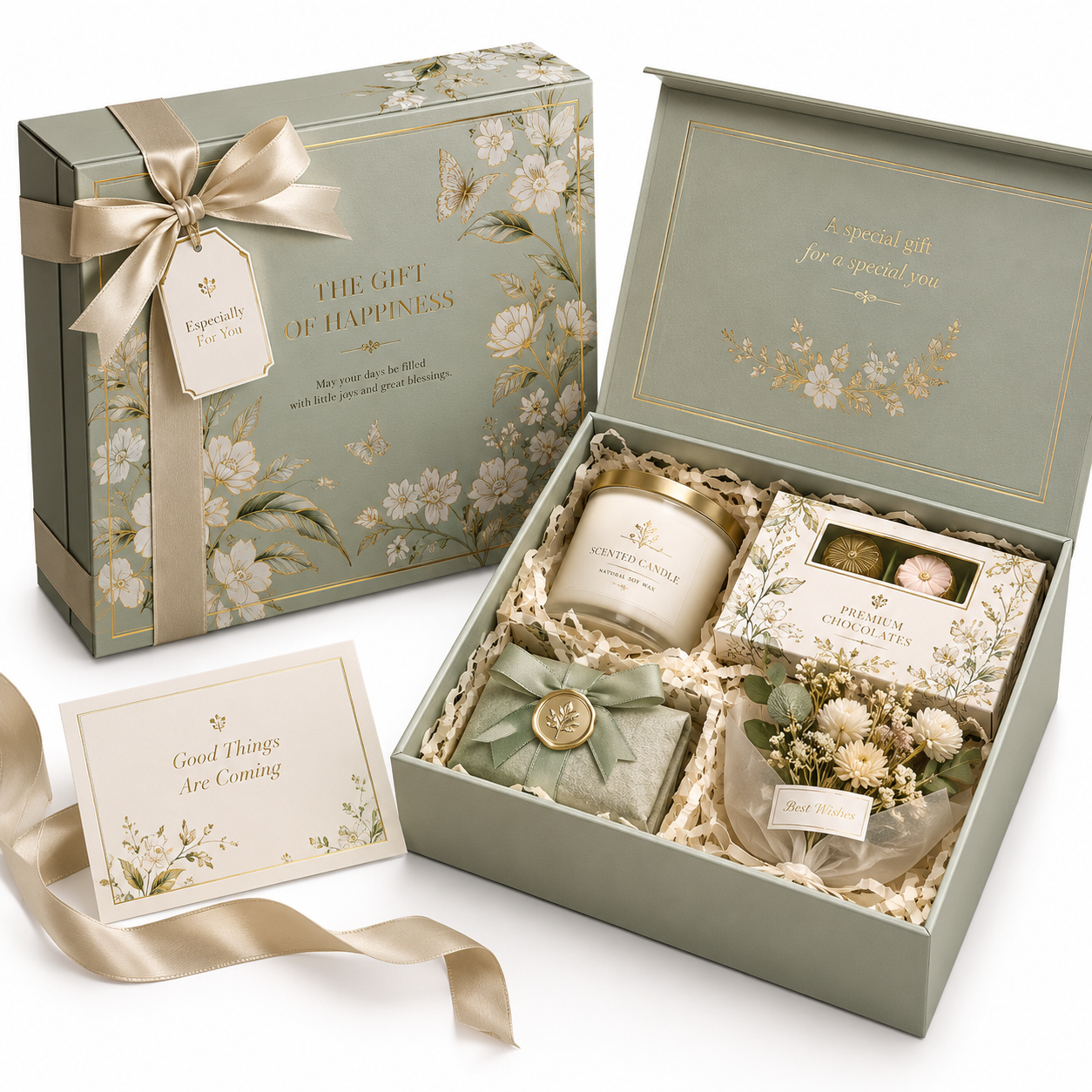
We are also offering finishing options such as glossy and matte look which gives the custom printed candy boxes a final touch. They can add sparkle to your design and also give added protection.
| Feature | Application | Cost Impact |
| Printing: Digital | Small quantities, complex color layouts | Low setup cost, high per-unit cost |
| Printing: Offset | High quantities, precise color matching | High setup cost, low per-unit cost |
| Finish: Gloss Lamination | For a bright, eye-catching look; it also protects | Low-Medium |
| Finish: Matte Lamination | For an elegant, classy, modern look | Low-Medium |
| Finish: Spot UV | To show a logo or highlight a specific design | Medium |
| Finish: Foil Stamping | For products with luxury and a premium feel (gold, silver) | High |
| Finish: Embossing/Debossing | Creating the feel of texture and the 3D effect | Medium-High |
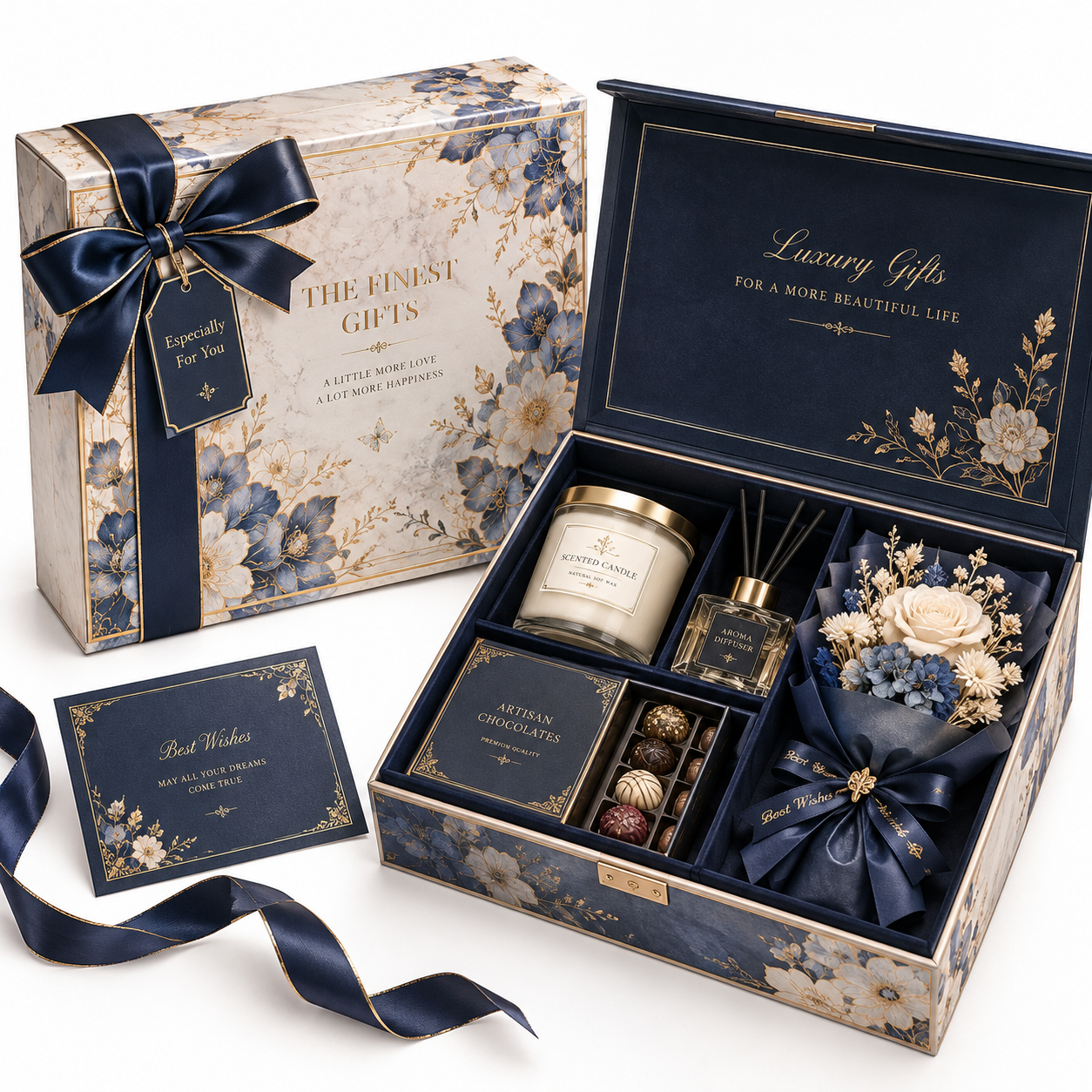
Let's talk money, because this is where expectations often diverge from reality.
The unit price you see on a quote is just one piece of the puzzle. The full cost includes several components that need to be understood upfront. The unit price itself depends on materials, size, finishes, and quantity. A simple folding gift box might be $0.30-0.50 per unit at 5,000 units. A rigid magnetic-closure box with foil stamping could be $1.50-3.00 per unit at the same volume. Custom inserts, special papers, and additional finishes add cost.
Tooling costs are separate and often overlooked. Custom die-cutting requires a cutting die ($50-200). Foil stamping requires a stamping plate ($50-150 per foil color). Embossing requires an embossing die ($50-150). These are one-time costs that get amortized across your order. At 1,000 units, a $200 die adds $0.20 per box. At 10,000 units, it adds $0.02. Volume matters enormously.
Shipping is the hidden cost that surprises newcomers. A container full of assembled rigid boxes is mostly air. You're paying to ship that air. Flat-packed folding cartons are far more efficient. Ask your supplier about nesting options and flat-pack designs. The difference in freight cost can be thousands of dollars.
Duties and taxes vary by country. Check your country's tariff rates for packaging materials. Some countries have trade agreements that reduce or eliminate duties. Others don't. Factor this into your landed cost calculation.
The final piece is payment terms. Most Chinese factories require a deposit—typically 30%—to start production, with the balance due before shipping. Some established relationships can negotiate different terms. Be cautious of suppliers demanding 100% upfront. That's not standard and often signals a lack of confidence in their own production.
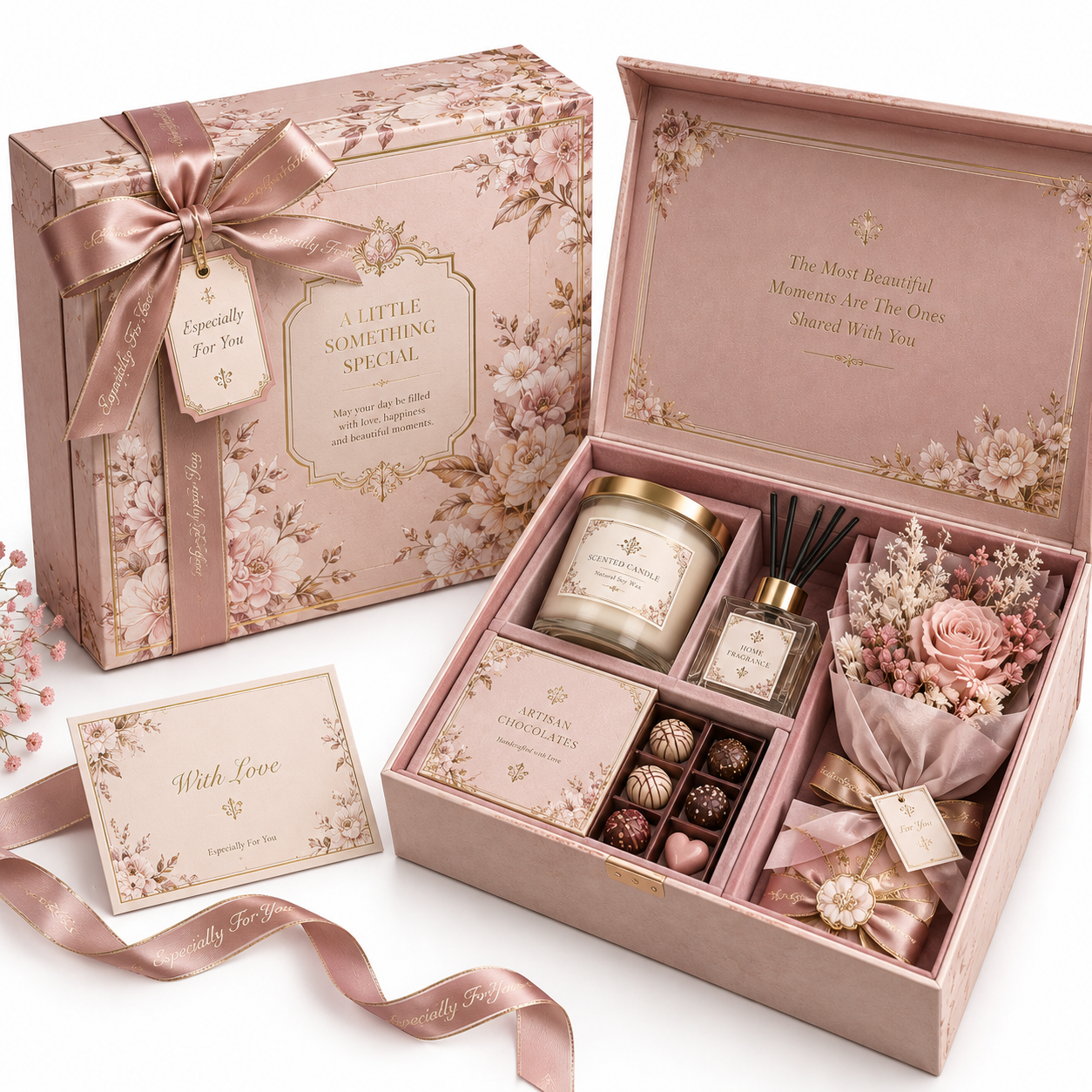
Sampling is where your gift box goes from concept to reality. It's also where a lot of projects go wrong. Here's how to get it right.
The first sample you receive should be a pre-production sample. This is made using the actual materials and processes that will be used in the full run. It represents exactly what you'll receive. Check everything. The board weight. The color accuracy. The finish quality. The fit and alignment of the lid. The strength of the magnetic closure. The cleanliness of the edges. Put your product inside and see how it fits and feels.
The second sample should be a production sample. This is pulled from the actual manufacturing run, not made separately. It confirms that the bulk production matches the approved pre-production sample. If there's a discrepancy—different color, thinner board, weaker magnets—you catch it before the entire order ships.
Don't skip sampling to save time. I've seen brands try to rush and end up with 10,000 boxes that don't match what they approved. The cost of a reprint is ten times the cost of a sample. The timeline for a reprint is twice as long. Sampling is not optional.
When providing feedback on samples, be specific. "The color looks off" is vague. "The red is too orange—it needs to match Pantone 186C" is actionable. Use Pantone codes for colors. Use physical references for textures and finishes. The more precise your feedback, the better the final product.
I've seen the same mistakes trip up smart business owners repeatedly. Let me save you the pain.
Mistake one: choosing on price alone. The cheapest quote is rarely the best value. It often means thinner materials, less experienced staff, or cutting corners on quality control. Look at the total picture—materials, certifications, communication, track record—not just the number on the quote.
Mistake two: not clarifying what's included. Does the quote include tooling? Shipping? Duties? Packaging for transport? A quote that looks cheap might not include everything, and those extras add up fast. Ask for a full landed cost breakdown before comparing suppliers.
Mistake three: skipping the sample. I've said it before, but it bears repeating. Always get a physical sample. Always test it with your actual product. Always compare it against the approved pre-production sample before accepting the bulk order. This step prevents expensive mistakes.
Mistake four: ignoring Chinese holidays. Chinese New Year shuts down factories for 2-3 weeks, and the weeks surrounding it are chaotic. Golden Week in October is another slowdown. If your timeline is tight, plan around these periods. Build buffer into your schedule.
Mistake five: poor communication. Vague inquiries get vague quotes. Unclear feedback gets unsatisfactory samples. Unresponsive suppliers get frustrated clients. Be clear, be specific, be prompt. The quality of your communication directly influences the quality of your outcome.
It depends on the box type and printing method. Digitally printed folding cartons can start as low as 200-500 units. Offset-printed boxes typically require 1,000-3,000 units because of plate setup costs. Rigid luxury boxes often start at 500-1,000 units. If you're a small brand testing the waters, ask specifically about low-MOQ options and digital printing. Many factories are more flexible than their published MOQs suggest.
Start with documentation. Ask for their business license and food safety certifications if applicable. Check if they've been audited by third parties like SGS or Intertek. Ask for client references and actually call them. Request a video tour of their factory—legitimate suppliers are proud to show their operations. Be wary of suppliers who can't or won't provide these basics.
Budget 8-12 weeks for a typical project. That includes 1-2 weeks for initial communication and quoting, 2-3 weeks for sampling and revisions, 3-4 weeks for production after approval, and 2-4 weeks for shipping. Rush timelines are possible but expensive. If you're ordering for a specific season or holiday, start the process at least four months ahead.
Yes, and the options have expanded dramatically. FSC-certified board, recycled paper wraps, water-based coatings, and compostable PLA windows are all widely available. Some suppliers specialize in sustainable packaging and can guide you toward the best options for your brand. Expect a slight premium over conventional materials, but the gap is closing as demand increases.
Document everything immediately. Take photos and videos of the issue. Contact your supplier right away—most reputable factories will work with you to resolve problems. If the issue is significant, you may need to file a claim with your freight forwarder or shipping insurance. This is why third-party inspection before shipping is worth the investment. Catching problems at the factory is far easier than resolving them after the goods have crossed an ocean.
Post time: Sep-19-2026


