


What Does Migration-Safe Mean?
In food packaging, migration refers to the transfer of substances from packaging materials into food. These substances may include printing ink components, adhesives, coatings, or other chemical compounds. Under certain conditions, such as prolonged contact, high temperatures, or unsuitable storage, these substances may move from the packaging into the chocolate.
Migration-safe packaging is designed and tested to minimize this risk under its intended conditions of use. For chocolate manufacturers, this means selecting materials that are suitable for food packaging and checking that the complete packaging system meets applicable food contact requirements.
Why Chocolate Needs Special Protection
Chocolate contains cocoa butter, which can interact with certain packaging substances, especially when the packaging is poorly designed or uses unsuitable materials. Dark chocolate, milk chocolate, pralines, and filled chocolates may also have different packaging needs.
A well-designed paper box provides structural protection and helps maintain a clean, professional presentation. When combined with a suitable inner liner, wrapper, or food-contact barrier, it can also help reduce direct contact between the chocolate and printed outer surfaces.
The safety of food packaging starts with material selection. Not every paperboard product is suitable for direct food contact, even if it looks clean or feels thick. Manufacturers need to consider the paperboard grade, recycled content, coatings, inks, adhesives, and the way these materials work together.
Food-Grade Paperboard and Its Benefits
Food-grade paperboard is selected for its suitability for specific food packaging applications. Depending on the product design, manufacturers may use virgin-fiber paperboard or other appropriately assessed materials. The choice depends on the intended contact conditions, required strength, appearance, and relevant regulatory requirements.
For premium chocolate products, paperboard can offer a balance of durability and visual appeal. It is lightweight, easy to print, and can be converted into different shapes and sizes. These features make it suitable for chocolate bars, gift boxes, truffle packaging, and seasonal confectionery collections.
Coatings, Liners, and Barrier Protection
Chocolate is sensitive to moisture, odors, and temperature changes. Depending on the packaging application, an inner liner or functional barrier may help protect the product from unwanted contact and environmental exposure.
However, a coating should never be treated as an automatic guarantee of safety. Its performance depends on the material composition, thickness, intended use, and supporting test data. Food-contact suitability should be evaluated for the finished packaging rather than assumed from a supplier's general description.
The Role of Inks and Adhesives
Printing helps brands stand out, but the ink system must also be appropriate for the packaging structure. Low-migration inks, controlled printing processes, and suitable adhesives can help reduce potential contamination risks. Where possible, printed areas should be separated from direct food contact through an appropriately designed inner layer.
Working with a packaging supplier that can provide material specifications, declarations of compliance where applicable, and relevant test reports makes the selection process much easier.
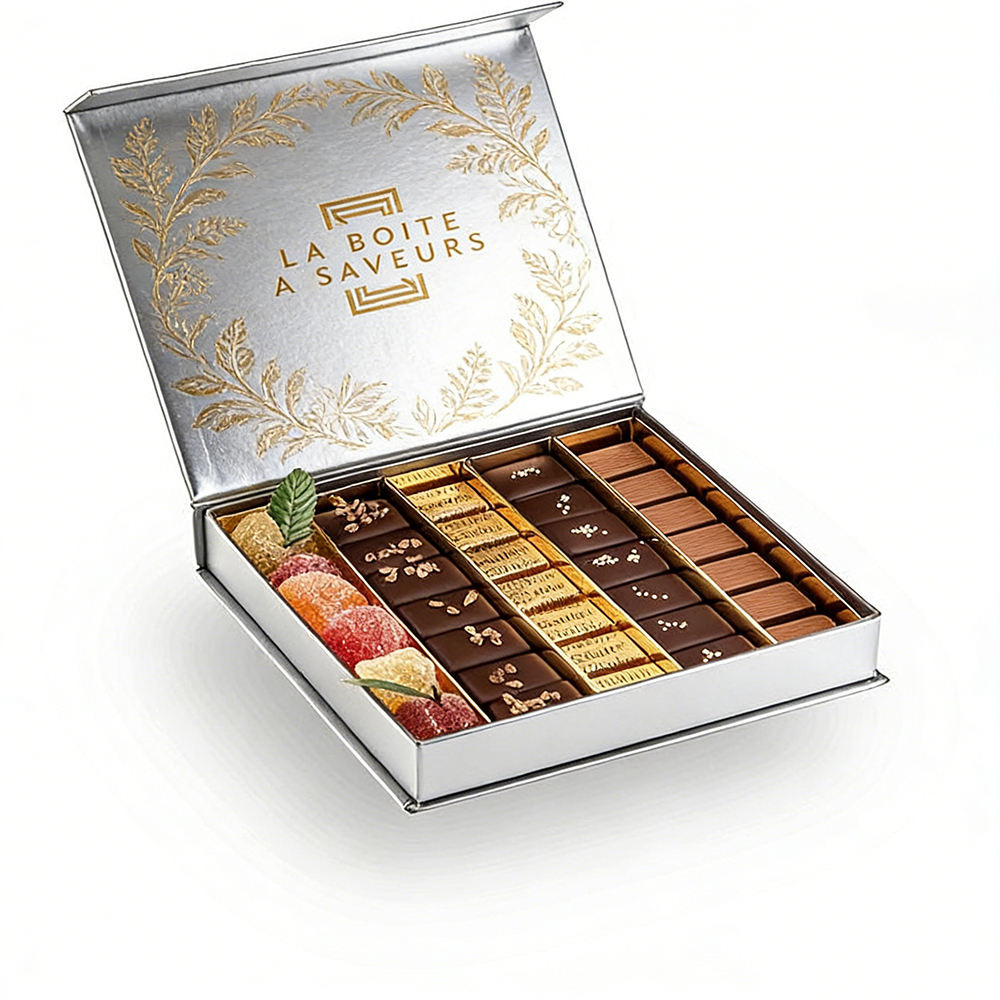
Good packaging design does more than make a product look attractive. It also considers how the box is manufactured, assembled, transported, stored, and opened by the customer. For chocolate brands, these details can make a real difference to product quality and packaging reliability.
Structure and Direct Food Contact
One of the first design decisions is whether the chocolate will touch the paperboard directly. For many products, a separate food-grade wrapper or tray creates a useful barrier between the chocolate and the printed exterior.
This approach allows brands to maintain colorful graphics and premium finishes on the outside while using a suitable material for the food-contact surface. The chosen structure should be assessed as a complete system, including folds, seams, glue points, inserts, and any other components that may contact the product.
Printing and Finishing Options
Embossing, foil stamping, matte finishes, and spot UV effects can give chocolate packaging a more distinctive look. These features are particularly popular for luxury gift boxes, handmade chocolates, and limited-edition products.
Still, visual quality should not come at the expense of food safety. Finishing materials need to be suitable for their intended position in the package, and the production process should control the possibility of ink transfer, set-off, or contamination during stacking and storage.
Practical Design for Different Chocolate Products
A slim chocolate bar usually needs a compact box with enough rigidity to prevent bending. Truffles and pralines may require individual cavities or inserts to stop pieces from moving around. Gift assortments often need a stronger outer structure because customers expect both protection and presentation.
By matching the design to the product, businesses can reduce unnecessary packaging, improve the customer experience, and create a box that works well throughout the distribution process.
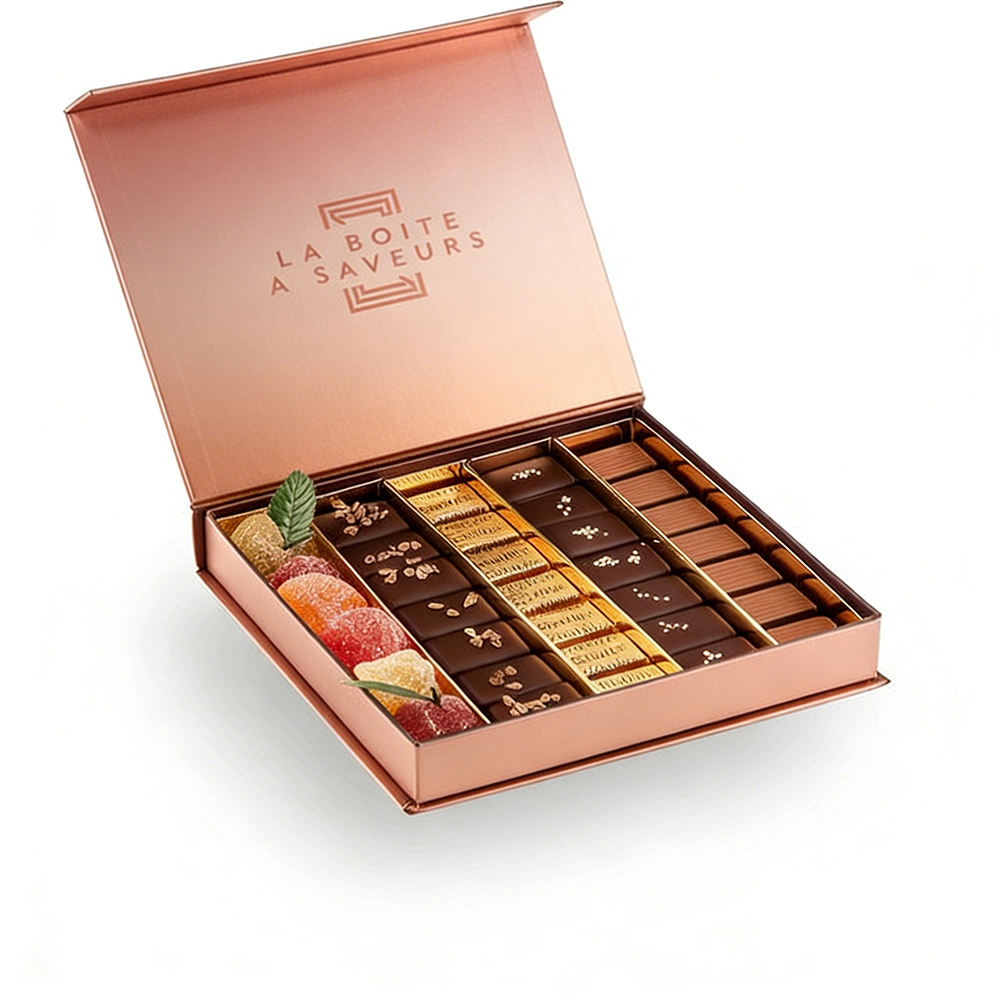
Food packaging safety should be supported by evidence, not just marketing claims. Terms such as "food-grade," "eco-friendly," and "migration-safe" can be useful descriptions, but they do not replace technical documentation or appropriate testing.
Understanding Migration Testing
Migration testing evaluates whether substances can transfer from packaging into food or an appropriate food simulant under defined conditions. The test method and conditions depend on the packaging materials, food type, contact duration, temperature, and applicable regulations.
For chocolate packaging, the assessment should consider the actual intended use. A box designed for short-term storage at room temperature may require a different evaluation from packaging intended for extended storage or exposure to elevated temperatures.
Checking Applicable Regulations
Requirements vary by market. In the European Union, food-contact materials are subject to the general safety requirements of Regulation (EC) No 1935/2004, alongside relevant rules for manufacturing practices and specific material categories. Paper and board packaging may also be subject to national requirements and other applicable measures.
In the United States, food-contact materials must comply with relevant requirements under the Federal Food, Drug, and Cosmetic Act and applicable FDA regulations. The exact requirements depend on the substances used and their intended conditions of use.
Brands selling internationally should confirm the rules that apply in each destination market rather than assuming that one certificate covers every country.
Documentation Buyers Should Request
Before placing a large order, buyers should ask suppliers for material specifications, relevant compliance statements, migration test results where appropriate, and information about inks, coatings, and adhesives.
It is also useful to clarify whether the documents cover the complete finished packaging or only individual raw materials. Traceability and consistent production controls help businesses manage changes in suppliers, materials, and manufacturing processes.
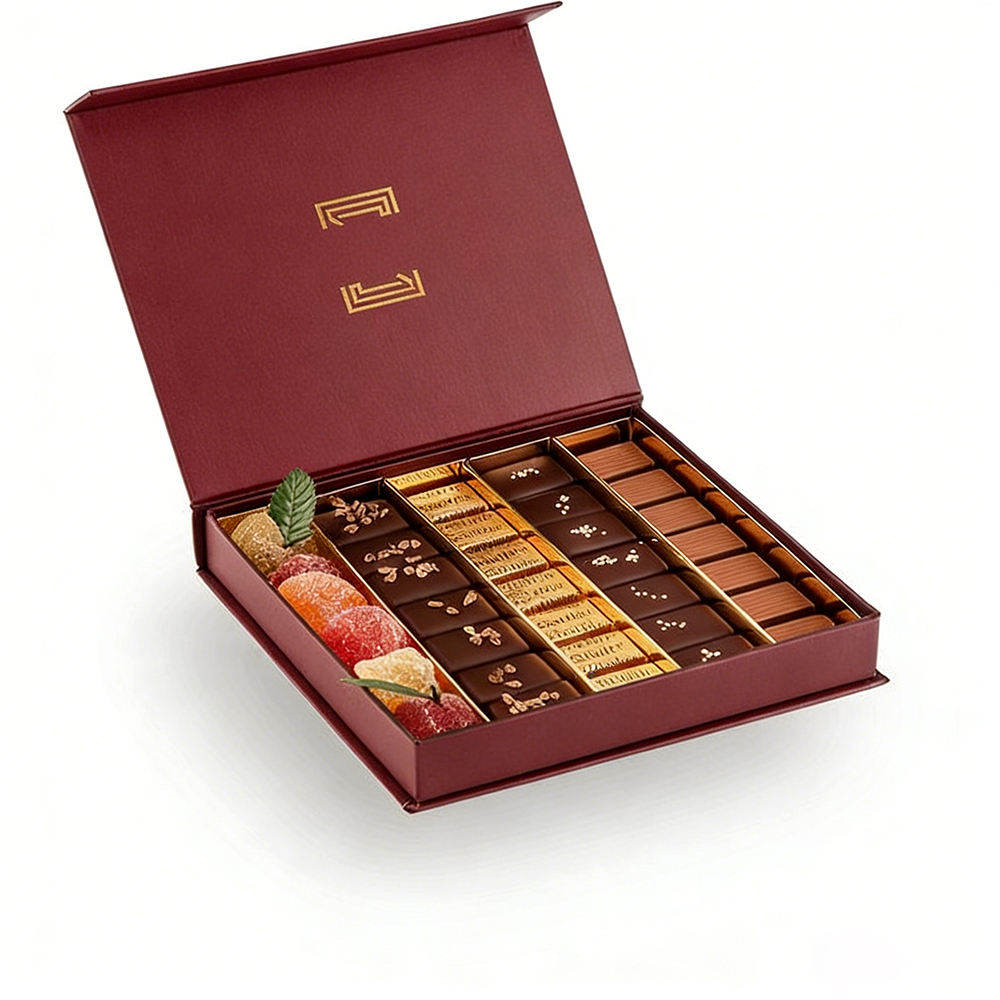
Sustainability has become an important consideration for chocolate brands. Customers often prefer packaging that uses fewer materials, can be recycled through available local systems, and still protects the product effectively. Paperboard can support these goals, but the overall design needs careful planning.
Balancing Recyclability and Food Safety
Paper-based packaging may be recyclable when its construction and local collection systems allow it. However, plastic laminates, metallic layers, coatings, and mixed-material inserts can complicate recycling.
Brands should review the full packaging structure before making environmental claims. A simpler design may improve recyclability, while a functional barrier may still be necessary for product protection. The best solution balances food safety, shelf life, packaging performance, and end-of-life considerations.
Reducing Material Waste
Right-sized Chocolate Paper Boxes can help reduce excess material and make shipping more efficient. A well-planned box can also improve pallet utilization and limit movement during transportation.
At the same time, removing too much protective material can lead to damaged products and additional waste. Packaging engineers should test structural strength, closure performance, and resistance to normal distribution conditions before finalizing a lighter design.
Choosing Responsible Packaging Suppliers
A reliable supplier should be able to explain where its materials come from, how quality is controlled, and what evidence supports its environmental claims. Depending on the project, buyers may also look for responsibly sourced paperboard and recognized chain-of-custody certification.
Instead of focusing on a single sustainability label, brands should evaluate the complete package. A practical, well-documented design is often more valuable than a product marketed as sustainable without clear supporting information.
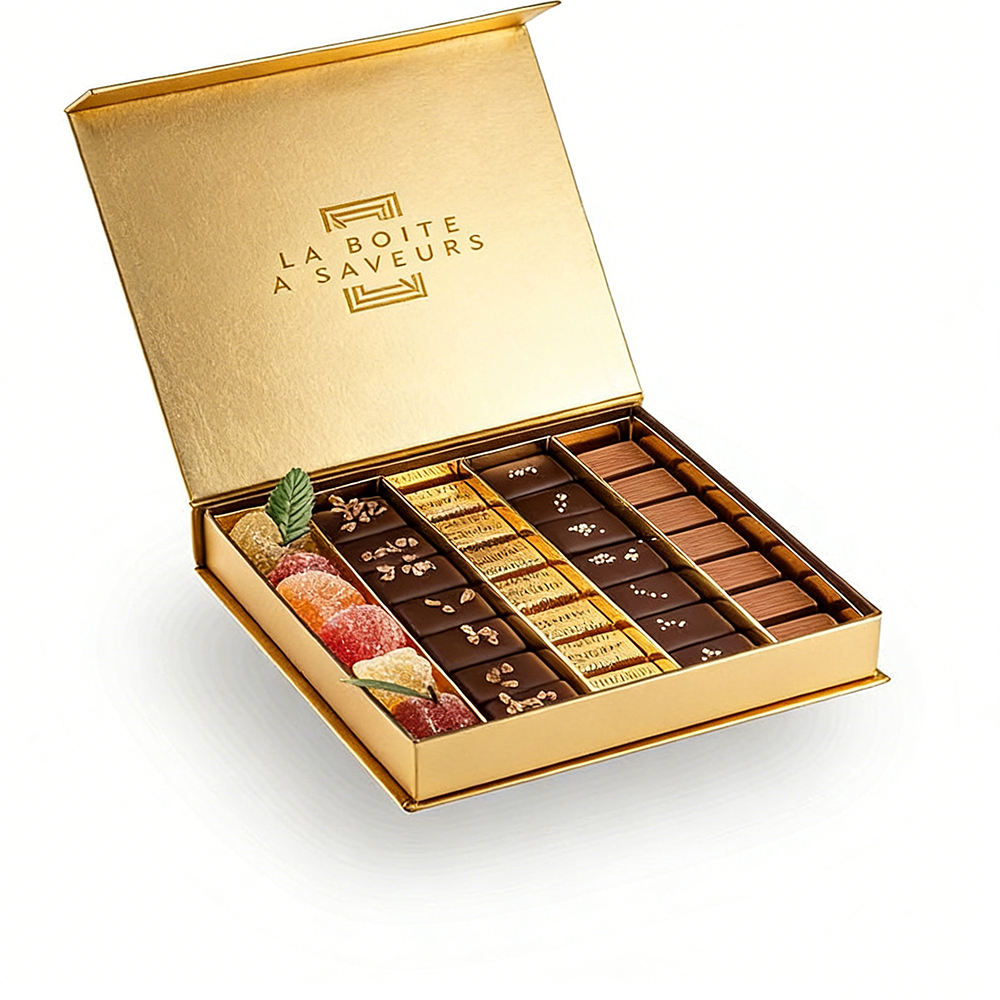
Choosing a supplier is an important step for any chocolate business. Even a well-designed box can cause problems if production quality varies, materials change without notice, or delivery schedules are unreliable. A good supplier should understand both packaging design and the technical requirements of food contact applications.
Evaluate Technical Knowledge and Quality Control
Start by asking how the supplier evaluates paperboard, printing inks, adhesives, and barrier materials. Find out whether it can provide relevant documentation and whether it works with qualified testing laboratories when necessary.
It is also worth discussing quality control during production. Consistent board thickness, accurate cutting, clean folding, and reliable glue application all contribute to packaging performance. For food packaging, manufacturing hygiene and contamination prevention should also be part of the supplier's quality system.
Request Samples Before Bulk Production
A sample order allows your team to assess appearance, strength, assembly, and product fit before committing to a larger quantity. If possible, test the packaging with the actual chocolate product under realistic storage and handling conditions.
Check whether the box closes securely, whether inserts hold the chocolate in place, and whether the materials develop unwanted odors. For higher-risk applications, technical testing should complement these practical checks.
Consider Customization, Cost, and Lead Time
Different businesses have different needs. A small chocolatier may prioritize low minimum order quantities and simple customization, while a large manufacturer may require automated packing compatibility and high-volume production capacity.
When comparing quotes, consider more than the price per box. Printing setup, tooling, testing, shipping, storage, and potential waste can all affect the total cost. Clear communication about specifications, approval samples, production schedules, and change-control procedures can prevent expensive surprises later.
Migration-safe Chocolate Paper Boxes combine thoughtful material selection, functional design, and appropriate compliance checks to help protect chocolate throughout storage and distribution. For brands, the goal is not simply to choose a paper box that looks attractive, but to build a packaging system that supports food safety, product quality, and customer confidence.
Start by identifying the chocolate's contact conditions and protection needs. Then assess the paperboard, inner barriers, printing inks, adhesives, and finishing materials as part of the complete package. Request suitable technical documentation, verify applicable regulatory requirements, and test samples before moving into full production.
Sustainability and visual appeal still matter, but neither should replace safety and performance. By working with a knowledgeable supplier and making decisions based on evidence, chocolate manufacturers can develop packaging that looks professional, performs reliably, and meets the expectations of today's food-conscious customers.
Migration-safe Chocolate Paper Boxes are food packaging solutions designed to minimize the transfer of unwanted substances from packaging materials into chocolate. They use appropriately selected paperboard, inks, adhesives, and coatings to help meet relevant food-contact safety requirements. The complete packaging structure should be assessed for its intended use.
Not all paper boxes are suitable for direct contact with chocolate. Safety depends on the materials used, manufacturing processes, and applicable regulations. Some packaging designs use a separate food-grade inner wrapper or tray to create an additional barrier. Always check the supplier's technical documentation before selecting packaging for direct food contact.
Ask your packaging supplier for material specifications, relevant compliance statements, and migration test reports where applicable. Make sure the documentation covers the intended food type, contact conditions, and finished packaging structure. Additional testing may be necessary when materials, printing systems, or packaging designs change.
Yes. Chocolate Paper Boxes can feature custom sizes, brand colors, printed graphics, embossing, foil stamping, and other decorative finishes. However, the inks, adhesives, coatings, and finishing materials must be suitable for their intended applications. Proper structural design and manufacturing controls help maintain packaging quality while achieving the desired appearance.
Yes. Paper-based packaging can offer an attractive and practical option for premium chocolate products. Brands can explore responsibly sourced paperboard, right-sized designs, and recyclable structures where local recycling systems permit. The key is to balance sustainability with product protection, food-contact safety, and presentation. Before making environmental claims, verify that the packaging materials and finished design support those claims.
Post time: Oct-23-2026


