


Why Authenticity Matters in Baklava Packaging
For traditional baklava producers, authenticity is about more than following a recipe. It also involves preserving the product's origin, quality, and cultural identity. Packaging should reflect these values rather than simply serve as a container. A well-designed box helps communicate the care that goes into making every piece, from selecting quality ingredients to arranging the finished pastries.
What Does Origin-True Mean?
Origin-true packaging focuses on presenting a product honestly and consistently with its claimed origin. For businesses producing geographically protected foods, this principle is especially important. Packaging should use accurate product descriptions, trustworthy origin information, and relevant certification details. Instead of making exaggerated claims, brands can build confidence by showing customers what makes their baklava distinctive.
The Role of Custom Packaging in Customer Trust
When customers purchase premium baklava, they often expect freshness, attractive presentation, and a reliable product experience. Custom packaging helps meet these expectations by combining practical protection with thoughtful branding. A clear label, an appropriate box structure, and a professional finish can make a bakery's products easier to recognize while reinforcing its commitment to quality.
Protected Geographical Indication, commonly known as PGI, is a European Union quality scheme that connects a product's reputation or other characteristics to a specific geographical area. For baklava businesses, understanding this distinction is essential when developing packaging for products that qualify for geographical protection.
What Is a PGI-Compliant Product?
A PGI designation identifies products whose quality, reputation, or other characteristics are essentially attributable to their geographical origin, with at least one production step taking place in the defined area. The exact requirements depend on the registered product specification. Businesses should check the applicable registration before using protected names, symbols, or certification-related language.
How Packaging Supports PGI Requirements
Packaging does not automatically make a product PGI-compliant. Compliance depends on whether the product and its production process meet the relevant specifications. However, packaging can support compliance by presenting approved names correctly, displaying required information, and avoiding statements that might mislead consumers about the product's origin.
For example, a bakery selling a geographically protected variety of baklava should verify whether the product qualifies to use the registered designation and whether specific labeling conditions apply. A generic baklava product should not be presented as a protected regional product simply because its box uses traditional patterns or regional imagery.
Important Labeling Considerations
Before printing packaging in large quantities, businesses should review the applicable product specification and current labeling rules. Depending on the market and product category, relevant details may include the product name, ingredients, allergen information, net quantity, storage instructions, business details, and required geographical indication wording or symbols.
Working with a packaging supplier who understands food packaging requirements can make this process easier. Still, final compliance should be confirmed with the relevant regulatory authority or a qualified compliance professional.
Food-Grade Materials for Everyday Use
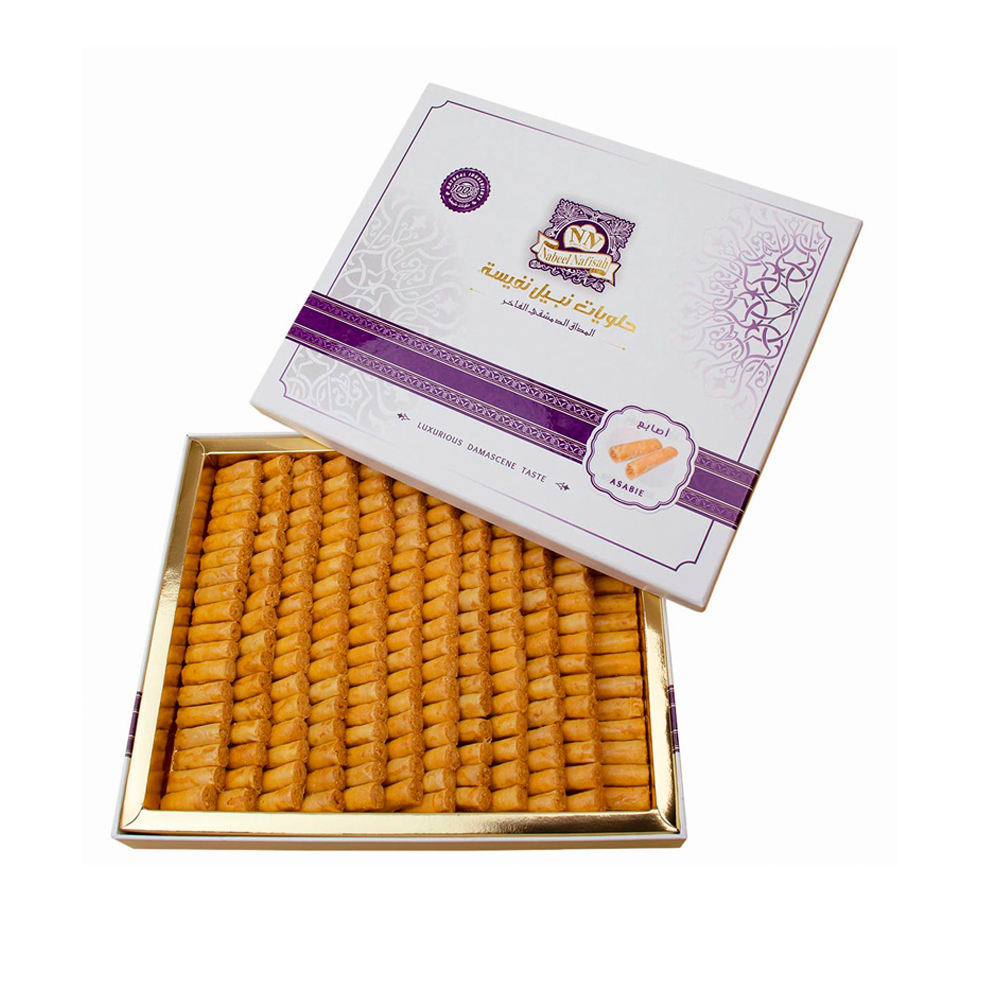
Food-grade paperboard is a popular choice for bakery packaging because it offers a clean appearance, useful structural support, and plenty of room for branding. Depending on the product and intended use, businesses may also consider coated paperboard or food-contact-approved liners.
The key is to select materials suitable for the food, its fat and moisture content, and the expected storage conditions. Any coating, adhesive, ink, or insert that could come into contact with food should be evaluated for its intended application and applicable food-contact requirements.
Box Structures That Keep Baklava in Place
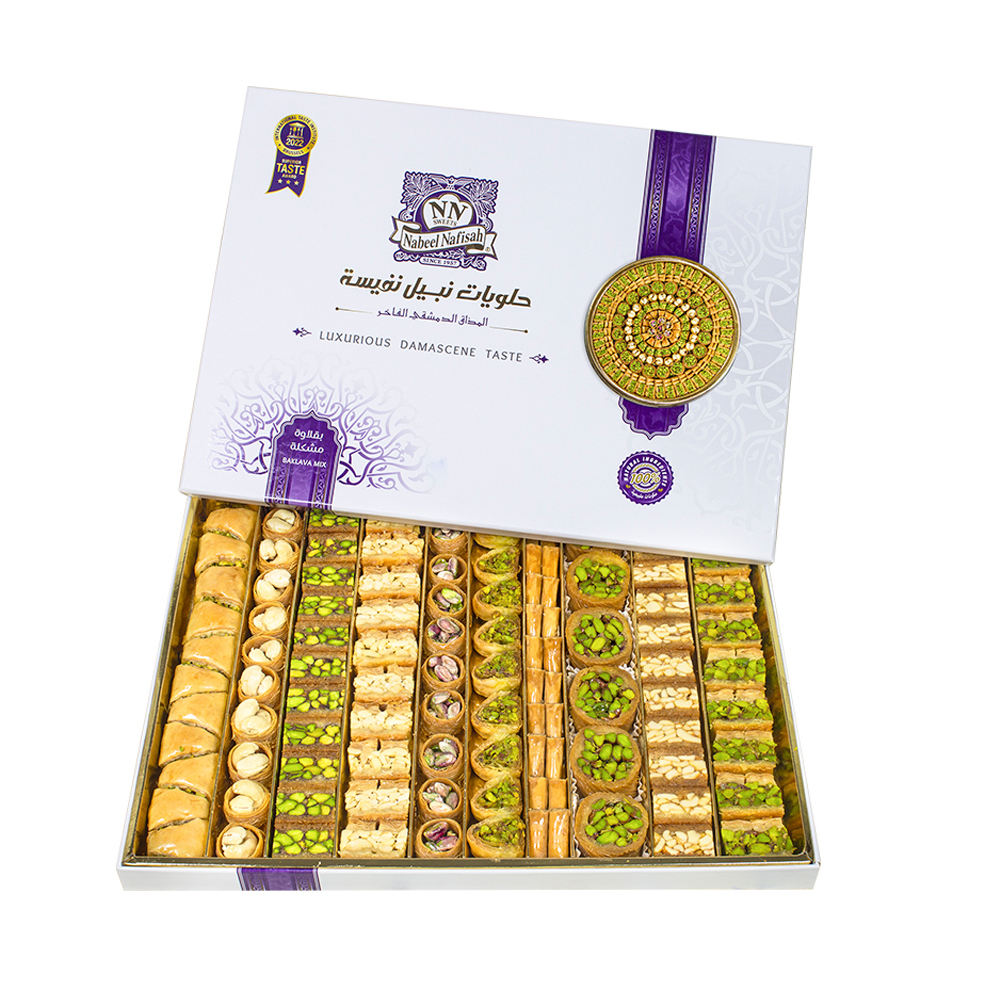
A good box should prevent individual pieces from sliding around during transportation. Custom-sized compartments, fitted inserts, and sturdy internal supports can help keep pastries neatly arranged. These features are especially useful for gift assortments containing different shapes or flavors.
For takeaway orders, lightweight folding cartons may offer a practical balance between convenience and protection. Premium gift sets may benefit from rigid boxes with secure closures and carefully designed inserts.
Managing Moisture and Temperature
Baklava recipes vary, so there is no single packaging solution that works equally well for every product. Some varieties contain more syrup, while others rely on a drier, crispier texture. Packaging should be tested under realistic storage and delivery conditions to identify possible problems with condensation, oil migration, leakage, or texture loss.
Businesses should also follow validated storage guidance for their particular recipe. Packaging can help maintain product quality, but it cannot replace proper food handling, temperature management, or shelf-life testing.
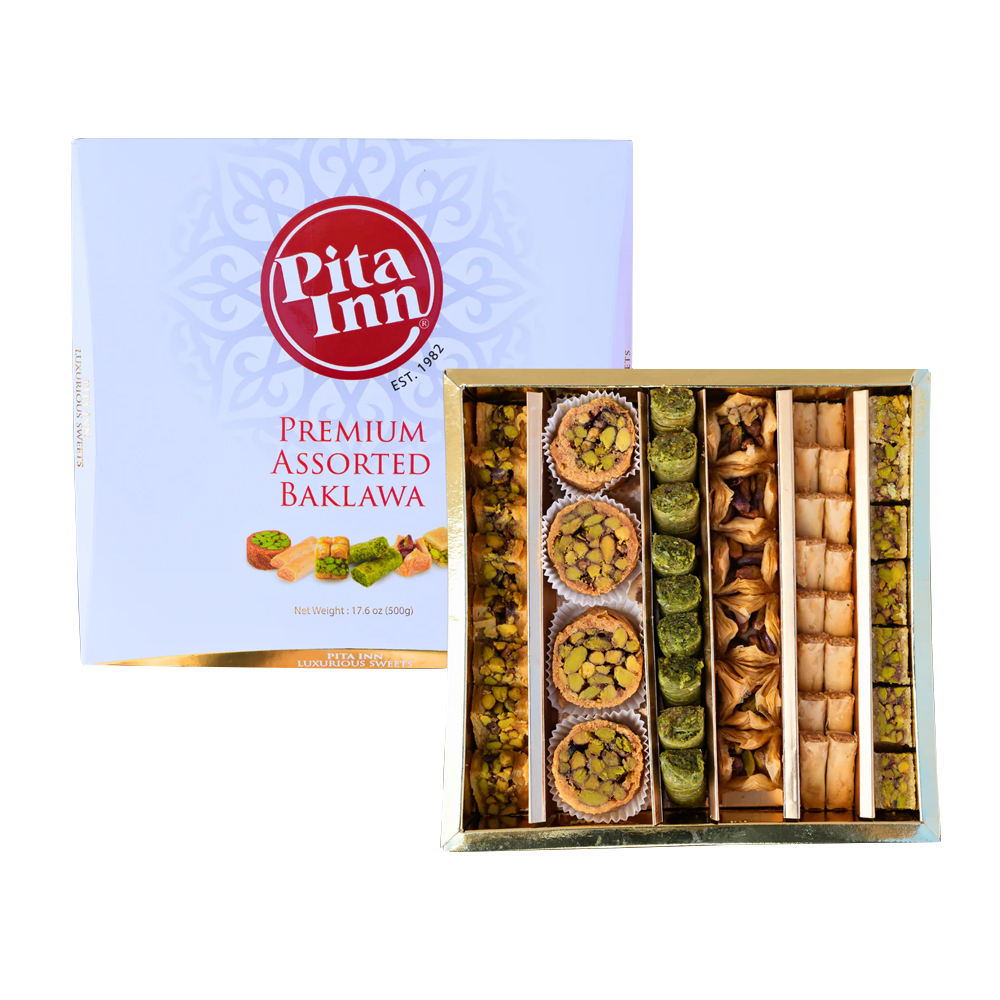
A bakery's packaging often creates the first physical impression of its product. Even before customers taste the baklava, they notice the colors, typography, material, and overall presentation. The right design can make a product feel special without distracting from the traditional dessert inside.
Combining Traditional Patterns With Modern Branding
Geometric motifs, subtle ornamental borders, and warm color palettes can reflect the cultural heritage associated with baklava. Gold accents, deep green, cream, burgundy, or natural kraft tones may work well depending on the brand's identity.
However, traditional design elements should be used thoughtfully. A clean layout with a recognizable logo and readable product information is often more effective than a box crowded with decorative details. Brands should also avoid imagery or wording that falsely suggests a protected geographical origin.
Custom Printing and Finishing Options
Digital printing can be useful for smaller production runs, seasonal collections, and packaging tests. Offset printing may be more suitable for larger orders where consistent color reproduction and unit-cost efficiency are priorities.
Finishing options such as embossing, foil stamping, and selective gloss can create a premium appearance. Before choosing these features, businesses should consider their budget, production quantities, recycling goals, and the suitability of the materials for food packaging.
Creating an Unboxing Experience Worth Sharing
Gift packaging is especially important for holidays, weddings, corporate gifts, and family celebrations. A well-organized interior, an easy-to-open lid, and an attractive arrangement can make the purchase feel more thoughtful.
Small details also matter. A simple product card, a clear flavor guide, or a short description of the baklava-making tradition can help customers connect with the brand. The information should remain accurate and relevant, particularly when discussing regional heritage or protected status.
Packaging decisions affect more than appearance. They influence shipping expenses, storage space, production efficiency, and the amount of waste generated by a business. For bakeries trying to grow, the best packaging solution is one that balances these practical considerations without compromising food quality.
Choosing More Responsible Packaging Materials
Many businesses are exploring recyclable paperboard, responsibly sourced paper, and packaging designs that use fewer unnecessary components. These choices can support sustainability goals, but the final environmental impact depends on the material composition, local recycling infrastructure, and actual disposal conditions.
A package should not be described as recyclable, compostable, or environmentally friendly without adequate evidence. If a box includes plastic windows, laminated surfaces, metallic finishes, or mixed-material inserts, businesses should check whether the complete package can be processed through the relevant local waste system.
Reducing Packaging Costs Without Sacrificing Quality
Ordering larger quantities can lower the unit price, but it may also increase storage needs and create waste if designs change. Smaller businesses can start with a standard box structure and customize the printing, labels, or sleeves to establish a recognizable brand.
Another useful approach is to create a small range of box sizes that fit the most popular product quantities. This reduces unnecessary packaging space and can simplify inventory management.
Testing Packaging Before Full Production
Before approving a large order, businesses should test sample boxes with actual baklava. Check whether the lid closes securely, the inserts hold the pastries in place, and the packaging remains intact during stacking and delivery.
It is also worth evaluating how quickly staff can assemble the boxes and pack orders during busy periods. A beautiful design is less useful if it slows down production or increases the risk of damaged products. Practical testing helps identify these issues before they become expensive problems.
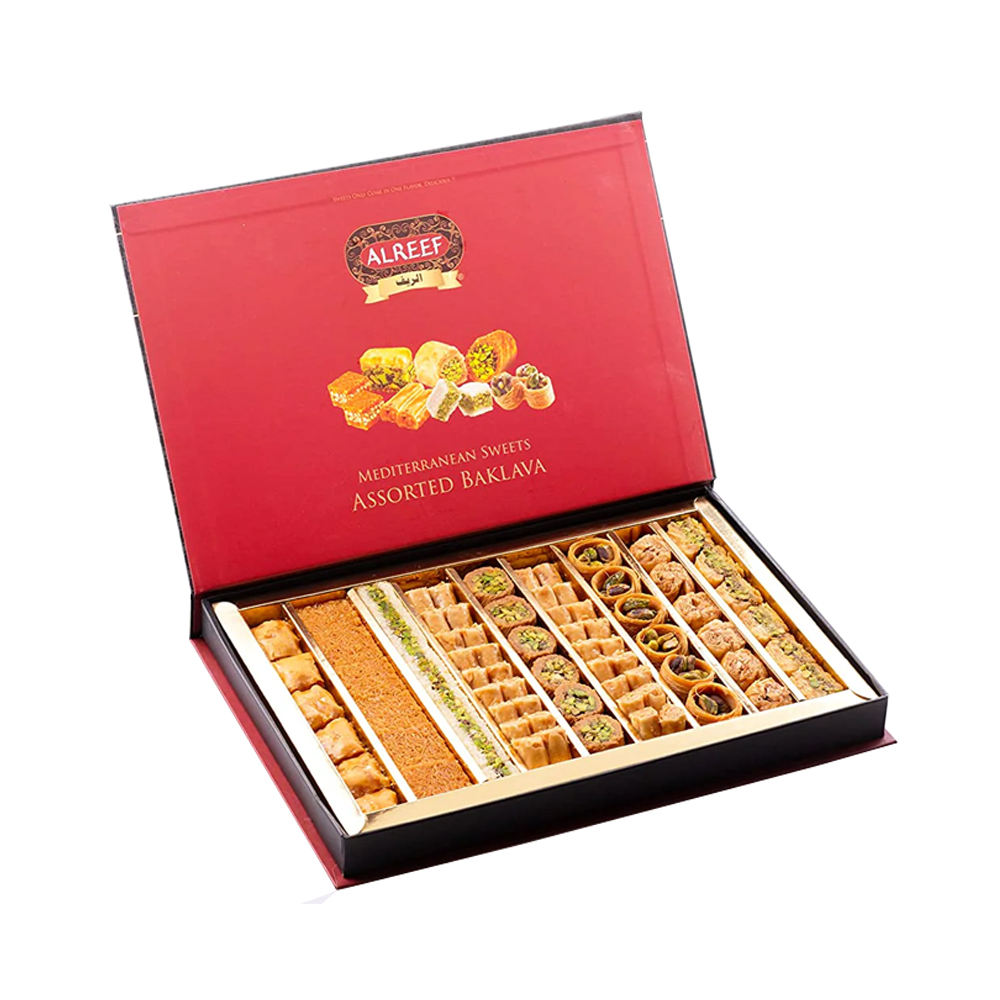
Choosing a packaging manufacturer is an important step for bakeries, distributors, and specialty food brands. A reliable partner should understand the balance between product protection, visual presentation, production requirements, and applicable packaging regulations.
What to Ask Your Packaging Supplier
Start by asking about available materials, box dimensions, printing methods, minimum order quantities, sample availability, and production lead times. If the packaging will be used for food, request relevant documentation demonstrating that the materials are suitable for the intended food-contact application.
Businesses marketing PGI-protected baklava should also confirm that artwork can accommodate the required product name, approved designation, and other applicable labeling details. The supplier can help reproduce approved artwork, but it should not be treated as the authority responsible for confirming the product's protected status.
Customization for Different Business Models
A neighborhood bakery may need compact boxes for daily sales and takeaway orders. An online retailer may prioritize shipping strength and protective inserts. Meanwhile, a premium food brand may focus on presentation, gift-ready packaging, and consistent visual identity across different product sizes.
The ideal solution depends on the product, sales channel, target audience, and budget. Businesses should explain these requirements clearly before requesting a quotation so that suppliers can recommend an appropriate structure and production method.
Building a Consistent Packaging Strategy
As a brand grows, consistency becomes increasingly important. Standardized colors, typography, box dimensions, and product information help customers recognize the business across retail shelves, online orders, and gift collections.
A planned packaging system can also make future product launches easier. Once the main box structure and visual identity are established, new flavors or seasonal editions can often be introduced through carefully controlled artwork changes rather than an entirely new packaging design.
The right packaging does more than hold a delicious dessert. It protects product quality, supports a recognizable brand, and helps customers understand what makes a baklava product worth choosing. For bakeries and specialty food businesses, Custom Baklava Boxes offer a practical way to combine product protection, appealing design, and clear communication.
When PGI requirements apply, accuracy should always come first. Businesses need to verify the product's eligibility, follow the relevant registered specification, and use protected names and symbols only when authorized. At the same time, food-grade materials, suitable box structures, thoughtful printing, and realistic performance testing help create packaging that works in everyday operations.
Origin-true packaging is ultimately about consistency between what a brand says and what it delivers. By choosing the right materials, working with a dependable supplier, and treating authenticity as a genuine business commitment, baklava producers can create packaging that respects tradition while meeting the expectations of modern customers.
Custom Baklava Boxes are specially designed packaging solutions for bakeries, confectionery brands, and food businesses selling baklava. They can be customized in different sizes, shapes, materials, and printing styles to protect delicate pastries while creating an attractive presentation. Businesses can add their logos, product details, and brand colors to make their packaging more recognizable.
PGI stands for Protected Geographical Indication, a European Union quality scheme that protects the names of qualifying products associated with a specific geographical area. For Custom Baklava Boxes, PGI-related labeling must accurately reflect the product's registered status and applicable requirements. Using regional patterns or traditional designs does not automatically make a product PGI-compliant, so businesses should verify the relevant product specification before printing protected names or symbols.
Food-grade paperboard, suitable coated cardboard, and food-contact-approved inserts are common options for Custom Baklava Boxes. The best choice depends on the baklava recipe, moisture content, packaging conditions, and transportation requirements. Sturdy materials and well-fitted inserts can help prevent damage, while appropriate food-contact materials support safe packaging and product quality.
Yes, Custom Baklava Boxes can be designed for birthdays, weddings, holidays, corporate gifts, and other special occasions. Options such as premium printing, foil stamping, embossed logos, decorative sleeves, and fitted compartments can create a more luxurious presentation. Brands can also include flavor descriptions or product information to improve the customer experience while maintaining a consistent visual identity.
Businesses should compare suppliers based on material quality, customization options, printing capabilities, minimum order quantities, production lead times, and pricing. It is also helpful to request samples and test the boxes with actual baklava before placing a large order. For products marketed under a PGI designation, businesses should ensure that the packaging artwork follows approved labeling requirements and that all origin-related claims are accurate.
Post time: Oct-20-2026


