


The global bakery market keeps growing, and more bakeries, importers, and distributors are turning to cross-border sourcing. Most buyers searching for pastry packaging for export are looking for two things: how to choose and whom to buy from. Today, the top-ranking results are dominated by B2B marketplace product pages or articles about local delivery and flexible films — very few actually explain the export scenario end to end. Based on an analysis of the top 10 ranking pages, this guide covers five dimensions — materials, structure, compliance, cost, and supplier selection — and gives you a practical checklist you can act on.
Local packaging only needs to survive a few hours on the display counter, but export packaging must withstand weeks of ocean freight, multiple handlings, and warehouse stacking. Flaky pastries crush easily, cream cakes lose their shape, and cookies go soft with moisture. If the packaging design isn't right, your goods arrive as complaints.
The three tests of long-distance shipping
The first is physical compression: container stacking and forklift handling put constant pressure on boxes, so the structure must resist crushing. The second is temperature and humidity fluctuation: the temperature gap between day and night at sea is wide, and damp paper collapses while grease stains seep through. The third is shelf-life pressure: products are in transit for weeks, so packaging needs stronger sealing and protection.
Five differences between export and local packaging
Structural strength, moisture resistance, printing ink safety, labeling language, and outer carton and pallet specifications — all five are non-negotiable in an export order.
Food-grade materials: from kraft to white cardboard
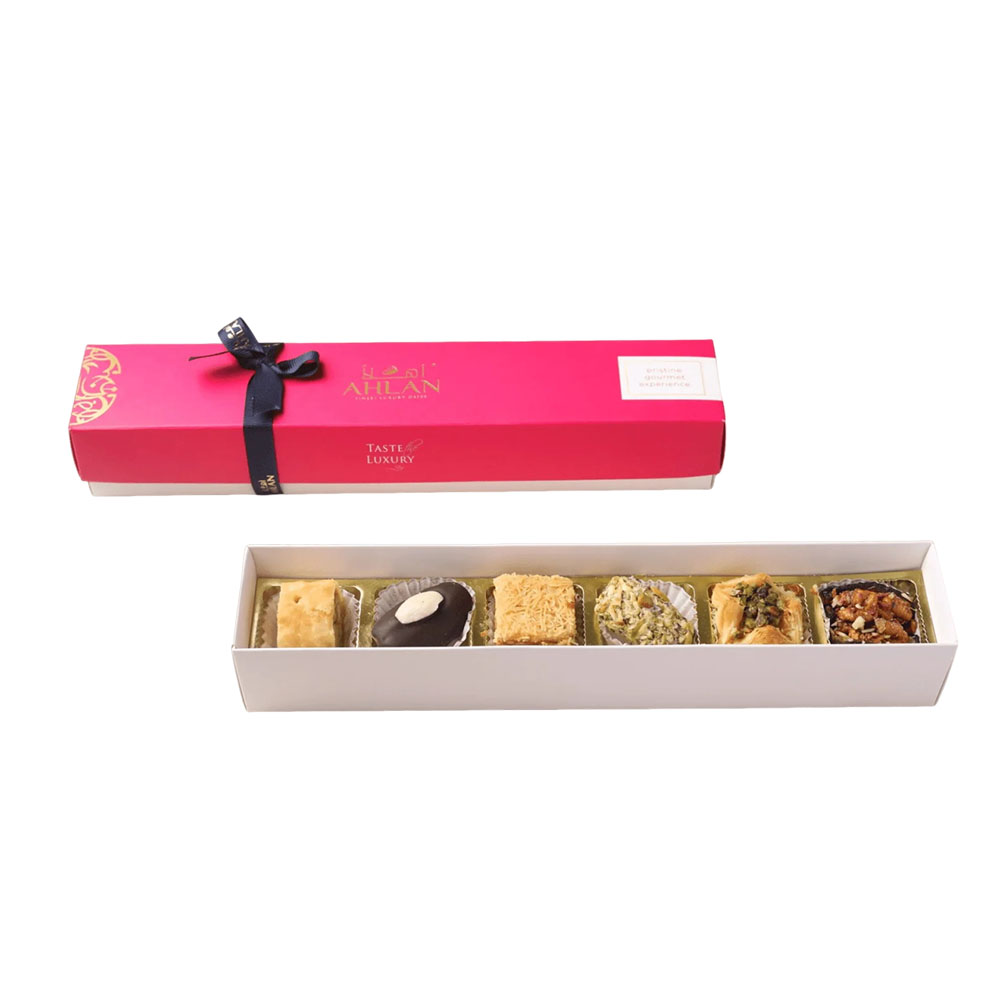
Kraft paper is natural, eco-friendly, and cost-effective — ideal for dry items like cookies and croissants. White cardboard offers higher rigidity and better print quality, making it the choice for premium gift boxes. Where grease resistance is needed, choose coated or greaseproof-laminated paper. Every material that touches food should carry food-grade certification.
Structure design: windows, inserts, and flat-pack folding
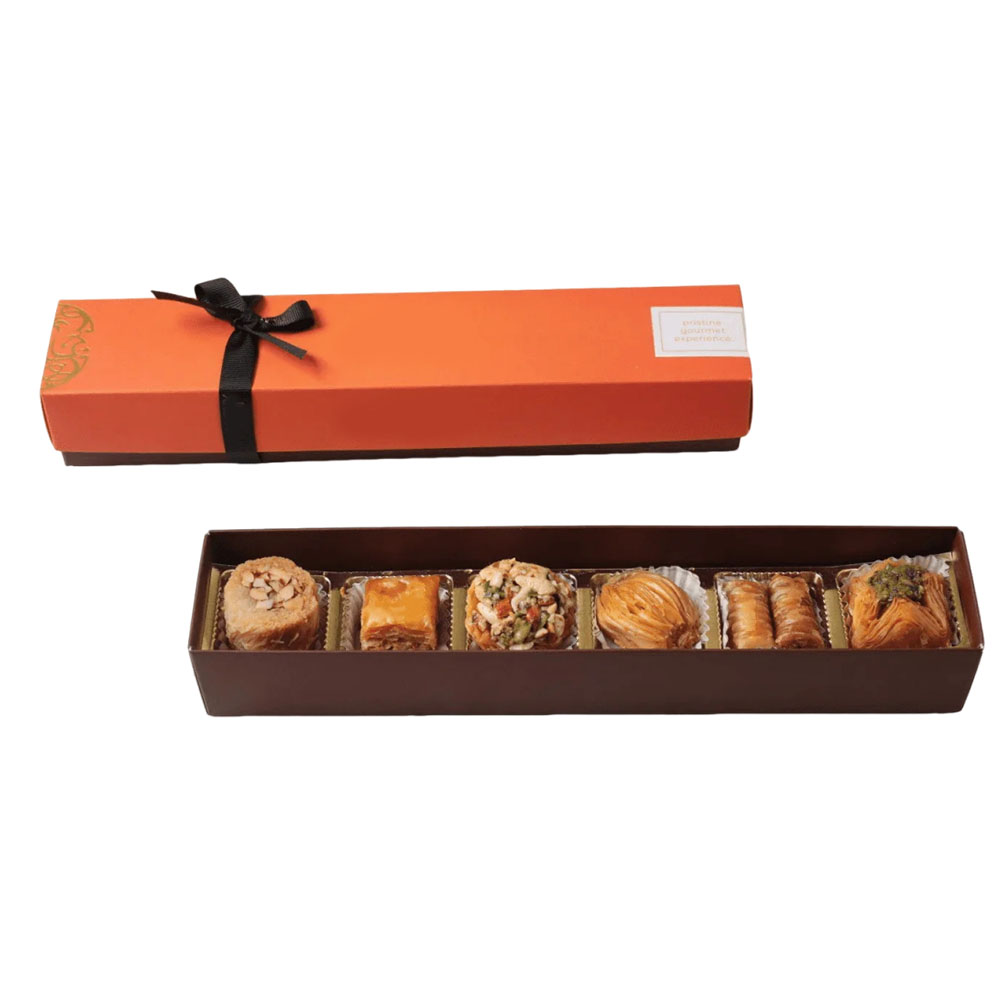
Window designs let customers see the product directly and boost shelf appeal; inserts and dividers keep pastries from shifting and colliding; lock-bottom structures improve load-bearing. The most important point is choosing a flat-pack, collapsible structure — the same container can fit 50% more boxes, directly lowering freight cost per unit.
Food-contact regulations in target markets
For the US market, packaging must comply with FDA 21 CFR requirements for food-contact materials. For the EU, it must meet Regulation (EU) 10/2011 with a declaration of conformity. Germany commonly requires LFGB testing. Some markets also involve REACH and packaging waste directives. Your supplier should provide the corresponding test reports item by item.
Common test reports and documents for export
These include food-grade test reports, MSDS, packing lists, commercial invoices, and certificates of origin. Confirm every document with your supplier before ordering to avoid detention or rejection at the destination port.
MOQ and sampling
Most factories have minimum order quantities, but quality suppliers usually support samples or small trial runs. Start with a small batch to verify quality, then scale up — trade volume for unit price.
Flat-pack shipping and load optimization
Choosing flat-fold boxes, optimizing outer carton dimensions, and planning loads around pallet specifications can significantly reduce per-piece sea freight. Air freight is faster but pricier; sea freight is cheaper but slower — weigh both against your delivery schedule.
Trade terms and customs essentials
Clarify responsibility boundaries under trade terms such as FOB or EXW, and confirm the HS code and destination-country duties in advance. A supplier with export experience saves you enormous communication costs.
Supplier qualification checklist
Look at three things: food-grade materials and test reports, experience with similar export orders, and responsiveness on sampling and rework. Ask for physical samples and test crush resistance, moisture resistance, and print quality — samples are the only evidence that never lies.
Why choose a Chinese paper box factory with export experience
China's packaging supply chain is mature, and paper boxes offer clear advantages in both quality and price. Fuliter Paper Box, for example, covers the full bakery scene with cake boxes, dessert boxes, and chocolate boxes, supporting OEM/ODM customization, free design, low MOQ, and one-stop service from sampling to export shipment — trusted by buyers worldwide.
Export packaging is fundamentally the union of product protection, brand expression, and risk control. When sourcing pastry packaging for export, first clarify your target market and product characteristics, then lock down materials and structure, verify compliance documents one by one, cut freight with flat-pack design, and finally test your supplier with samples. Follow this checklist and you can avoid most common pitfalls on your very first export order. For sampling or a quotation, contact Fuliter Paper Box for free design and sample support.
For dry products (cookies, croissants), food-grade kraft or white cardboard boxes are the top choice, with greaseproof lamination when needed. For cream cakes, use white cardboard with windows and inserts. Always request food-grade certification and test reports for all materials.
The US references FDA 21 CFR, the EU references Regulation (EU) 10/2011 (with a declaration of conformity), and Germany commonly requires LFGB testing. REACH and packaging waste directives may also apply — confirm against the destination country's customs and your customer's requirements.
Choose flat-pack foldable structures, optimize outer carton dimensions, and plan loads around pallet specifications — this can increase container loading by 50% or more. Use sea freight for large orders and air freight only for urgent ones.
It varies by product: paper box MOQs generally range from a few hundred to a few thousand units; sampling takes about 7–15 days and mass production about 15–30 days. Fuliter supports low MOQ and free design — order samples first, then scale up.
Post time: Sep-19-2026


