


Make Your Packaging Ideas Come to Life
Chocolate packaging is no longer just about protecting sweets during storage and delivery. It has become an important part of the customer experience. From the moment someone sees a box on a store shelf to the second they open it, the packaging helps shape their impression of the brand. With AI-generated artwork becoming more accessible, chocolate businesses have a new way to create attractive designs without spending weeks developing every visual concept from scratch.
Custom Chocolate Gift Boxes can now feature imaginative illustrations, colorful patterns, seasonal artwork, and personalized graphics created with the help of AI design tools. For example, a chocolatier preparing a Valentine's Day collection might explore romantic floral patterns, elegant gold-inspired details, or playful heart illustrations. Instead of relying on one initial concept, the team can generate several visual directions and select the one that best matches its products.
Why AI Artwork Is Useful for Packaging
One of the biggest advantages of AI-assisted design is speed. A designer can experiment with different styles, color combinations, and decorative elements before moving into the final artwork stage. This makes it easier to compare concepts and respond to changing market trends.
AI can also help smaller chocolate brands explore creative packaging ideas that might otherwise require a larger design budget. However, the best results usually come from combining AI-generated concepts with professional design judgment. Designers still need to refine the composition, check brand consistency, and prepare the artwork for printing.
Keep Creativity Connected to Your Brand
AI can produce plenty of interesting images, but not every attractive design is suitable for commercial packaging. A premium chocolate brand may prefer understated colors, delicate illustrations, and plenty of empty space. A playful brand targeting younger customers might choose bold colors and cheerful characters instead.
The goal is not simply to create something eye-catching. It is to develop a visual identity that customers can recognize. When AI artwork supports a clear brand message, Custom Chocolate Gift Boxes become more memorable and help products stand apart from competing chocolate collections.
Start with a Clear Design Brief
Before generating images, take some time to define what the packaging should communicate. Think about the target audience, chocolate varieties, price range, brand personality, and intended sales channel. These details give the design process a useful direction.
For instance, a chocolate company selling handmade truffles as corporate gifts may need a sophisticated appearance. A brand offering holiday chocolate assortments might benefit from festive illustrations and seasonal colors. Writing down these requirements before using an AI tool helps reduce unnecessary revisions.
A useful design brief should cover the box dimensions, preferred colors, visual style, logo placement, required text, and printing method. It should also identify any practical limitations, such as a small printable area or the need to accommodate several chocolate flavors.
Write Better Prompts for Better Results
The quality of an AI-generated image often depends on how clearly the prompt describes the desired result. General instructions such as "make a beautiful chocolate box design" leave too much room for interpretation.
A more specific prompt could describe botanical line art, warm brown and cream tones, a clean composition, delicate cocoa pod illustrations, and an elegant gift-packaging aesthetic. You can then adjust individual elements until the artwork feels appropriate for the brand.
It is also useful to generate separate concepts for different packaging purposes. A festive retail collection, a wedding favor box, and a corporate gift set may all contain chocolate, but each requires a different visual approach.
Consider the Final Packaging Structure
Artwork should be developed with the physical box in mind. A design that looks impressive on a flat screen may not work as well once the packaging is folded and assembled.
For example, important illustrations should not disappear into folds, and decorative patterns should align properly across adjoining panels. The designer should also leave enough room for the logo, product name, ingredients, and other necessary information.
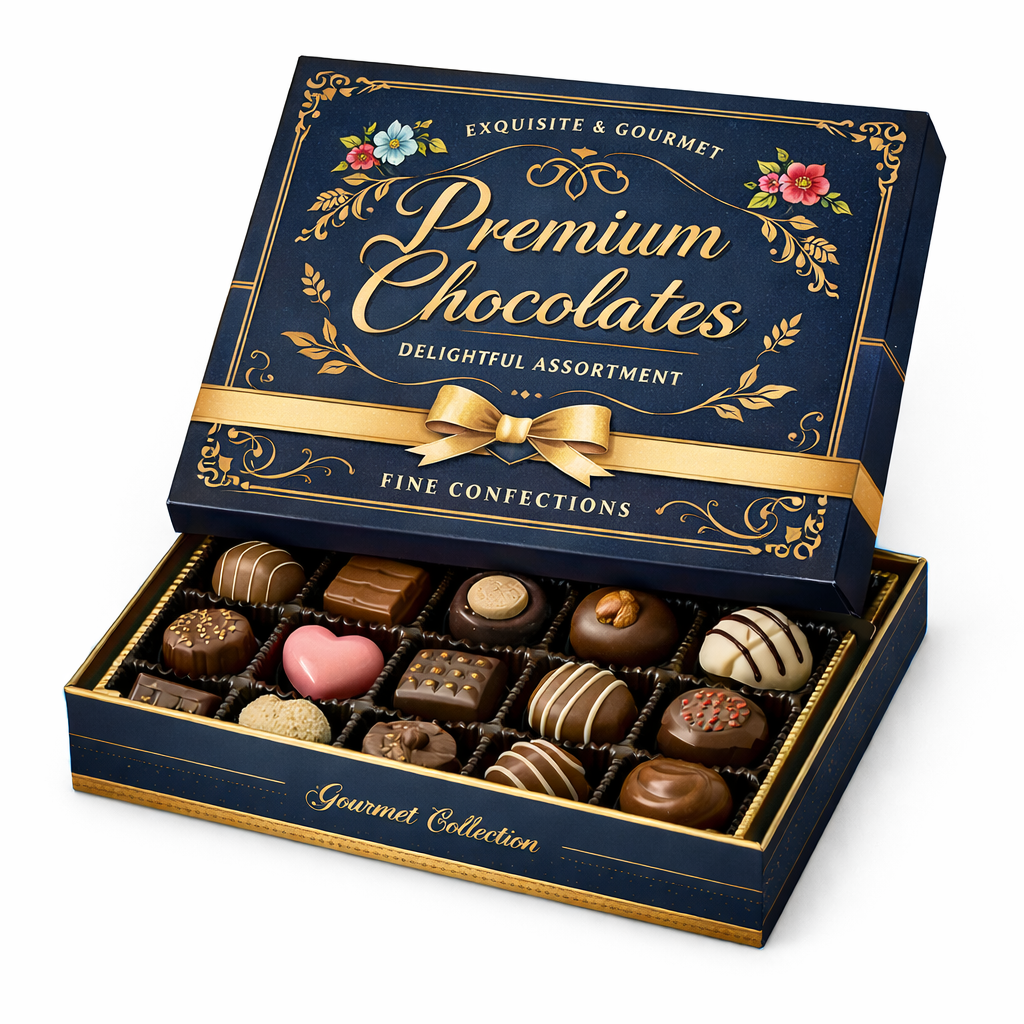
Before finalizing Custom Chocolate Gift Boxes, obtain a dieline from the packaging manufacturer. This template shows the cut lines, fold lines, glue areas, and printable panels. Using it early helps the design team position artwork correctly and avoid expensive changes later.
Understand What Print-Ready Actually Means
An AI image may look finished on a monitor, but that does not automatically make it suitable for commercial printing. Print-ready artwork needs the correct dimensions, resolution, color setup, and file structure.
For many full-color print projects, images are prepared at approximately 300 pixels per inch at their final printed size. However, the appropriate resolution depends on the printing process, viewing distance, and manufacturer's specifications.
Vector artwork is especially useful for logos, icons, and clean line illustrations because it can generally be resized without losing sharpness. Raster images, meanwhile, work well for photographic backgrounds and detailed painted effects when they have sufficient resolution.
Choose the Right Color Mode and Bleed
Screen designs usually use RGB colors, while many conventional printing workflows use CMYK. Converting an image from one color space to another can change how certain colors appear, especially vivid blues, greens, and highly saturated gradients.
For this reason, ask the printer for its preferred color profile and production requirements before completing the file. A soft proof or printed sample can help reveal differences between the screen preview and the expected printed result.
Bleed is another important detail. It extends background colors or images beyond the final cutting edge so that small cutting variations do not leave unwanted white borders. The required bleed varies by manufacturer, so follow the supplied dieline rather than assuming a universal measurement.
Check Typography and Fine Details
AI image generators can produce impressive illustrations, but text inside generated images may contain misspelled words, distorted letters, or inconsistent spacing. This is one reason to treat AI artwork as a starting point rather than a complete production file.
Add important wording separately using professional design software. Check the spelling of the brand name, product description, and promotional messages. Make sure small text remains readable at the actual printed size and that critical details are not placed too close to folds or cutting lines.
For Custom Chocolate Gift Boxes, a final preflight check should include image resolution, fonts, linked images, color settings, bleed, dieline alignment, and document dimensions. A properly prepared PDF or another manufacturer-approved format can make the production process smoother.
Explore Illustration and Pattern-Based Designs
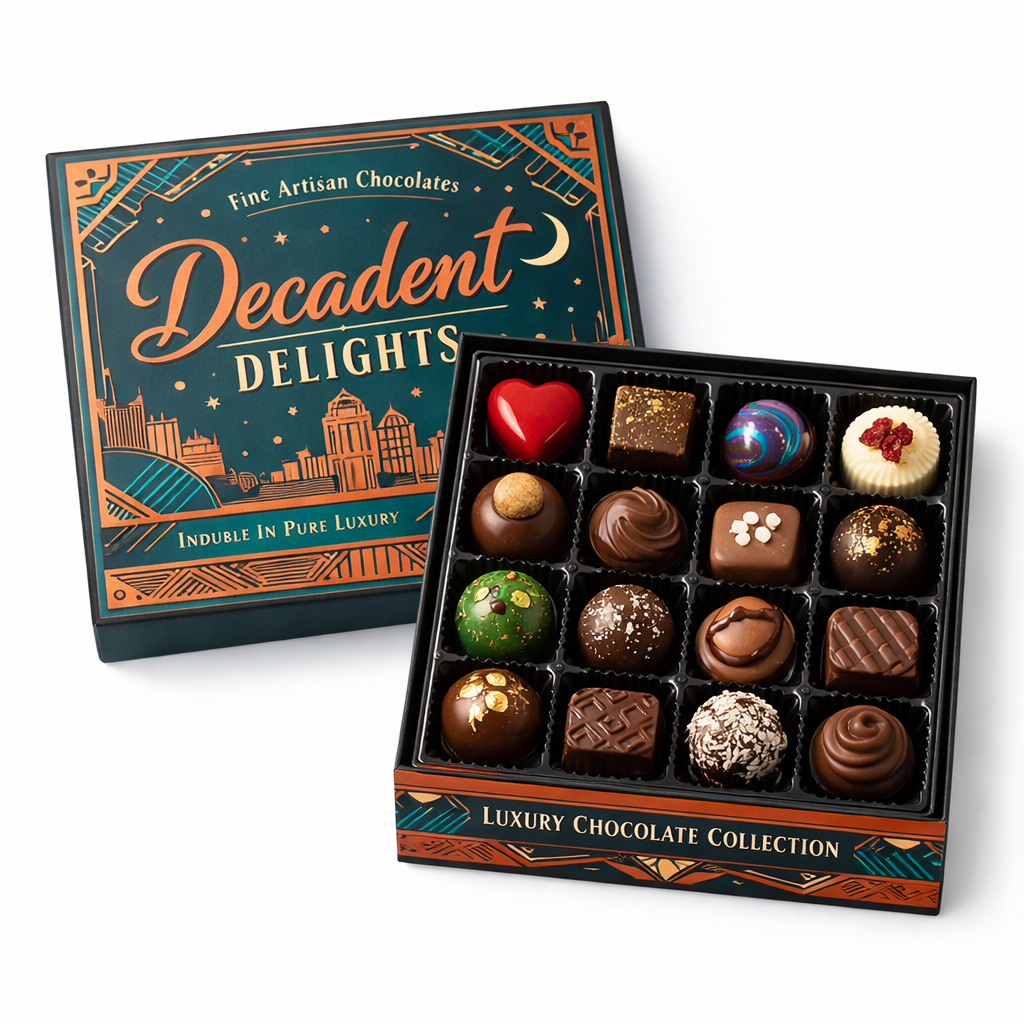
AI tools make it easier to experiment with different artistic directions. Hand-drawn cocoa beans, watercolor flowers, geometric patterns, vintage botanical illustrations, and abstract chocolate-inspired textures can all provide useful starting points.
Patterns are particularly practical for packaging because they can cover large panels while maintaining a consistent appearance. A repeating cocoa leaf motif, for example, can make a simple box feel more considered without overwhelming the product name.
For brands that sell several chocolate flavors, a shared illustration style can tie the collection together. Each flavor might have its own accent color while keeping the same typography, layout, and core graphic elements.
Use Personalization to Make Gifts More Meaningful
Gift packaging often feels more special when it reflects the recipient or occasion. AI-assisted artwork can help businesses explore personalized themes for birthdays, weddings, anniversaries, corporate events, and seasonal celebrations.
A wedding favor box might feature delicate floral illustrations inspired by the event's color palette. A corporate gift set could use subtle geometric artwork that complements a company's visual identity. For holiday gifting, custom illustrations can create a sense of occasion without requiring a completely new packaging structure.
Personalization does not always mean printing an individual's name on every box. Sometimes, changing the artwork, message, color scheme, or decorative details is enough to create a more relevant gift experience.
Balance Visual Impact with Practicality
It is tempting to include every attractive element in one design, especially when AI tools make it easy to generate new ideas. However, too many patterns, colors, and decorative effects can make the packaging feel crowded.
A stronger approach is to establish a clear visual hierarchy. The brand name should be easy to identify, the product type should be understandable, and the artwork should support rather than compete with these elements.
Material choice also affects the final appearance. Matte paperboard can create a soft, understated finish, while a glossy coating may make colors appear more vibrant. Foil stamping, embossing, and spot UV finishes can add contrast when used selectively. These effects should be planned with the packaging supplier because not every decorative treatment is compatible with every material or production method.
Create Packaging That Photographs Well
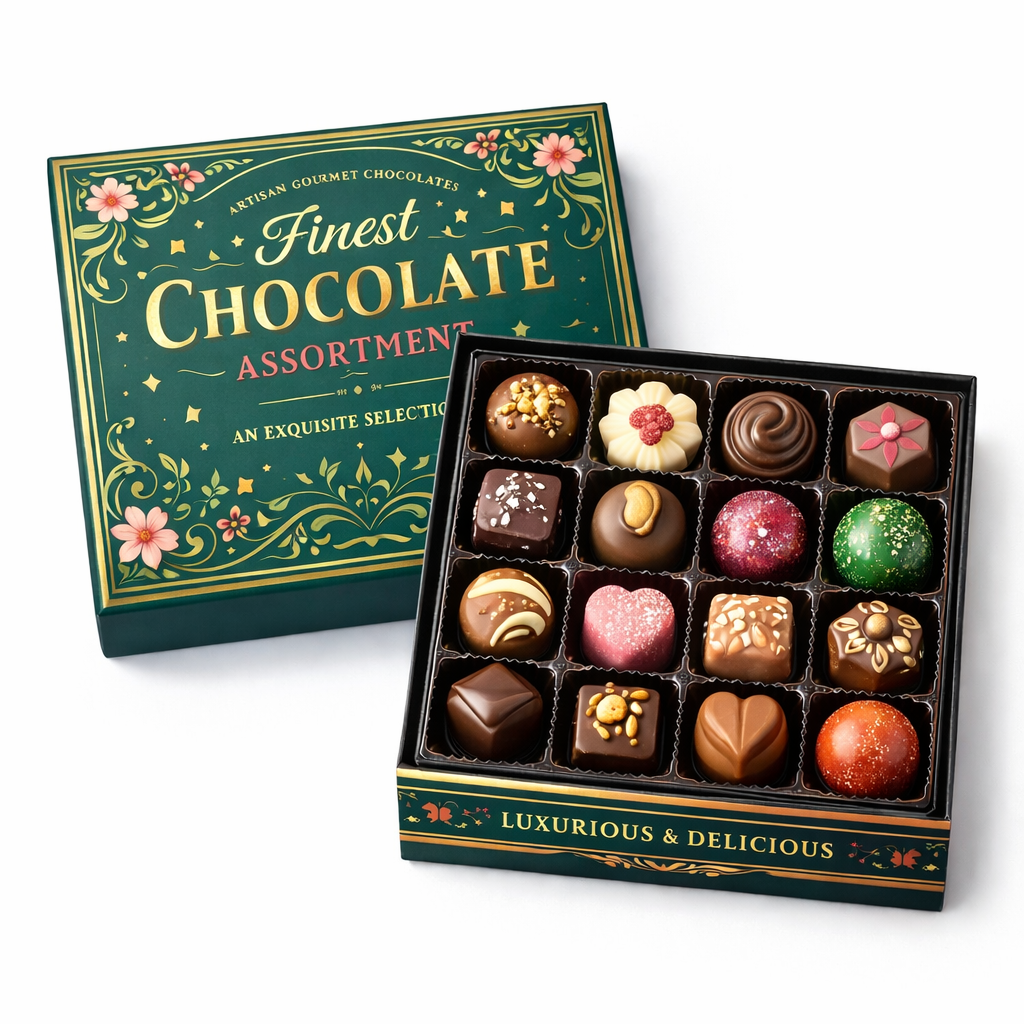
Packaging often appears in online product listings, social media posts, advertisements, and promotional emails before customers ever see it in person. This means the design should work both as a physical object and as a digital image.
Strong contrast, recognizable graphics, and a clear product name can help the box stand out in a crowded online store. Thoughtful artwork can also give customers a reason to share photographs of their gifts, creating additional exposure for the brand.
AI-generated concepts can help marketing teams explore seasonal campaign visuals that coordinate with the packaging. For example, a winter chocolate collection could use a consistent palette across the box, product photography background, website banners, and social media graphics.
However, digital mockups should not be mistaken for photographs of finished products. Before launching a campaign, check that the manufactured packaging matches the approved design and that any promotional images accurately represent the product being sold.
Adapt Designs for Different Sales Channels
A chocolate box sold in a boutique gift shop may need a different visual emphasis from one shipped directly to customers. Retail packaging benefits from clear product identification and shelf visibility, while direct-to-consumer packaging may focus more on presentation, unboxing, and gift appeal.
Corporate buyers may value professional branding and customization options. Seasonal shoppers might respond more strongly to occasion-specific graphics. Understanding these differences helps brands choose artwork that speaks to the intended audience.
AI-assisted design can make it easier to test alternative concepts for these markets. Rather than redesigning everything, businesses can preserve their core visual identity and adjust selected elements for different audiences or campaigns.
Support SEO with Consistent Product Content
Packaging design and search engine optimization work together when product pages clearly explain what customers can customize. A website offering Custom Chocolate Gift Boxes should describe available box sizes, materials, printing options, finishing techniques, and personalization possibilities.
Useful product photography, descriptive image alt text, and clear page headings can help search engines understand the content. Related blog posts can answer questions about print-ready artwork, sustainable packaging materials, custom finishes, and packaging design for special occasions.
AI artwork can also support a consistent visual direction across marketing materials, but it should not replace useful product information. Customers still need accurate details about minimum order quantities, lead times, available materials, and production capabilities before placing an order.
Do Not Skip Human Review
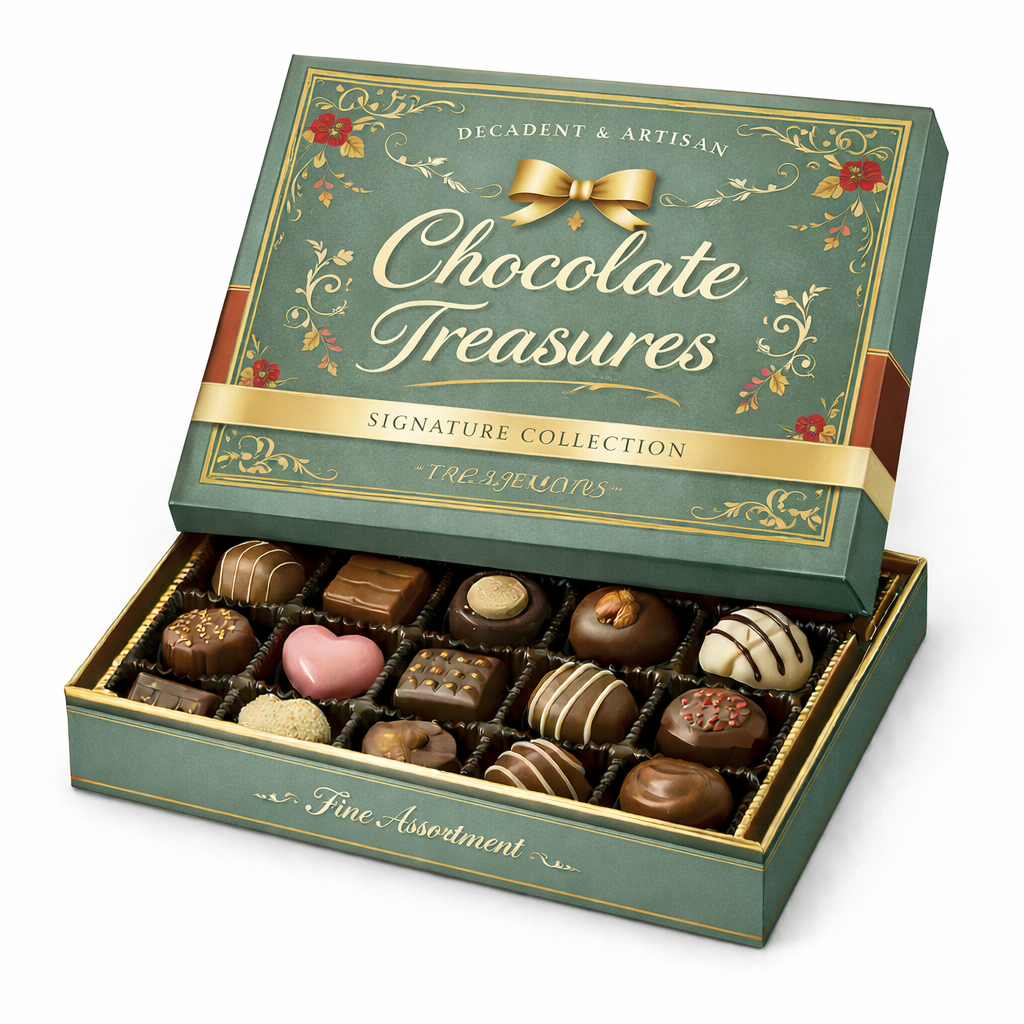
AI-generated designs can contain strange visual details, inconsistent patterns, accidental artifacts, or elements that look attractive on screen but become distracting in print. A trained designer should review every proposed concept before it moves into production.
It is also important to consider intellectual property. Check the commercial-use terms of the AI tool, review any applicable licensing restrictions, and avoid prompts that deliberately imitate a specific living artist's distinctive style or reproduce protected brand artwork. Search for potentially conflicting logos or recognizable designs when appropriate, and seek legal advice if a significant concern arises.
Test Materials Before Ordering in Bulk
Different papers, coatings, inks, and printing processes can change the appearance of the same design. Fine lines may become less distinct, subtle colors may shift, and dark backgrounds may reproduce differently than expected.
Request a physical proof or sample whenever possible, particularly for premium gift packaging or large orders. Check the printed colors, structural fit, surface finish, and overall presentation under ordinary lighting.
It is also worth checking how the box performs during handling and shipping. Chocolate packaging needs to protect the contents, maintain its shape, and support appropriate food-contact requirements. Decorative artwork should never distract from the structural and functional needs of the package.
Keep Food Safety and Sustainability in Mind
Packaging for chocolate should be designed around the product's storage and handling requirements. Any material that directly contacts food must be suitable for that intended use, and inks, coatings, adhesives, and inserts should be selected in accordance with applicable requirements and supplier guidance.
Sustainability is another important consideration. Depending on the product and local recycling systems, recyclable paperboard, reduced packaging components, or responsibly sourced paper may be suitable options. Avoid making broad environmental claims unless they can be supported by reliable evidence.
Finally, remember that AI-generated artwork is only one part of successful packaging. The best Custom Chocolate Gift Boxes combine attractive design, accurate printing, suitable materials, product protection, and a consistent brand message.
AI-assisted artwork gives chocolate brands more opportunities to explore creative packaging concepts, test different visual styles, and develop designs for specific audiences. From elegant botanical illustrations to playful seasonal graphics, these tools can help turn early ideas into practical design directions.
Still, a beautiful image is only the beginning. Successful Custom Chocolate Gift Boxes require careful attention to dielines, resolution, color management, typography, materials, and printing requirements. Human review remains essential for checking visual quality, brand consistency, licensing concerns, and production accuracy.
For businesses looking to improve their packaging, the most effective approach is to combine AI creativity with professional design and reliable manufacturing. Start with a clear brief, develop several concepts, refine the strongest option, and request a physical proof before committing to a large production run.
When these steps come together, AI-generated art can become more than an interesting visual experiment. It can help create distinctive chocolate packaging that presents products beautifully, strengthens brand recognition, and gives customers a more memorable gifting experience.
Custom Chocolate Gift Boxes with AI-generated artwork are personalized packaging solutions that use artificial intelligence to help create unique illustrations, patterns, colors, and visual concepts. Businesses can use AI tools to explore different packaging styles, from elegant floral designs to seasonal graphics, and then refine the selected artwork for professional printing. This approach helps chocolate brands develop distinctive packaging that reflects their identity and appeals to their target customers.
To prepare AI-generated artwork for printing, start by checking the box dimensions and obtaining a dieline from your packaging manufacturer. Ensure that images have sufficient resolution, typically around 300 DPI at the final print size for detailed images. Adjust the color settings according to the printer's requirements, add the necessary bleed, and check that text, logos, and important design elements are correctly positioned. Before production, review the final PDF or approved file format to make sure everything is ready for printing.
Yes, AI-generated designs can often be used for commercial packaging, but the rules depend on the AI tool, its licensing terms, and applicable laws. Before using artwork commercially, review the platform's terms of use and check for potential copyright, trademark, or other intellectual property conflicts. It is also a good idea to have a professional designer review the artwork to ensure it is original enough for your intended use and suitable for your brand.
Custom Chocolate Gift Boxes can be produced with various printing and finishing options, depending on the packaging material and manufacturer's capabilities. Common choices include full-color printing, matte or glossy coatings, foil stamping, embossing, debossing, and spot UV finishes. These techniques can enhance the appearance of AI-generated artwork and create a more premium presentation. The best option depends on your design, budget, target audience, and desired packaging style. Requesting a physical sample before bulk production can help you evaluate the final result.
Custom Chocolate Gift Boxes help promote your brand by creating a recognizable visual identity and making your products more appealing to customers. Unique artwork, consistent colors, and professional finishing can help your chocolate stand out in retail stores and online marketplaces. Attractive packaging can also improve the gift-giving experience and encourage customers to share product photos on social media. Combined with high-quality product photography, optimized product descriptions, and relevant SEO content, custom packaging can support brand awareness and help attract potential customers.
Post time: Oct-29-2026


