


Chocolate gift boxes are easy to market as “green,” “eco-friendly,” or “sustainable.” The hard part is proving those claims. Today’s shoppers are more skeptical, and for good reason. A box made from recycled paper may still contain plastic inserts. A “compostable” wrapper may only work in an industrial composting facility. Even a beautiful kraft-paper package can create unnecessary waste if it is oversized or difficult to recycle.
For brands selling chocolate gift boxes, the goal should not be to sound greener. It should be to make environmental claims that can be backed up with clear evidence. That means looking at the materials, suppliers, packaging format, disposal instructions, and the wording used on the label or product page.
Start With the Packaging Materials
The first step is simple: know exactly what goes into the box. List the outer carton, inner tray, chocolate wrappers, labels, ribbons, protective padding, adhesive, and any printed materials. Then ask suppliers for specifications instead of relying on vague descriptions.
For example, saying a package is “paper-based” does not automatically mean it is recyclable. A paperboard box with a heavy plastic coating may be treated differently by local recycling systems. Likewise, recycled content can vary significantly depending on the material and supplier.
A better product description might say that the outer carton contains a stated percentage of post-consumer recycled fiber, provided the supplier can verify that percentage.
Avoid Claims That Sound Bigger Than the Evidence
Words such as “100% sustainable,” “zero waste,” and “completely eco-friendly” create a high burden of proof. They also leave plenty of room for customers to question the claim.
Instead, make the claim narrower and specific. “Box made with 80% recycled paperboard” tells shoppers what they are actually buying. If you can provide a certification or supplier documentation, even better.
The basic rule is straightforward: the more specific the claim, the easier it is to prove and understand.
Make the Claim Easy to Check
A green claim should not require customers to dig through a maze of marketing language. If the packaging has a certified material, recycled-content statement, or recognized certification, explain what it means.
A short note on the product page can work well:
“The outer box is made with 80% post-consumer recycled paperboard. Please check local recycling guidance before disposal.”
That sounds much more credible than simply calling the product “planet-friendly.”
Keep Supplier Documentation
If your company makes environmental claims, documentation matters. Ask packaging suppliers for technical specifications, recycled-content information, material composition, certifications, and relevant test reports.
Do not wait until someone challenges the claim to start collecting evidence.
Create a simple internal file for each major packaging component. Record the supplier, material type, recycled content, certification details, date of documentation, and any limitations.
This makes future packaging updates much easier to manage.
Understand What Certifications Actually Cover
A certification is useful only when you understand its scope. Does it cover the paperboard? The entire package? The manufacturing process? The recycled content? The forest source?
Do not assume that a certification attached to one material automatically validates every sustainability statement about the finished chocolate gift box.
When communicating certification information, be precise about what has actually been certified.
Be Careful With “Compostable”
“Compostable” is one of the easiest terms to misuse.
Some packaging is designed for industrial composting rather than home composting. If a product requires specific conditions, customers should know that.
A safer product description might explain the required disposal route rather than simply printing “compostable” in large letters.
Clear instructions are especially important for gift boxes because customers may keep the packaging, reuse it, recycle it, or throw away individual components separately.
Design for Real-World Use
Good packaging should work in real life, not just in a product photograph.
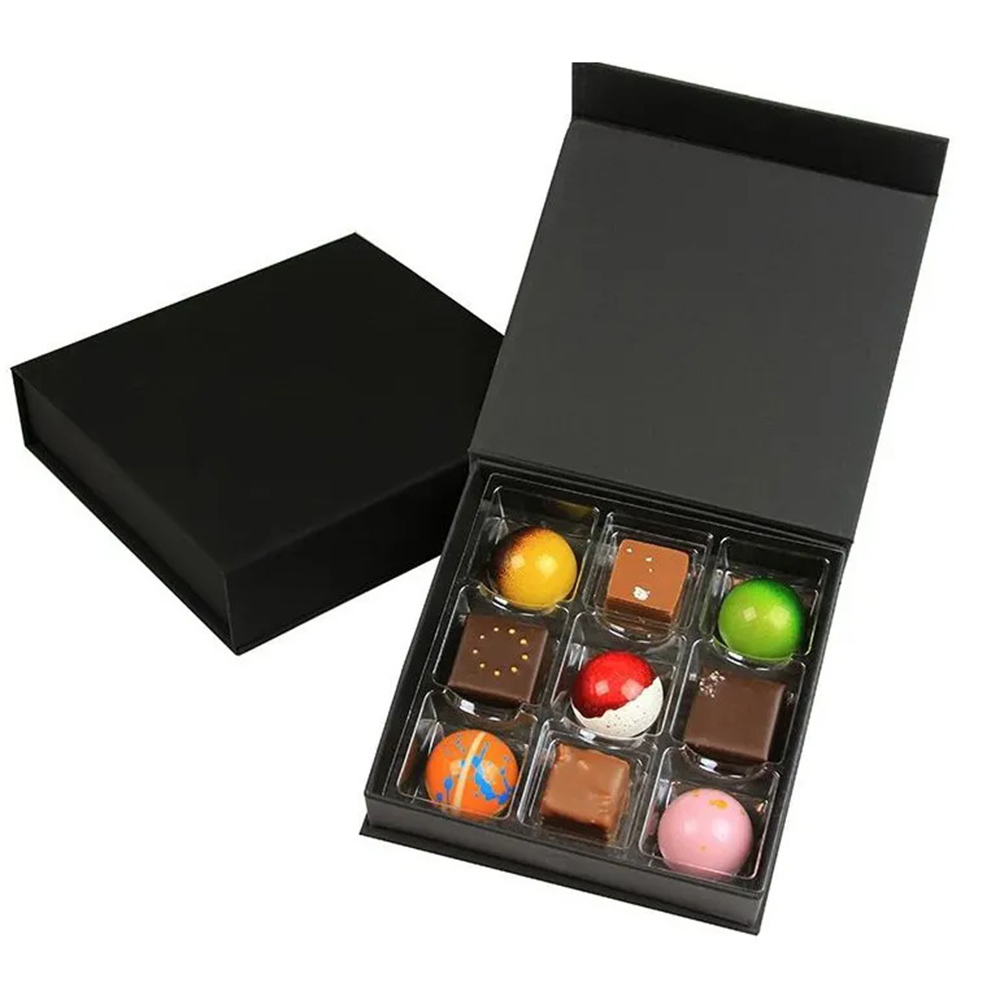
Chocolate gift boxes need enough protection to prevent damaged products, especially during shipping. If reducing packaging causes a high breakage rate, the environmental trade-off may not be as simple as it first appears.
The practical question is: How much packaging is actually necessary to protect the chocolates?
Use testing to find the balance. If a lighter box performs just as well as a heavier one, the lighter option may be the smarter choice.
Consider Shipping From the Beginning
Packaging and logistics are closely connected.
An oversized gift box can take up more warehouse space and require more shipping volume. A compact design may allow more units per carton or pallet.
For online chocolate brands, this matters even more. Packaging that looks luxurious on a shelf may be unnecessarily bulky for direct-to-consumer shipping.
A good green-claim strategy therefore considers the full product journey, not just the material printed on the outside of the box.
Make Sustainability Part of the Product Experience
Customers notice details. A box that opens beautifully, uses minimal material, and provides straightforward disposal instructions can feel more thoughtful than packaging covered with vague environmental slogans.
Consider printing simple guidance inside the box:
- Remove non-paper components.
- Flatten the paperboard where appropriate.
- Check local recycling rules.
- Reuse the box if it remains clean and sturdy.
The goal is not to lecture the customer. It is to make the responsible choice easy.
Replace “Eco-Friendly” With Specific Facts
“Eco-friendly” is attractive marketing language, but it says very little by itself.
Compare these two statements:
“Our chocolate gift boxes are eco-friendly.”
and
“Our gift box uses 80% post-consumer recycled paperboard and contains no plastic tray.”
The second statement gives customers something concrete to evaluate. It also gives the brand a clear standard to maintain.
Specific facts usually make stronger marketing copy than broad environmental promises.
Explain What You Do Not Claim
Transparency can actually increase trust.
Suppose your box uses recycled paperboard, but the chocolate wrappers are not recyclable through standard household recycling. You do not have to hide that limitation.
Instead, explain it.
Customers are increasingly familiar with the idea that sustainability involves trade-offs. A brand that openly discusses those trade-offs can appear more credible than one that presents an unrealistically perfect picture.
Keep Marketing and Packaging Consistent
A common problem is inconsistency between a product page and the physical package.
If the website says “plastic-free” but the box contains a plastic window, customers will notice. If the website says “recyclable” but the disposal instructions are unclear, customers may become skeptical.
Create a central list of approved environmental claims and the evidence supporting each one. Marketing, packaging, sales, and customer service teams should work from the same information.
Give Customers Useful Information
The best packaging does not force customers to become sustainability experts. It gives them the information they need at the right moment.
A small material guide can be surprisingly effective:
Box: recycled paperboard
Tray: molded fiber
Wrapper: check local disposal guidance
Ribbon: remove before recycling the box
This approach is simple, practical, and much easier to defend than a collection of broad green slogans.
Track Improvements Over Time
Green claims should not be treated as a one-time marketing campaign.
Packaging suppliers change materials. Recycling rules change. Product formats change. A claim that was accurate two years ago may need updating today.
Set a review schedule for packaging claims and supporting documents. When a material changes, review the environmental language before the new packaging reaches customers.
Make Proof Part of Your Brand
Ultimately, trustworthy sustainability marketing is not about finding the perfect phrase. It is about building a system where every important environmental statement has evidence behind it.
That can include supplier documents, material specifications, certifications, testing, packaging audits, and clear disposal guidance.
Once that system is in place, writing product descriptions becomes much easier. Instead of asking, “How can we make this sound greener?” your team can ask, “What can we prove?”
Sustainable packaging does not need exaggerated language to make an impact. The strongest Chocolate Gift Boxes are often the ones that communicate simple facts: what the package is made from, how much recycled content it contains, which components can be recycled, and what customers should do after opening the gift.
For brands, the safest approach is to start with the physical package, collect reliable evidence, understand the limits of each material, and then build marketing language around what can actually be demonstrated.
That approach may sound less flashy than calling a product “100% eco-friendly.” But it is more useful to customers, easier for marketing teams to maintain, and far more credible.
In the end, a green claim should not ask customers to simply believe it. Your Chocolate Gift Boxes should give them enough information to prove it.
Chocolate Gift Boxes can be more environmentally responsible when they use verified recycled or responsibly sourced materials, avoid unnecessary packaging, and are designed for practical recycling or reuse. The key is not simply calling a box “green,” but providing specific information about its materials and disposal options.
It is better to avoid broad claims such as “100% eco-friendly” unless you have strong evidence to support them. A more credible approach is to use specific claims, such as “made with 80% post-consumer recycled paperboard,” when the percentage can be verified through reliable supplier documentation.
Not necessarily. Recycling systems vary by location, and some packaging materials accepted in one area may not be accepted in another. For this reason, brands should avoid making overly broad recycling claims and should encourage customers to check their local recycling guidelines.
Not automatically. Some compostable packaging requires commercial or industrial composting facilities and may not break down properly in a home compost system. Brands should clearly explain the conditions required for disposal instead of simply using the word “compostable” without further information.
The best way to avoid greenwashing is to make claims based on evidence. Brands should keep supplier specifications, recycled-content information, certifications, and material documentation for their packaging. Marketing claims should then match the actual product and clearly explain any limitations, so customers can make informed decisions.
Post time: Oct-07-2026


