


A Smarter Way to Package Chocolate
When it comes to chocolate packaging, appearance matters, but practicality matters just as much. A beautiful box can catch a customer's eye, yet if it takes up too much warehouse space or costs a fortune to ship, it may not be the best choice for a growing chocolate business. That is where collapsible chocolate paper boxes come in. Designed to ship flat and fold into shape when needed, these boxes offer a simple solution to several common packaging problems.
For chocolate brands, retailers, gift companies, and confectionery manufacturers, storage and shipping expenses can quickly add up. Traditional rigid boxes often arrive fully assembled, which means businesses must find room to store large quantities of empty packaging. Collapsible boxes work differently. They can be delivered in a flat format and assembled when orders are ready to go out. This makes everyday packaging operations easier without sacrificing visual appeal.
Saving Space Without Losing Style
One of the biggest advantages of collapsible packaging is its compact structure. Instead of storing hundreds of bulky boxes, businesses can keep flat-packed packaging neatly stacked on shelves or in cartons. This is particularly helpful for small chocolate shops, seasonal gift businesses, and online sellers that operate from limited spaces.
The best part is that a flat-packed box does not have to look basic. With the right paperboard, printing, folding structure, and finishing details, it can create a polished presentation that feels suitable for premium chocolates.
Why Packaging Design Matters to Chocolate Brands
Chocolate is often purchased as a gift, so packaging plays an important role in shaping customer expectations. A thoughtfully designed box can make a product feel more valuable before the customer even tastes it. Collapsible Chocolate Paper Boxes allow brands to combine efficient storage with attractive presentation, making them a practical option for businesses that want both convenience and a professional appearance.
Lower Storage Requirements
Warehouse space is expensive, and packaging can occupy more of it than businesses realize. When empty boxes arrive fully assembled, much of that space is used to store air. Flat-packed boxes reduce this problem by keeping the packaging in a compact form until it is needed.
For manufacturers handling large orders, this can make inventory management more straightforward. Staff can organize different sizes, colors, and designs in labeled cartons instead of arranging bulky boxes across shelves. A more organized storage system also makes it easier to identify the correct packaging for each product.
More Efficient Shipping and Handling
Shipping packaging materials can become costly when cartons contain mostly empty space. Collapsible designs help suppliers fit more packaging units into a shipment, depending on the box structure, carton dimensions, and shipping method.
This can be especially useful for brands that purchase custom packaging from overseas suppliers. By reducing the space required for empty boxes, businesses may be able to improve shipping efficiency and reduce certain logistics expenses. Actual savings depend on order quantities, freight rates, and the dimensions of the finished product.
A Practical Choice for Growing Businesses
Small businesses often need packaging that can adapt as sales increase. A collapsible design makes it easier to store packaging in advance and assemble boxes as customer orders arrive. Instead of dedicating valuable space to preassembled cartons, teams can keep a larger supply of flat packaging on hand.
For growing chocolate brands, this flexibility can help support seasonal promotions, online sales, corporate gifting, and wholesale distribution. It also gives businesses more room to experiment with different packaging designs without completely changing their storage systems.
Better Control Over Daily Operations
A well-designed box should be easy to assemble and reliable during use. Folding lines, locking tabs, and carefully positioned closures can help employees prepare packaging quickly. When a company handles hundreds of chocolate orders each day, small improvements in assembly time can make a meaningful difference.
Before placing a large order, businesses should test the folding process with actual staff. A design that looks attractive on paper but requires too many steps may slow down packing operations. The ideal solution balances appearance, strength, and ease of use.
Selecting Suitable Paperboard
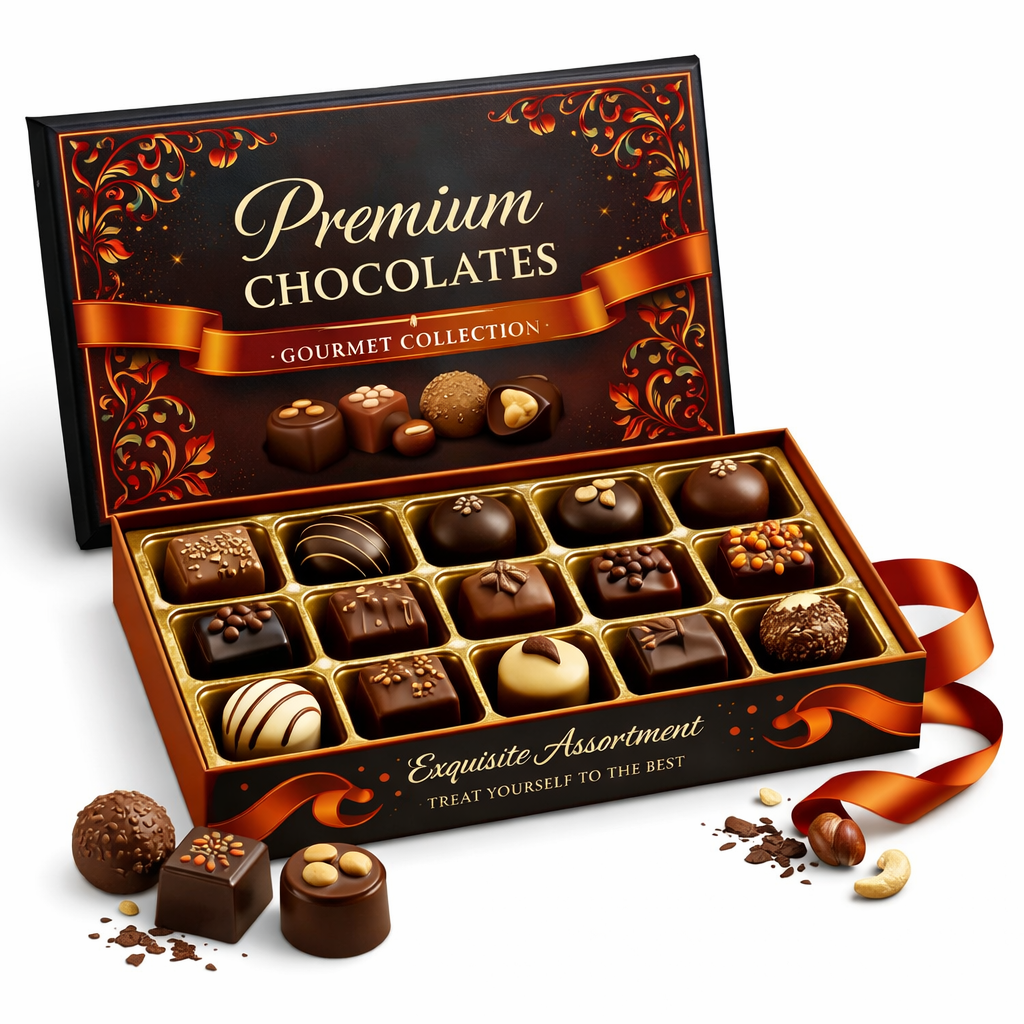
The material used for collapsible chocolate packaging affects its strength, appearance, and overall performance. Folding boxboard, coated paperboard, and other suitable paper-based materials are common options, with the right choice depending on the product weight, box dimensions, printing requirements, and distribution conditions.
Lightweight chocolates may work well with a relatively simple paperboard structure. Heavier assortments, chocolate gift collections, or boxes containing multiple inserts may require a thicker board or additional structural support.
Businesses should avoid choosing materials based on price alone. A box that bends too easily or loses its shape during transport can damage the customer experience and create unnecessary replacement costs.
Protecting Chocolate from Moisture and Damage
Chocolate is sensitive to heat, moisture, odors, and physical pressure. Although paperboard can provide structure and some protection, the outer box alone may not be enough to preserve product quality in every situation.
For this reason, chocolate packaging often works best as a system. The paper box can provide branding and structural support, while a suitable food-contact inner tray, wrapper, or barrier layer helps protect the chocolates themselves. Materials that touch the food should be selected according to applicable food-contact requirements.
Businesses should also consider the conditions their products will face during storage and shipping. If chocolates are shipped through warm regions or stored for extended periods, temperature management and appropriate protective packaging may be just as important as the box design.
Balancing Durability and Sustainability
Many chocolate brands want packaging that looks premium while using materials responsibly. Paper-based packaging can support this goal, especially when the structure is designed to avoid unnecessary material and components.
However, sustainability depends on more than whether a box is made from paper. Coatings, laminations, adhesives, plastic windows, and mixed-material inserts may affect recyclability. Brands should check local recycling guidance and discuss material specifications with their packaging suppliers before making environmental claims.
Using an appropriately sized box is another practical step. Oversized packaging may require extra paperboard, filler, and shipping space without providing meaningful benefits. A well-fitted collapsible design can help reduce unnecessary material use while keeping the product presentable.
Building a Recognizable Brand Identity
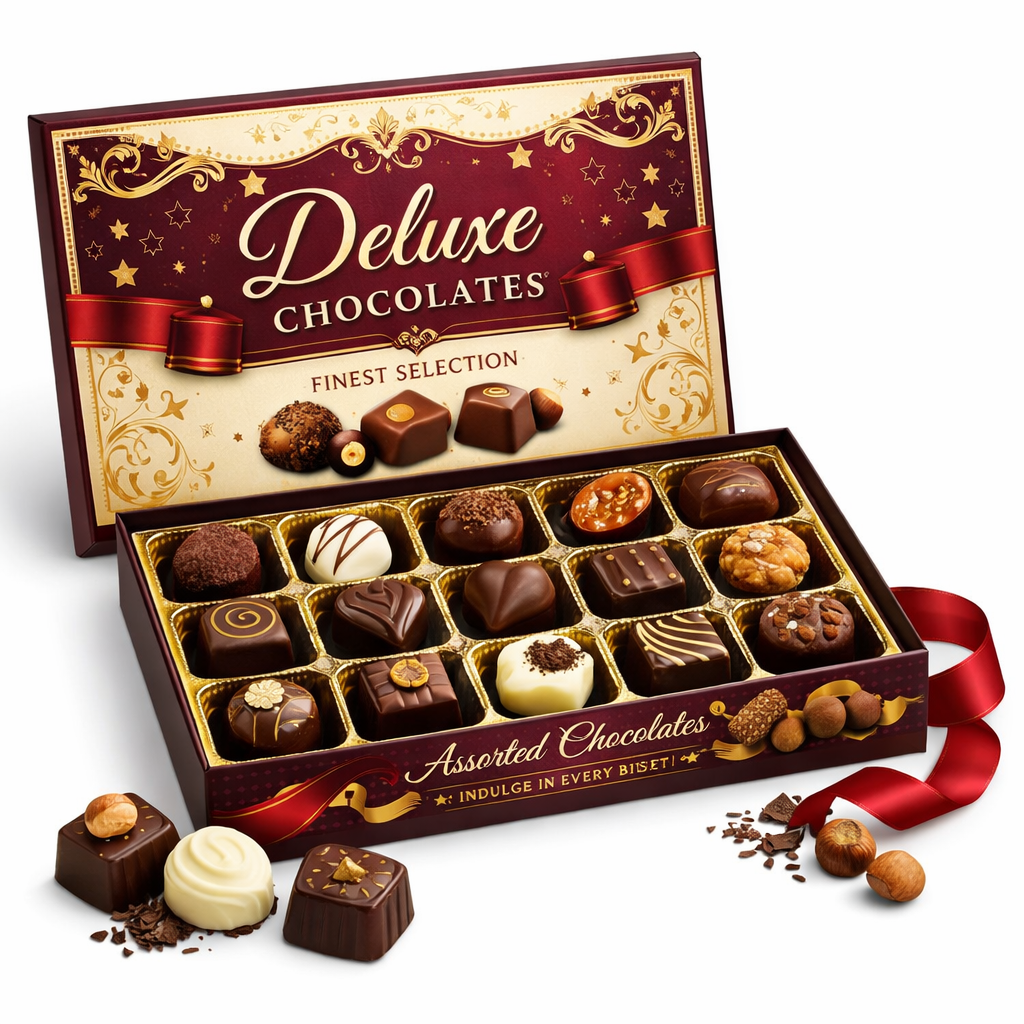
Custom packaging gives chocolate businesses an opportunity to communicate their personality. A box is more than a container; it can become part of the experience customers associate with a brand.
For a luxury chocolate company, a minimalist layout with elegant typography and a restrained color palette may create the right impression. A playful brand might choose bright colors, illustrated graphics, or bold patterns. Handmade chocolate businesses may prefer natural textures and simple artwork that reflects their small-batch approach.
With custom Chocolate Paper Boxes, brands can include their logo, product name, flavor information, brand story, and other relevant details. The goal is to make the package recognizable without overcrowding the design.
Exploring Printing and Finishing Options
Modern printing methods offer plenty of ways to make a flat-packed box look impressive after assembly. Full-color printing can bring product photography, seasonal illustrations, and detailed brand graphics to life. For a more understated appearance, businesses may prefer one or two brand colors with clean typography.
Finishing options can add another layer of visual interest. Depending on the material and production process, brands may consider matte or gloss coatings, foil stamping, embossing, or debossing. These details can make a chocolate gift box feel more distinctive, but they should be selected carefully to avoid unnecessary cost.
It is also worth remembering that printing and finishing must work with the folding structure. Artwork should be positioned so important text and logos remain visible when the box is assembled. Creases, tabs, and glued areas should be considered during the design stage.
Creating Seasonal and Gift-Ready Packaging
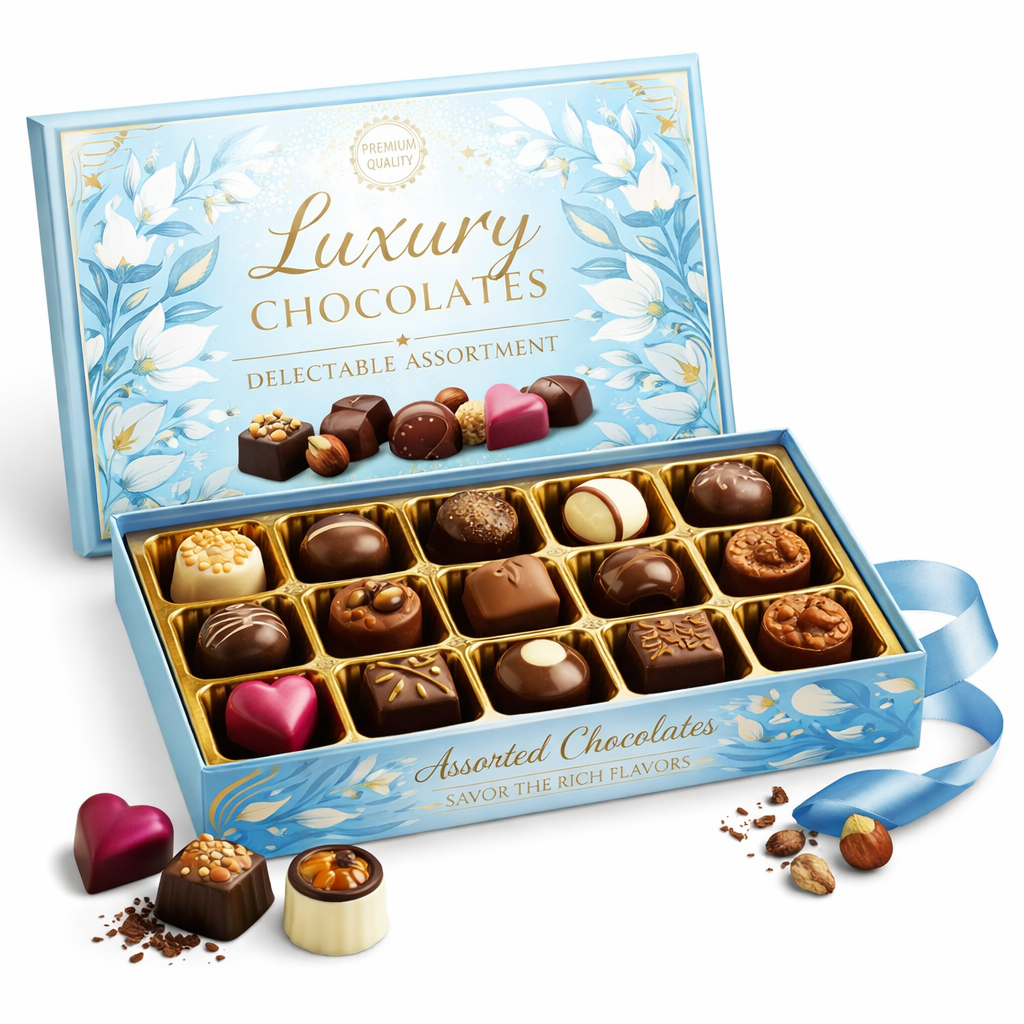
Chocolate sales often rise during holidays and special occasions. Valentine's Day, Easter, Christmas, birthdays, weddings, and corporate events all create opportunities for themed packaging.
Collapsible boxes are useful for these campaigns because businesses can store flat packaging before the selling season begins and assemble it as demand increases. A standard box structure can sometimes support several artwork variations, helping brands create different visual themes without developing an entirely new format for every campaign.
For example, a chocolate company could use a consistent box size while changing the printed design for holiday collections. This approach can simplify storage and production planning, although the final cost will depend on print quantities, artwork changes, and supplier requirements.
Making the Folding Structure Work
A collapsible box must be easy to fold while remaining stable once assembled. Common design features include pre-scored folding lines, tuck-in flaps, locking tabs, and glued seams. Each feature serves a purpose, and the right combination depends on the box shape and how it will be used.
A well-planned design should open and close smoothly without requiring excessive force. If the tabs are too tight, workers may struggle to assemble the packaging. If they are too loose, the box may open unexpectedly during handling.
This is why structural design deserves as much attention as graphics. Before mass production, businesses should request samples and assemble them several times to check whether the folds remain neat and the closures stay secure.
Adding Inserts for Different Chocolate Shapes
Chocolate products come in many forms, from small truffles and pralines to chocolate bars and assorted gift collections. A box designed for one product may not provide the right support for another.
Custom inserts can help keep individual pieces organized and reduce movement inside the package. Paperboard dividers may work for some assortments, while food-contact-compatible trays or other protective inserts may be better suited to delicate chocolates.
The insert should fit the outer box accurately. Too much empty space can allow products to shift, while a poorly fitted insert may make packing difficult. Brands should test the complete package with their actual chocolates rather than evaluating the empty box alone.
Testing Before Full Production
A packaging sample can reveal problems that are difficult to spot in a digital design. It allows businesses to check dimensions, folding accuracy, print placement, closure strength, and the overall customer experience.
For products that will be shipped directly to customers, testing should also consider the full shipping setup. The assembled chocolate box may need an additional outer carton or protective cushioning, particularly when the contents are fragile.
Useful checks include whether the box stays closed, whether the insert keeps chocolates in place, and whether the packaging arrives without crushed corners or surface damage. Testing several samples under realistic handling conditions can help identify weaknesses before a large production run.
Finding a Supplier That Understands Your Needs
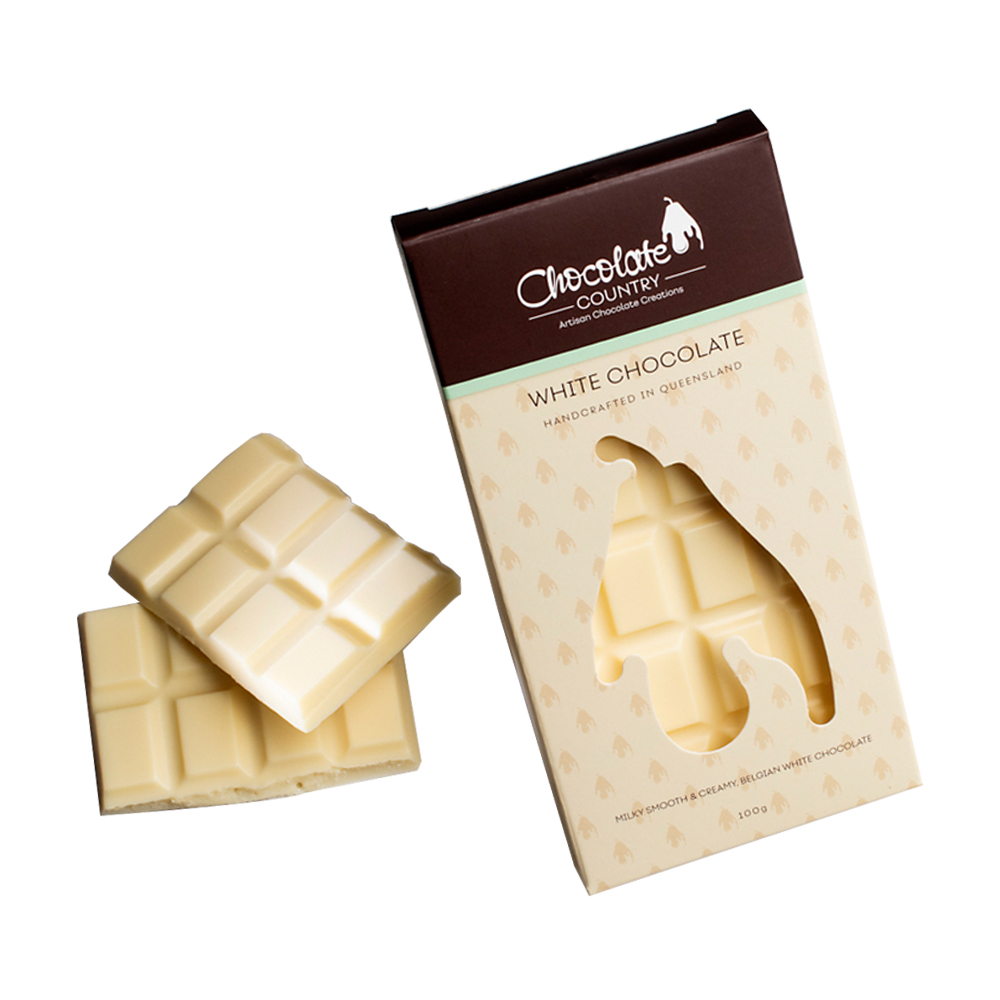
Choosing a packaging supplier involves more than comparing unit prices. Businesses should look for a manufacturer that understands paperboard selection, folding structures, printing requirements, and the practical needs of chocolate packaging.
A reliable supplier should be able to explain the available materials, recommend a suitable structure, provide samples, and clarify production specifications. It is also helpful to ask whether the supplier has experience producing food-related packaging, particularly when the design includes inserts or materials that contact the product.
Clear communication is essential. Sharing the product dimensions, expected quantity, brand artwork, delivery destination, and intended use helps suppliers provide more accurate quotations.
Comparing Cost, Quantity, and Lead Time
The final price of collapsible chocolate boxes depends on several factors, including box dimensions, paperboard thickness, printing coverage, finishing methods, inserts, order quantity, and shipping costs.
A low quoted price may not represent the best overall value if the packaging requires complicated assembly or does not protect the product adequately. Businesses should compare quotations using the same specifications and ask suppliers to identify any extra charges, such as sample fees, tooling, setup costs, or special finishing.
Lead time deserves attention as well. Custom packaging may involve design approval, sampling, production, quality checks, and transportation. For seasonal chocolate collections, placing orders early can reduce the risk of missing an important sales window.
Preparing Artwork and Ordering Samples
Before production begins, prepare high-resolution artwork and confirm the supplier's dieline, which shows the box's cut lines, folds, and glue areas. Keep important text and logos away from creases and trimming edges, and check that all product information is accurate.
It is also wise to request a physical sample before approving a large order. Review the printed colors, paperboard quality, folding process, closure, and fit of the chocolate inserts. If changes are necessary, resolve them before approving mass production.
A structured approval process can prevent avoidable mistakes and help ensure the finished boxes match the brand's expectations.
Collapsible Chocolate Paper Boxes offer chocolate businesses a practical way to combine attractive presentation with more efficient storage, shipping, and daily packaging operations. Their flat-packed structure helps reduce the space required for empty boxes, while custom printing and finishing allow brands to create packaging that reflects their identity.
The biggest benefit comes from choosing a design that works for the entire business, not just the product display. Material strength, food protection, folding performance, insert design, and shipping conditions all deserve attention. A beautiful box is valuable, but it must also protect the chocolates and remain convenient for the people who handle it.
For startups, established confectionery brands, gift retailers, and wholesale chocolate suppliers, collapsible packaging can provide flexibility as product lines and order volumes change. By selecting suitable materials, testing samples, and working with an experienced packaging manufacturer, businesses can create boxes that look professional without taking up unnecessary space.
Ultimately, smart chocolate packaging should make life easier for both the business and the customer. When a box ships flat, assembles quickly, protects the product, and delivers a memorable presentation, it becomes more than a packaging choice. It becomes a practical part of a stronger chocolate brand.
This depends on whether boxes have been printed before and deposited money saved. Most of the people that print in small quantities are better off paying cost. A simple box for stocking retail products like truffles or bonbons could be anywhere from one dollar to four dollars, and if you order 500 or more then the price portfolio will fall further-very probably each such box no more than 10 cents. A custom rigid box with foil of course is always going to be more expensive. You are better off getting a specific quote than just an estimate.
Certainly, suppliers who take their business seriously use only food grade materials and inks. All surfaces with which it comes into contact must guarantee not to contaminate whatsoever. This concerns things like the paperboard of a box, both coatings and glues. Equally, it's a good idea to check out from your supplier that their inks are deemed to be food safe. In this way you assure quality and safety in your printing.
A die line is simply a flat, two dimensional (2D) drawing of your box showing all cut lines, fold lines, and gluing areas. This is sent to you either by your suppliers or perhaps you draw my design on. It ensures that everything prints and folds correctly. It is the very first blueprint you need for your custom box.
Yes, thanks to the arrival of digital printing it is now possible to order modest quantities at low cost. Most suppliers ask for Minimum Order Quanties (MOQs) of perhaps about 25 or 50 boxes. Even so, it is worth noting that your cost per box is appreciably lower when you order a large quantity.
In switching to low-waste methods, you should choose materials like recycled Kraft paper or FSC-certified paperboard,which means it has been grown sustainably. Use soy-based inks in place of plastic coatings. A design which is simple, elegant, and made of recyclable materials will appeal to customers who care about the environment.
Post time: Oct-27-2026


