


For baking brands, a delicate cake, a box of handmade cookies, or a box of macarons, in addition to their taste and appearance, the packaging also influences the first impression of the product in consumers' minds. Especially in scenarios such as birthdays, weddings, festivals, corporate gift-giving, and e-commerce deliveries, ordinary food packaging has struggled to meet consumers' demands for "giftiness" and brand experience. Therefore, **bakery gift box packaging** has gradually evolved from merely being a product container to an important carrier that connects product protection, brand display, and consumer experience.
Modern baking gift boxes not only need to have good load-bearing capacity and stability, but also require structural design based on the size, weight, grease content, and fragility of different foods. At the same time, through customized printing, transparent windows, inner supports, and special surface treatments, ordinary baked goods can have a more professional and upscale visual effect.
Upgrade from Ordinary Food Boxes to Gift Packaging
Bakery gift box packaging is used to package products with gift attributes such as cakes, cookies, macarons, cupcakes, doughnuts, brownies, pastries, and assorted desserts. Compared to ordinary takeout boxes, gift box packaging pays more attention to **visual display, structural stability, and brand recognition**.
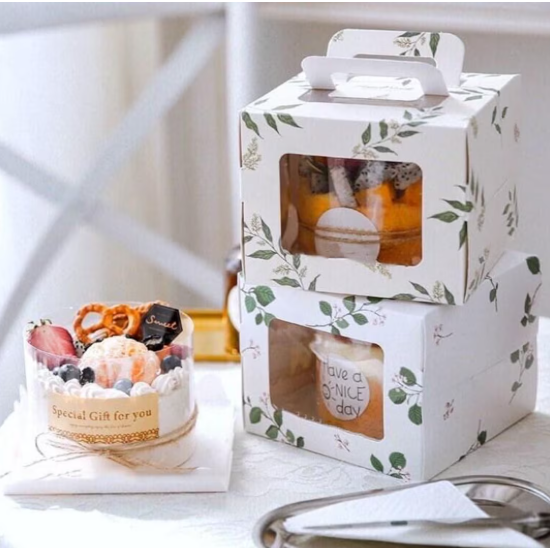
Currently, custom bakery gift boxes in the market are usually designed based on the size of the products, with different lengths, widths, and heights, and may include windows, partitions, inner supports, handles, or special opening structures. Some market solutions also offer PET transparent windows, allowing consumers to see the internal food without opening the box.
For baking brands that need to be sold as birthday gifts, holiday gifts, or corporate gifts, the right bakery gift box packaging can transform the product from "food" to "gift".
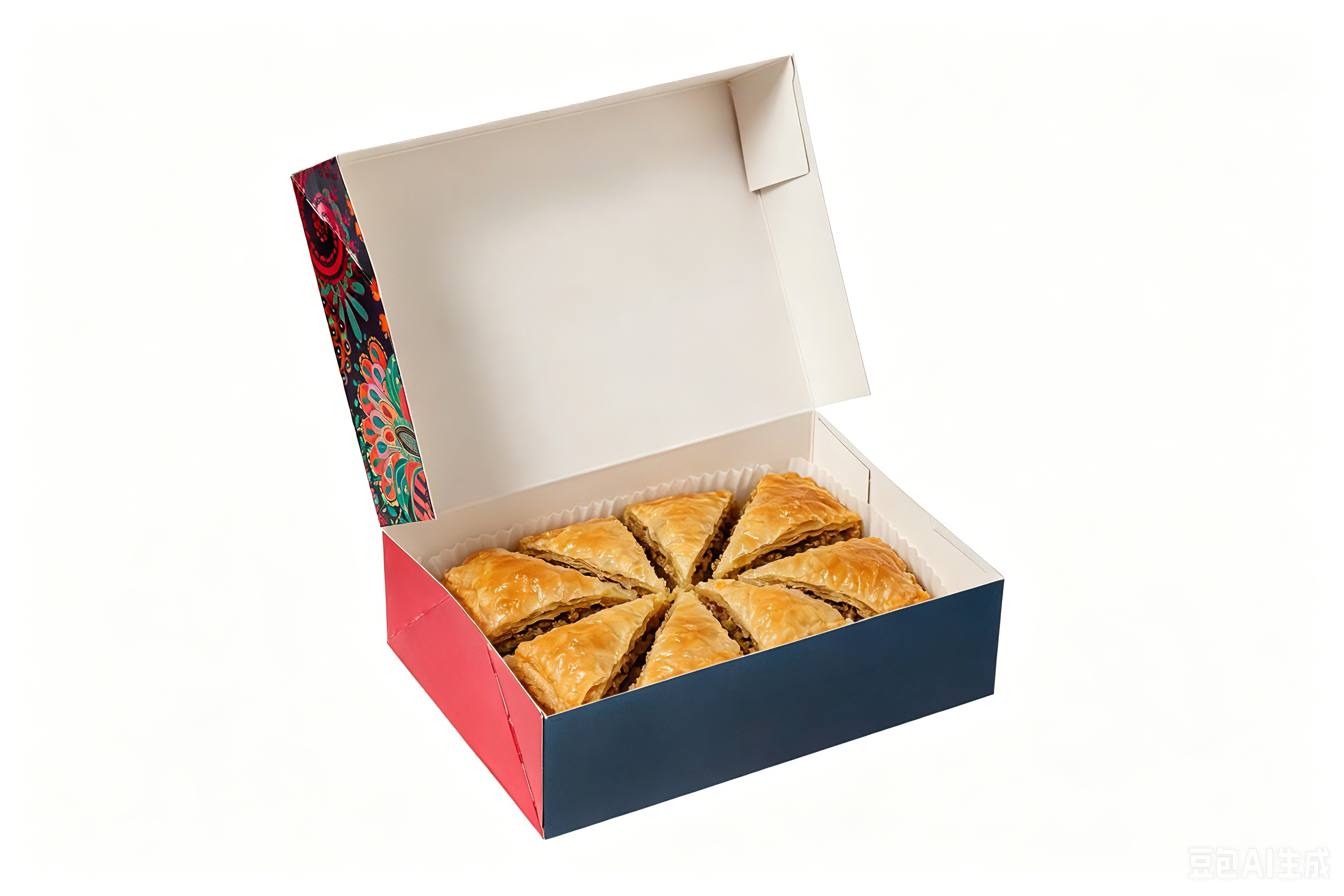
Design Based on Product Characteristics, Not Just Thick Paper
The types of baked goods vary, and so do the packaging requirements. For example, cookies and brownies usually need to consider oil and moisture resistance; macarons need to avoid impact; cream cakes rely more on the height of the box, bottom support, and internal fixation structure.
Therefore, when choosing bakery gift box packaging, one should first determine the product size, weight, quantity, and transportation method, and then select the appropriate paper and box type.
Common solutions include white card boxes, coated paper boards, corrugated paper boards, and hard gift boxes. For ordinary baked gifts, a lightweight, foldable, and transportable paper box can be chosen; for high-end gift boxes, more textured thick paper boards or hard box structures can be used.
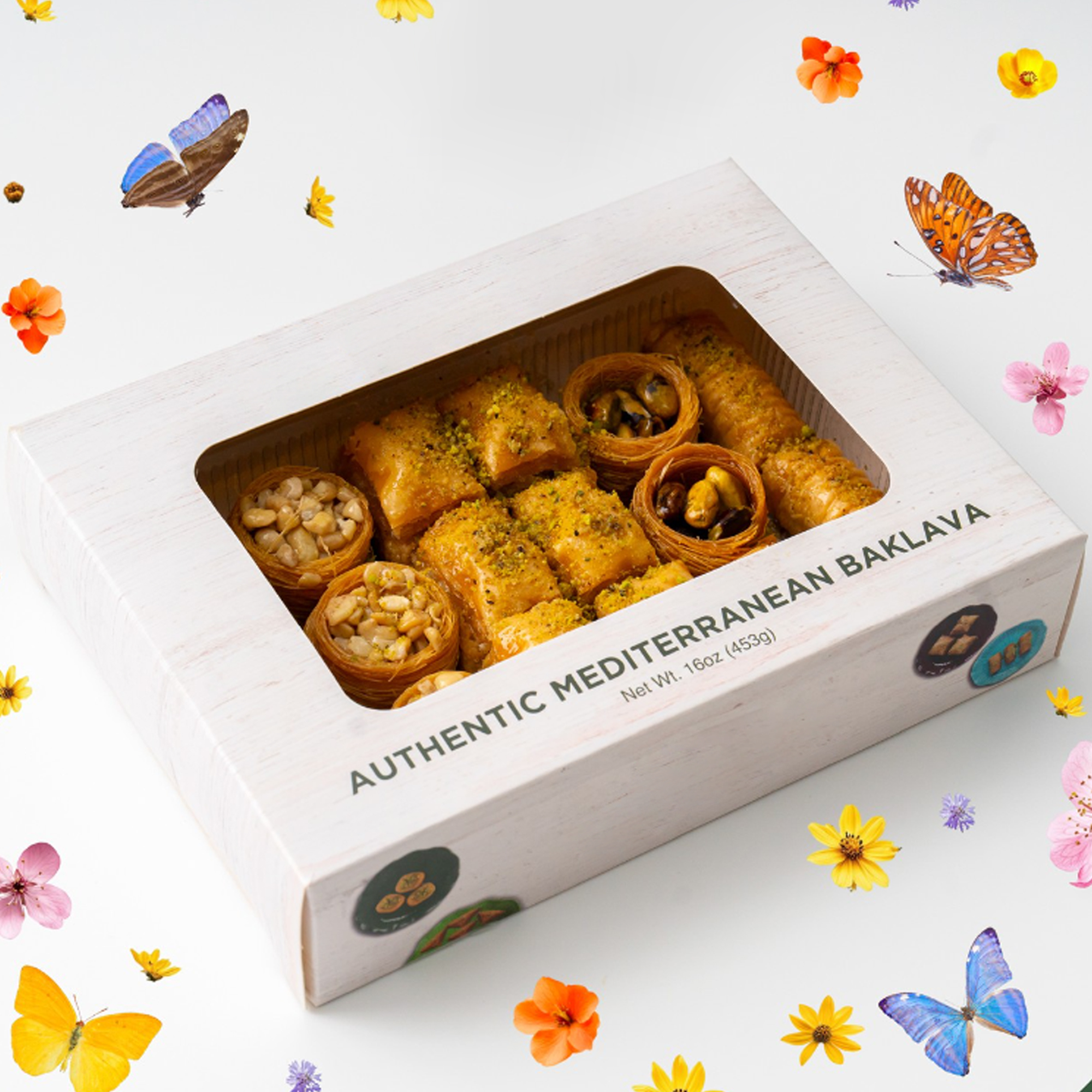
Transparent windows are also very practical designs. Transparent windows allow consumers to directly see the color and shape of the cake, cookies, or macarons, thereby enhancing their confidence in purchasing.
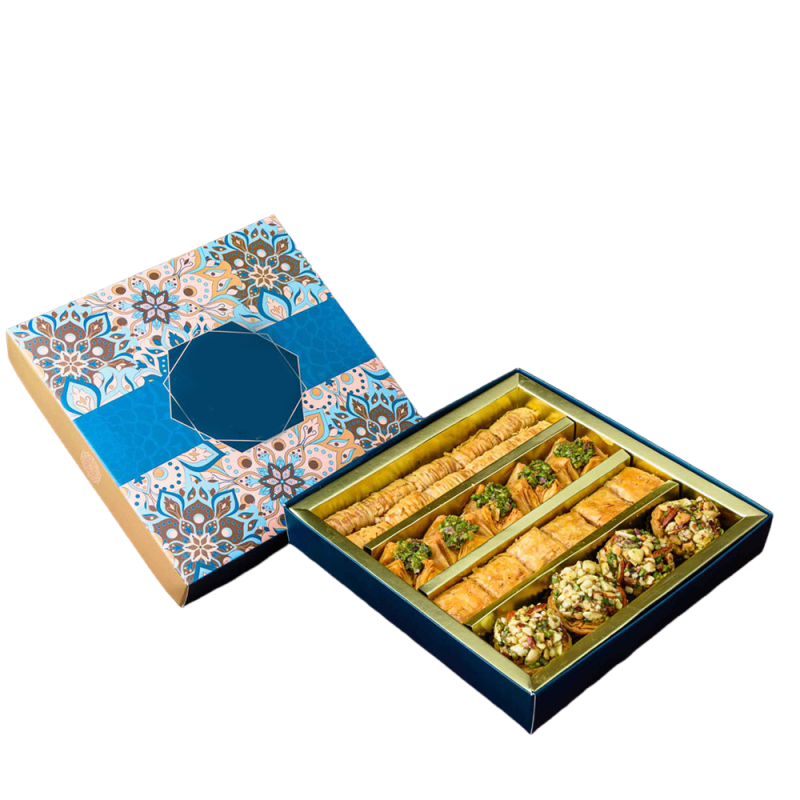
Packaging Protects the Food, But Also Acts as the Brand's "Mobile Advertisement"
When consumers receive a baked gift, the first thing they see is not the product itself, but the packaging. A custom bakery gift box packaging with a unified logo, brand colors, fonts and visual elements can help the brand create a clearer memory in the minds of consumers.
Custom bakery gift box packaging can incorporate processes such as CMYK full-color printing, spot color printing, gold stamping, silver stamping, embossing, relief printing, local UV coating, and matte film. Different processes can correspond to different brand positioning. For example, a simple matte design is suitable for modern premium bakery brands, while gold stamping and embossing are more suitable for high-end holiday gift boxes.
In addition, the inside of the packaging can also include brand stories, thank-you messages, product descriptions, QR codes or social media information, allowing consumers to further understand the brand during the opening process.
This is why more and more bakery companies now regard packaging as part of product marketing, rather than just a transportation tool.
Protecting food quality while meeting modern market demands
Bakery packaging must first meet the actual needs of food contact scenarios. For oily foods such as cream, butter, and chocolate, packaging materials and surface treatments need to consider oil resistance, moisture resistance, and structural strength to avoid the impact of food oils on the appearance of the paper box or the strength of the box body.
At the same time, environmental protection has become an important consideration in global packaging procurement. Choosing recyclable cardboard, controlling packaging size reasonably, reducing unnecessary material usage, and adopting more environmentally friendly printing and surface treatment solutions can help reduce the environmental impact of packaging.
Fuliter currently provides a one-stop solution for paper bakery packaging from materials, structure, printing to custom production, and introduces related solutions such as food contact materials, oil and water resistance treatment, and environmentally friendly packaging.
For export-oriented bakery brands, when purchasing, they should also confirm the specific regulations of the target market regarding food contact materials, labels, and environmental requirements, rather than just focusing on the appearance of the box.
What steps are needed from product size to batch production?
A complete bakery gift box packaging customization project can typically be divided into several stages: requirement confirmation, structure design, size confirmation, material selection, Artwork design, proofing, sample confirmation, batch production, quality inspection, and transportation.
First, the brand needs to provide product size, single box quantity, weight, packaging purpose, and estimated purchase quantity. The supplier then recommends suitable box types, paper materials, and internal structures based on these information.
Subsequently, knife mold design and Artwork layout are carried out, and Logo, colors, printing methods, and surface treatments are confirmed. Proofing is a very important step, as the actual sample can help customers check the size, opening method, printing color, and food placement effect of the box.
The leading custom packaging pages also generally list **custom size, custom printing, window, insert, sample, and bulk order** as core procurement information, indicating that these factors are highly relevant to the commercial search intentions of users.
When choosing a supplier, it is not only necessary to compare unit prices, but also to comprehensively consider production experience, material quality, proofing ability, printing effect, quality control, MOQ, delivery cycle, and international logistics capabilities.
For bakery brands that hope to make long-term purchases, packaging manufacturers with a complete production chain can reduce communication costs between design, proofing, production, and logistics.
An excellent **bakery gift box packaging** should address three key issues simultaneously: protecting the baked goods, showcasing the brand value, and creating a satisfying opening experience. From cake boxes, cookie boxes to macaron gift boxes, different products should be equipped with appropriate packaging solutions based on their size, weight, structure, and transportation methods.
For baking brands, custom packaging is not merely about printing the logo; it involves creating a complete brand experience through materials, box design, windows, inner supports, printing, and surface treatments. As a paper packaging manufacturer, Fuliter can provide customized paper boxes, gift boxes, and baking packaging solutions based on the products and brand requirements of customers, helping global baking brands achieve an integrated upgrade from product protection to brand display.
This depends on whether boxes have been printed before and deposited money saved. Most of the people that print in small quantities are better off paying cost. A simple box for stocking retail products like truffles or bonbons could be anywhere from one dollar to four dollars, and if you order 500 or more then the price portfolio will fall further-very probably each such box no more than 10 cents. A custom rigid box with foil of course is always going to be more expensive. You are better off getting a specific quote than just an estimate.
Certainly, suppliers who take their business seriously use only food grade materials and inks. All surfaces with which it comes into contact must guarantee not to contaminate whatsoever. This concerns things like the paperboard of a box, both coatings and glues. Equally, it's a good idea to check out from your supplier that their inks are deemed to be food safe. In this way you assure quality and safety in your printing.
A die line is simply a flat, two dimensional (2D) drawing of your box showing all cut lines, fold lines, and gluing areas. This is sent to you either by your suppliers or perhaps you draw my design on. It ensures that everything prints and folds correctly. It is the very first blueprint you need for your custom box.
Yes, thanks to the arrival of digital printing it is now possible to order modest quantities at low cost. Most suppliers ask for Minimum Order Quanties (MOQs) of perhaps about 25 or 50 boxes. Even so, it is worth noting that your cost per box is appreciably lower when you order a large quantity.
Post time: Sep-04-2026


