


In today’s increasingly segmented consumer market, gift boxes are far more than mere protective packaging. For brands, a gift box with distinctive visual characteristics and a unique structure reinforces product positioning and allows consumers to experience the brand's value during the unboxing process. Consequently, more enterprises are turning to professional gift box OEM manufacturers to create custom packaging that aligns with their unique style.
Gift boxes serve as a crucial visual touchpoint for consumers encountering a product. Unlike generic, standardized packaging, custom gift boxes that reflect a brand's identity are far more memorable.
Professional OEM manufacturers plan packaging based on factors such as the brand logo, product characteristics, target demographics, and sales scenarios. Every element—from color schemes and graphic designs to the box structure itself—can be tailored to the brand's style. For instance, a brand targeting young consumers might opt for a clean, bold visual design, whereas a high-end gift brand might emphasize quality through understated color palettes, premium materials, and exquisite craftsmanship.
This personalized OEM model transforms the gift box from a simple container into an integral part of the brand's visual identity.
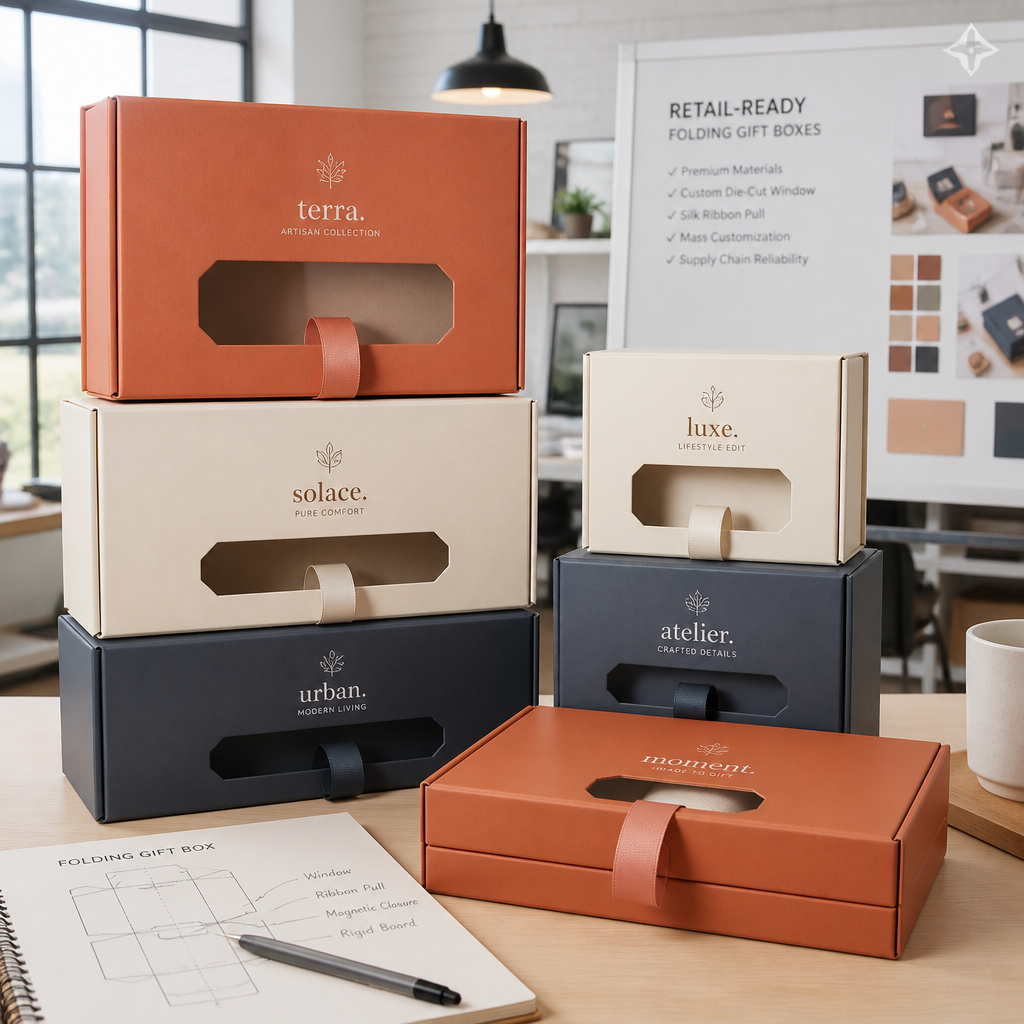
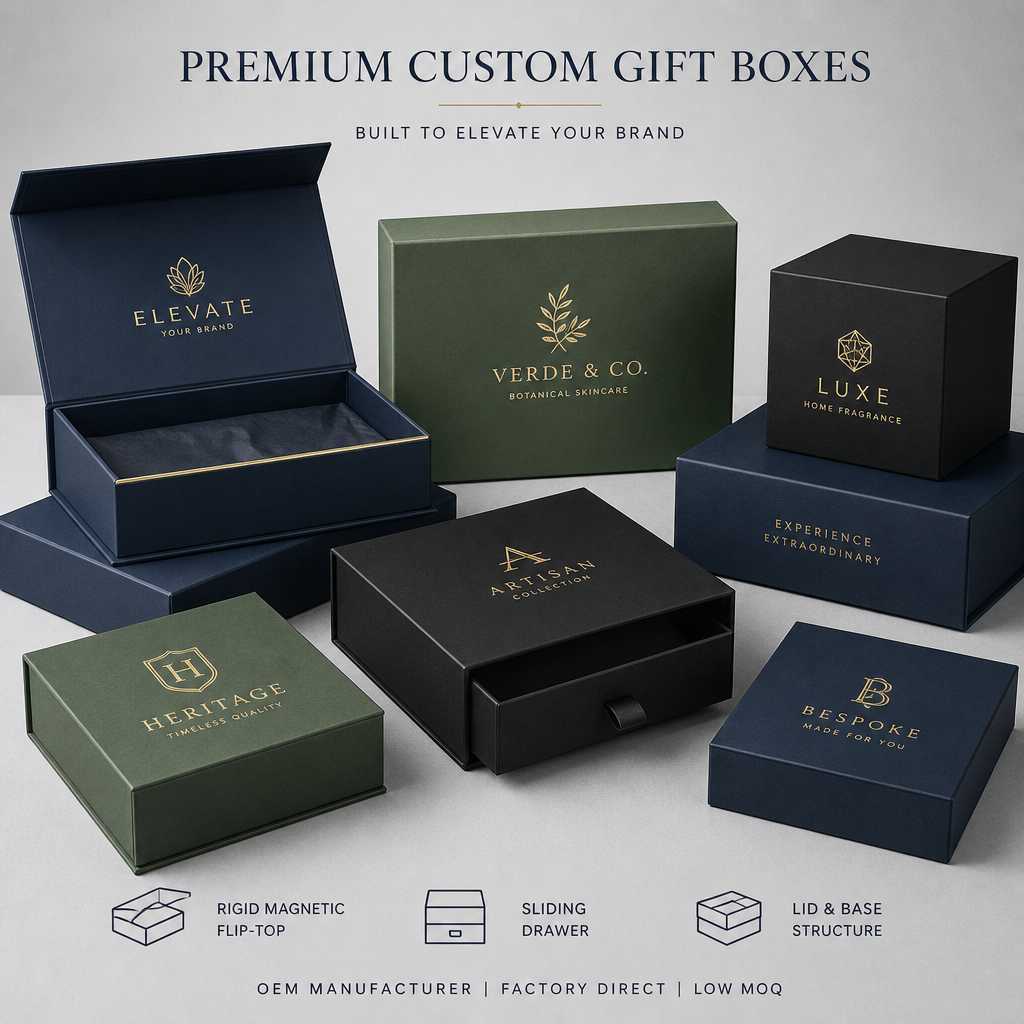
Different products have distinct requirements regarding the functionality and presentation of gift boxes. Traditional "lid-and-base" boxes offer a simple, elegant structure suitable for food, tea, and standard gifts; drawer-style boxes provide an enhanced unboxing experience ideal for premium products; and magnetic-closure boxes create a sense of occasion through their unique opening mechanism.
For brands seeking differentiated packaging, OEM manufacturers can develop custom structures based on product dimensions, weight, and usage scenarios, ensuring structural stability while creating distinctive visual effects.
Thoughtful structural design not only elevates the product's perceived value but also improves the consumer experience, making the packaging more convenient to open, display, and store.
Materials and Craftsmanship: Creating a Unique Tactile Experience of gift box OEM manufacturer
The appeal of a personalized gift box stems not only from its design but also from the materials and manufacturing techniques used, both of which significantly influence the final result.
Depending on the product's positioning, manufacturers can select from a range of materials, including white cardstock, greyboard, kraft paper, and various specialty papers. Furthermore, techniques such as hot stamping, embossing, spot UV coating, screen printing, and lamination can be employed to make logos, brand graphics, and key visual elements stand out. For instance, high-end gift boxes can be enhanced with hot stamping and embossing to convey sophistication, while brands with a natural aesthetic might opt for eco-friendly paper and minimalist printing to create a cohesive brand identity. Professional OEM manufacturers can recommend the right combination of materials and techniques based on budget and desired outcomes, avoiding excessive packaging while ensuring visual appeal.
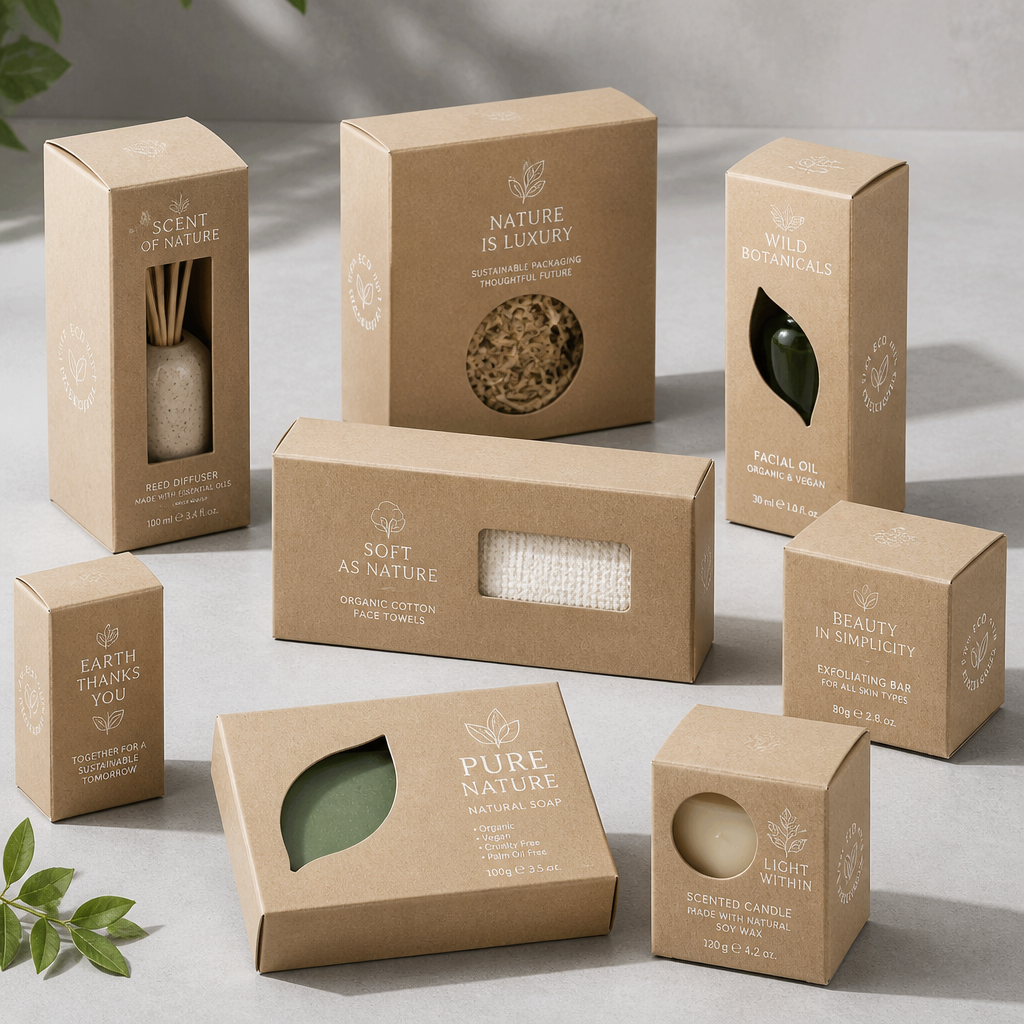
We are also offering finishing options such as glossy and matte look which gives the custom printed candy boxes a final touch. They can add sparkle to your design and also give added protection.
| Feature | Application | Cost Impact |
| Printing: Digital | Small quantities, complex color layouts | Low setup cost, high per-unit cost |
| Printing: Offset | High quantities, precise color matching | High setup cost, low per-unit cost |
| Finish: Gloss Lamination | For a bright, eye-catching look; it also protects | Low-Medium |
| Finish: Matte Lamination | For an elegant, classy, modern look | Low-Medium |
| Finish: Spot UV | To show a logo or highlight a specific design | Medium |
| Finish: Foil Stamping | For products with luxury and a premium feel (gold, silver) | High |
| Finish: Embossing/Debossing | Creating the feel of texture and the 3D effect | Medium-High |
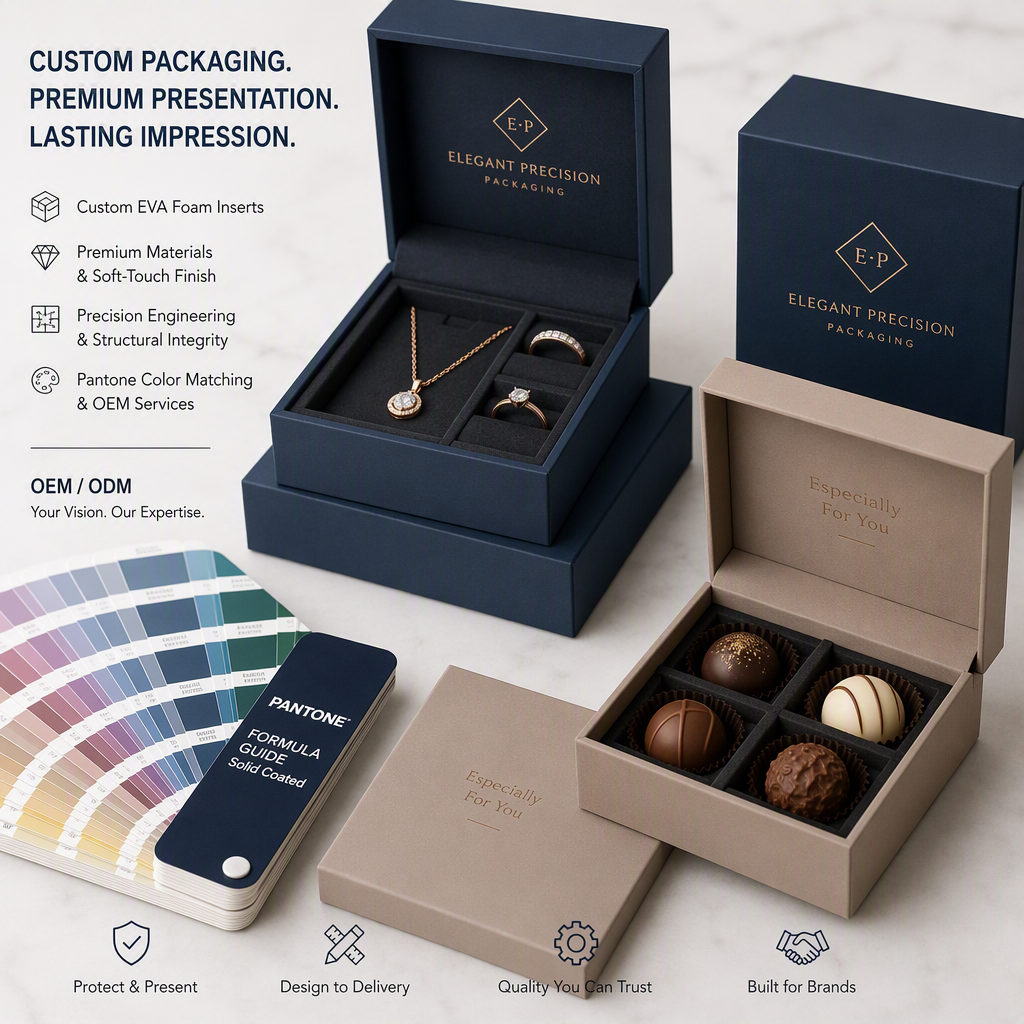
For businesses, the advantage of the OEM manufacturing model lies in the ability to directly translate design concepts into tangible products. Clients can specify dimensions, quantities, materials, structural designs, and finishing techniques, while the manufacturer handles prototyping and production.
Sample verification prior to mass production allows for the early inspection of box shapes, colors, printing quality, and fine details, thereby minimizing errors during full-scale manufacturing. Brands with multiple product lines can also use a unified packaging language to create a cohesive series of gift boxes, establishing a visual connection between different products.
Price should not be the sole criterion when selecting a supplier. Businesses should also evaluate the manufacturer's design collaboration capabilities, production experience, quality control standards, craftsmanship, and delivery reliability.
An ideal long-term OEM partner is one that understands the brand's needs and offers sound advice on materials, structure, and production methods, rather than simply executing tasks based on blueprints. Effective communication and stable production capabilities enable brands to maintain packaging quality while keeping costs under control.
As consumers place increasing importance on the product experience, the value of gift boxes has evolved from mere "packaging" to an integral part of the "brand experience." Distinctive, personalized gift boxes reinforce brand identity and enhance product appeal—whether on retail shelves, e-commerce pages, or in gift-giving scenarios.
Therefore, when seeking an OEM manufacturer, businesses should take a holistic approach that considers design, structure, materials, craftsmanship, and production capabilities. Through professional OEM customization, every gift box can align with the brand's positioning, creating truly recognizable packaging that allows products to stand out in a highly competitive market.
A gift box OEM manufacturer is a specialized company that provides custom production services based on a client's brand positioning, design concepts, and product requirements. Clients provide elements such as logos, design drafts, dimensions, and functional specifications, while the manufacturer handles material sourcing, prototyping, production, printing, and finishing processes.
Professional gift box OEM manufacturers typically offer services including box structure design, custom sizing, material selection, graphic printing, and logo customization, as well as surface treatments like hot stamping, embossing, UV coating, and lamination. They can also develop various box structures tailored to specific products, such as drawer-style boxes, lid-and-base boxes, magnetic closure boxes, and flip-top boxes.
The MOQ (Minimum Order Quantity) varies depending on factors such as box size, materials, structure, printing methods, and production techniques. Standard gift boxes are generally better suited for mass production, whereas designs with unique structures or complex craftsmanship may require higher minimum quantities. Specific quantities must be confirmed based on the actual project requirements.
The production timeline depends on design approval, prototyping, material preparation, printing processes, and order volume. Typically, the process begins with design and prototyping; mass production is scheduled only after the client approves the sample. If the project has a specific product launch date, it is advisable to discuss the production schedule with the OEM manufacturer well in advance.
In switching to low-waste methods, you should choose materials like recycled Kraft paper or FSC-certified paperboard,which means it has been grown sustainably. Use soy-based inks in place of plastic coatings. A design which is simple, elegant, and made of recyclable materials will appeal to customers who care about the environment.
Post time: Aug-25-2026


