


Let me tell you about a moment I witnessed that changed how I think about candy packaging forever.
A friend of mine received a box of chocolates from a high-end brand. She set it on the table, and for a solid ten seconds, nobody said a word. Everyone just stared at the box. It was matte black with subtle gold foil details. The lid had a slight heft to it. When she finally lifted it, the lid opened slowly—almost theatrically—and inside, each piece of chocolate sat in its own velvet-lined compartment like a jewel in a display case. We were grown adults, and we gasped. Over packaging.
That's what luxury candy box packaging does. It transforms candy from a casual impulse purchase into a remembered experience. It makes a $5 piece of chocolate feel worth $25. It turns a simple gift into a statement about how much the recipient matters.
I've worked in food packaging for years, and candy is one of the most interesting categories to design for because the emotional stakes are so high. People don't just eat candy—they give it, they share it, they use it to celebrate and comfort and apologize. The box carries all of that emotional weight. Let's talk about how to get it right.
Here's a misconception I hear all the time: "If I just make the box shiny, it'll look expensive." Nope. Shiny can look cheap fast. True luxury candy box packaging is built on restraint, material quality, and attention to details that most people never consciously notice but everyone feels.
The first thing is weight. Pick up a cheap candy box and then pick up a luxury one. The difference is immediate. Luxury boxes use rigid chipboard—thick, dense, substantial. When you hold it, there's a satisfying heft. It feels permanent, like it could be reused for years. That physical weight translates directly into perceived value.
The second thing is texture. Your fingers are incredibly sensitive, and they're reading the surface of the box before your eyes even focus on it. Soft-touch matte lamination feels velvety and warm. Uncoated textured paper feels organic and artisanal. A smooth, glassy surface feels modern and polished. Each texture tells a different story about the candy inside.
The third thing is precision. Luxury is about things fitting perfectly. A lid that aligns flush with the base. Corners that are sharp and clean. Edges that are finished, not raw and fraying. Foil stamping that's crisp, not blurry. These details are invisible when they're right and glaring when they're wrong. A good manufacturer sweats these details. A great one obsesses over them.
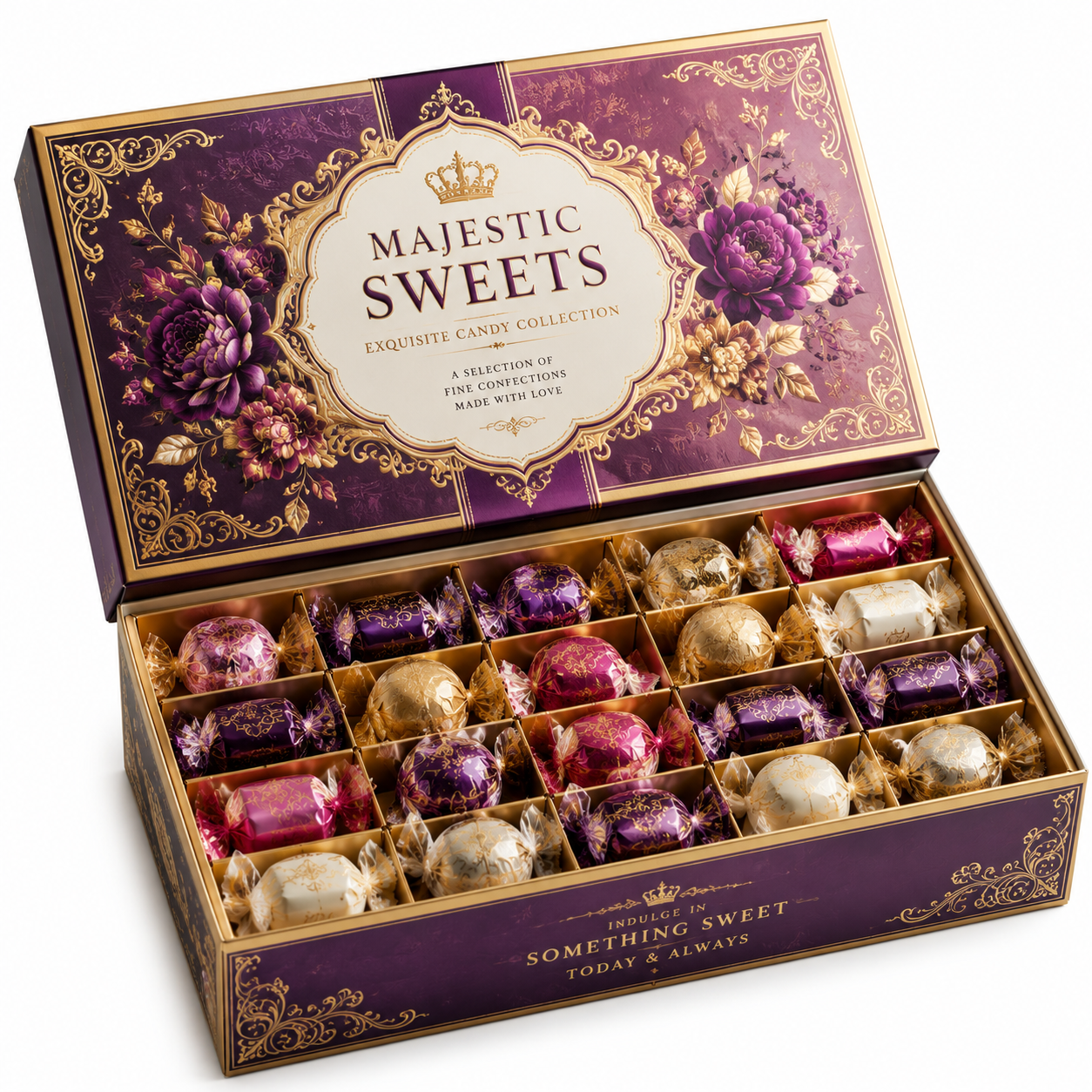
When I consult with brands on luxury candy box packaging, material selection is where we spend the most time. It's the foundation everything else builds on.
Rigid grey board wrapped in premium art paper is the industry standard for luxury. But "premium art paper" covers a huge range. Matte coated papers with soft-touch lamination are the current favorite for contemporary brands—they photograph beautifully and feel incredible in hand. Uncoated papers with a natural grain are trending among organic and craft candy makers who want their packaging to feel honest and artisanal. Metallic papers, particularly in champagne and copper tones, add a celebratory shimmer that works beautifully for holiday collections.
Beyond paper, fabric-wrapped boxes bring something special. A linen or cotton wrap adds texture and softness that paper can't match. It makes the box feel less like packaging and more like a keepsake. Some brands are even wrapping boxes in vegan leather or incorporating wood veneer accents for a more dramatic statement.
Inside the box, the materials matter just as much. Flocked inserts—where the tray is coated with a velvety fiber—cradle each piece of candy in softness. Satin or grosgrain ribbon pulls make it easy to lift the tray out without damaging the candy. A printed message on the inside lid adds a personal touch that customers remember. These interior details are what people discover during the unboxing, and that discovery is what gets shared on social media.
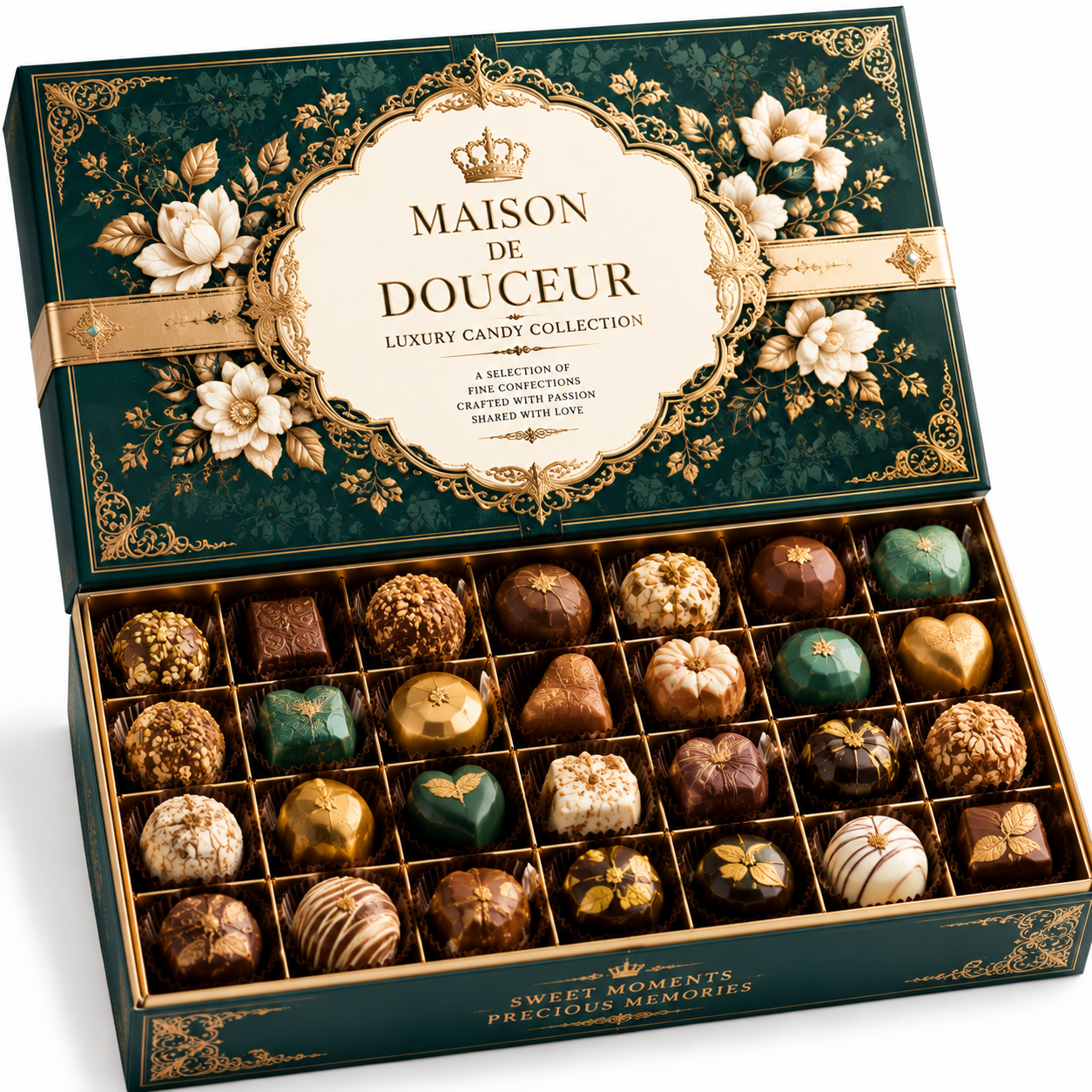
We are also offering finishing options such as glossy and matte look which gives the custom printed candy boxes a final touch. They can add sparkle to your design and also give added protection.
| Feature | Application | Cost Impact |
| Printing: Digital | Small quantities, complex color layouts | Low setup cost, high per-unit cost |
| Printing: Offset | High quantities, precise color matching | High setup cost, low per-unit cost |
| Finish: Gloss Lamination | For a bright, eye-catching look; it also protects | Low-Medium |
| Finish: Matte Lamination | For an elegant, classy, modern look | Low-Medium |
| Finish: Spot UV | To show a logo or highlight a specific design | Medium |
| Finish: Foil Stamping | For products with luxury and a premium feel (gold, silver) | High |
| Finish: Embossing/Debossing | Creating the feel of texture and the 3D effect | Medium-High |
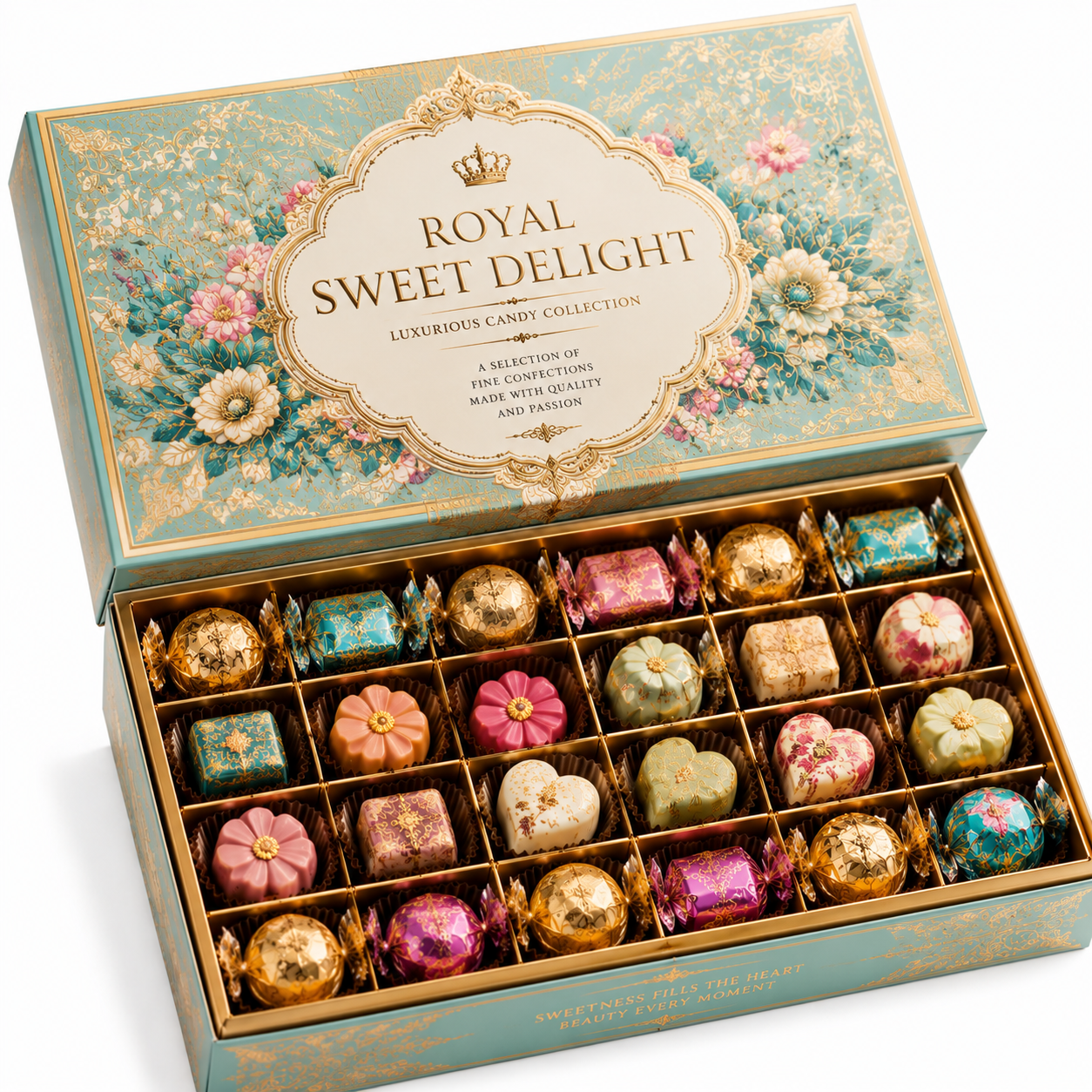
The base materials set the stage, but the finishes are the performance. Luxury candy box packaging uses finishing techniques the way a jeweler uses settings—to showcase and elevate.
Hot foil stamping is the heavyweight here. Gold foil on matte black or deep navy reads instantly as luxury. Rose gold feels fresh and romantic—perfect for Valentine's or Mother's Day collections. Holographic foil adds a playful shimmer that works beautifully for candy brands with a younger, more vibrant identity. The key with foil is restraint. A small logo or a thin border is elegant. Covering half the box in foil looks like you're trying too hard.
Embossing and debossing create dimensional depth that flat printing can't achieve. A debossed logo feels engraved—like the brand is literally pressed into the box. When combined with foil, the effect is stunning: a gold foil logo that's also indented into the surface, giving both visual and tactile impact.
Spot UV is another tool that creates contrast. Imagine a matte black box with a glossy, reflective pattern that only appears when the light hits it. It's subtle, but it catches the eye and draws attention to specific elements. This technique works brilliantly for highlighting a brand name, a pattern, or a central visual motif.
Edge painting is the detail that separates truly premium packaging from the merely nice. Cheap boxes show raw grey board at the edges and corners. Luxury boxes have those edges colored—often in the same shade as the wrap, sometimes in a contrasting color for a more designed look. Gold-gilded edges are the ultimate statement. This is a detail that adds cost but signals craftsmanship in a way that subconsciously registers as quality.
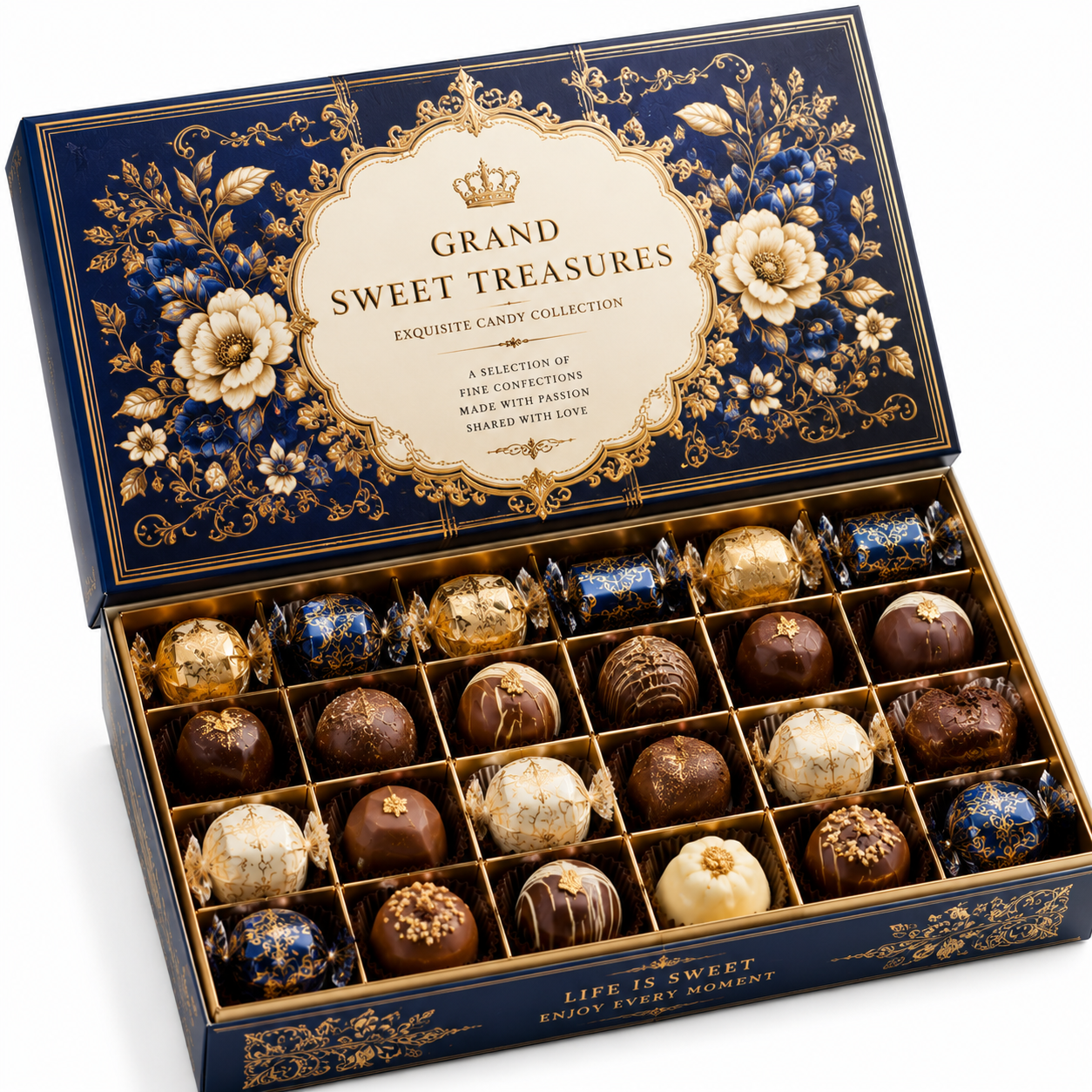
The best luxury candy box packaging isn't just beautiful on the outside—it's intelligently engineered on the inside. The way a box opens, the way candy is presented, the way it feels to interact with—all of this is structural design.
Magnetic closures are the gold standard. That gentle resistance when you lift the lid, followed by the soft snap as it closes—it's a tactile experience that feels engineered and precise. Magnetic closures also make boxes easier to open and close repeatedly, which matters because customers who buy luxury candy often save the box for storage or reuse.
Drawer-style boxes create a completely different unboxing moment. Instead of lifting a lid, the inner tray slides out horizontally like a tiny treasure chest. It's unexpected and delightful. For candy collections with multiple layers—say, a selection of truffles in the top tray and caramels in the bottom—drawer boxes let customers discover each layer sequentially.
Custom-fit inserts are where candy presentation really shines. Each piece sits in its own precisely sized compartment, protected from shifting and damage. The insert can be made from vacuum-formed PET for a sleek, modern look, from molded pulp for an eco-friendly aesthetic, or from flocked cardboard for a soft, luxurious feel. The key is that every piece looks intentionally placed, not dumped in.
For brands that want the ultimate unboxing experience, there are more dramatic options. Boxes with a hinged lid that opens like a book. Boxes with a ribbon mechanism that lifts the inner tray as you remove the lid. Boxes with multiple tiers that unfold in sequence. These are the designs that generate unboxing videos and social media buzz. They cost more, but the organic marketing they produce often justifies the investment.
Not every factory that claims to make luxury candy box packaging actually delivers luxury quality. Here's how to find the ones that do.
Start with samples. This is non-negotiable. Before you commit to a manufacturer, order sample boxes from their existing catalog. Feel the weight. Check the corners. Look at the edges. Examine the foil stamping under bright light. If the sample feels flimsy or sloppy, their production runs won't be better. Luxury is in the details, and the sample reveals their attention to those details.
Ask about their experience with rigid boxes specifically. Folding cartons and rigid boxes are completely different manufacturing processes with different skill requirements. A factory that's great at folding cartons might struggle with the precision wrapping required for rigid luxury boxes. Ask to see their rigid box portfolio. Ask about the brands they've served. A manufacturer with a track record in luxury packaging will be proud to show it.
Certifications matter, especially since candy packaging touches food. Look for ISO 22000 or BRCGS certification. Ask about low-migration inks and food-safe adhesives. These aren't optional extras—they're basic requirements for food-contact packaging. A manufacturer who can't produce these documents is not equipped to serve confectionery brands.
Communication is the final piece. Luxury packaging projects involve a lot of back-and-forth—design revisions, sample feedback, production updates. A manufacturer with a responsive, detail-oriented sales team will make the process smooth. A manufacturer who's slow to reply or vague in their answers will cause stress at every stage. Trust your gut on this one.
It comes down to materials, weight, and precision. Luxury boxes use rigid chipboard with substantial heft, not thin folding carton. The surfaces have texture—soft-touch lamination, fabric wraps, or high-quality uncoated papers. The details are finished perfectly: clean edges, flush corners, crisp foil stamping. A nice box looks good in photos. A luxury box feels incredible in your hands and holds up to close inspection.
It varies widely based on size, materials, and volume. A small rigid box with a magnetic closure and simple foil logo might run $1.50-$3.00 per unit at 1,000-2,000 units. More elaborate designs with custom inserts, multiple finishes, and larger dimensions can reach $4.00-$8.00 per unit. At higher volumes—10,000 units or more—per-unit costs drop significantly. The key is working with your manufacturer to balance impact against cost. Sometimes a single well-chosen finish delivers more luxury feel than five mediocre ones.
Yes, and this is where the industry is heading. FSC-certified rigid board, recycled paper wraps, and water-based coatings all deliver premium quality with reduced environmental impact. Many luxury brands are leaning into sustainability as part of their identity—uncoated recycled papers with debossed logos look beautifully understated and communicate responsibility. Compostable inner trays made from molded pulp are replacing plastic. The assumption that luxury requires plastic-heavy finishes is outdated.
Most manufacturers set MOQs between 500 and 1,000 units for rigid boxes. Some smaller or more specialized factories will do 200-300 units using digital printing for the wrap. The per-unit cost at those low volumes will be noticeably higher, but it allows you to test a design or create a limited seasonal run without overcommitting. If your annual volume is below 2,000 units, discuss your specific situation with the manufacturer—some are more flexible than their published MOQs suggest.
Give yourself at least four to five months. For Christmas, start the conversation in July. For Valentine's Day, start in September. The design and sampling phase takes 3-5 weeks. Production takes 3-5 weeks. Sea freight takes 4-6 weeks. Customs clearance and inland delivery add another 1-2 weeks. That's roughly four to five months total. The manufacturers worth working with get booked solid during peak seasons, and late orders mean paying premium freight rates or missing shelf dates entirely. Plan early. Your future self will thank you.
Post time: Aug-18-2026


