


Walk into any Middle Eastern grocery store, a gourmet food shop in London, or a specialty market in California. Look at the date section. What do you actually see? Rows and rows of nearly identical boxes. Gold typography. A picture of palm trees. Maybe a crescent moon. Nothing stands out. Nothing grabs you.
Now imagine your box in that same aisle. The colors are unmistakably yours. Your logo is crisp and prominent. The design tells a story that nobody else is telling. A shopper picks it up, turns it over, smiles, and puts it in their cart. That's what custom printed dates boxes do. They turn a commodity into a brand.
I work in food packaging, and I'll be honest with you—dates are one of those products where packaging makes an outsized difference. The fruit is beautiful, but the category is flooded with generic packaging that does nothing for the producer. If you're putting real effort into growing or sourcing incredible dates, your box should work just as hard as you do. Let me show you what I mean.
I've talked to dozens of date producers, and the frustration is always the same. They buy stock boxes because it's easier. No design headaches. No setup fees. Just pick a template, add a sticker with your logo, and you're done. But here's what actually happens.
Your box looks identical to three other brands on the same shelf. A customer grabs one at random. Maybe it's yours, maybe it's your competitor's. You've surrendered any control over that decision. Worse, stock boxes often aren't sized correctly for your specific dates. Medjool dates are huge. Ajwa dates are smaller and darker. A generic box fits neither perfectly. The dates slide around, get damaged, or just look sloppy when the customer opens the lid.
Custom printed dates boxes fix all of this at once. The dimensions match your product exactly. The printing reflects your actual brand identity, not some generic template designed ten years ago. Every surface—front, back, sides, inside lid—is yours to use. Put your story there. Put serving suggestions. Put a QR code to a video of your farm. Suddenly you're not just selling dates. You're selling an experience.
The other thing nobody tells you about stock boxes: they communicate "budget product" to consumers. It's subconscious but powerful. A custom box with thoughtful design signals quality and care. Shoppers pick that up instantly, and they'll pay more because of it.
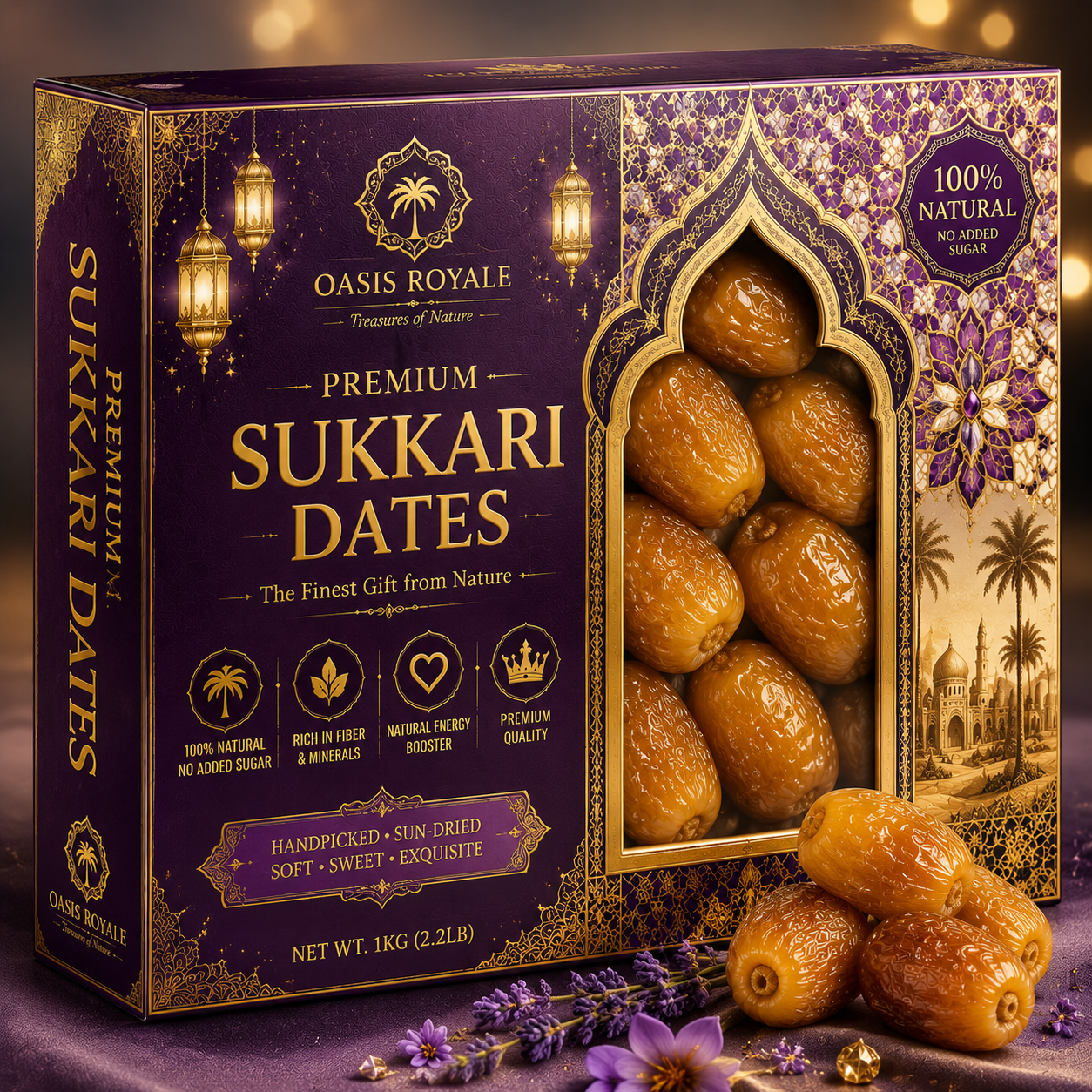
A lot of people hear "custom printed" and think it just means slapping a logo on the front. That's barely scratching the surface. When you work with a supplier who specializes in custom printed dates boxes, the creative possibilities are genuinely wide open.
Printing techniques alone give you a massive toolkit. Offset printing gives you photorealistic imagery—perfect if your dates have that gorgeous glossy skin you want to show off in close-up. Hot foil stamping in gold or copper adds a metallic sheen that catches light and reads as premium from across the room. Debossing presses your logo into the board so customers feel it with their fingertips. Spot UV lets you highlight specific elements—your brand name, a pattern, a key visual—with a glossy pop against a matte background. Combine two or three of these techniques on one box, and you've got something that feels genuinely luxurious.
The inside of the box is prime real estate that most brands completely ignore. Print a flavor pairing guide inside the lid. "Pairs beautifully with black coffee, sharp cheddar, or a glass of tawny port." Print your origin story. "These Medjool dates come from a single oasis farm in Al Qassim, where our family has cultivated palms for four generations." Print a thank you note in the target market's language. These details are cheap to add during production but they create an emotional connection that generic boxes will never achieve.
For seasonal collections—Ramadan, Eid, Diwali, Christmas corporate gifts—custom printing lets you adapt quickly. You can create limited edition designs without changing your box structure. Same box dimensions, different artwork. Your production line stays efficient while your shelf presence stays fresh.
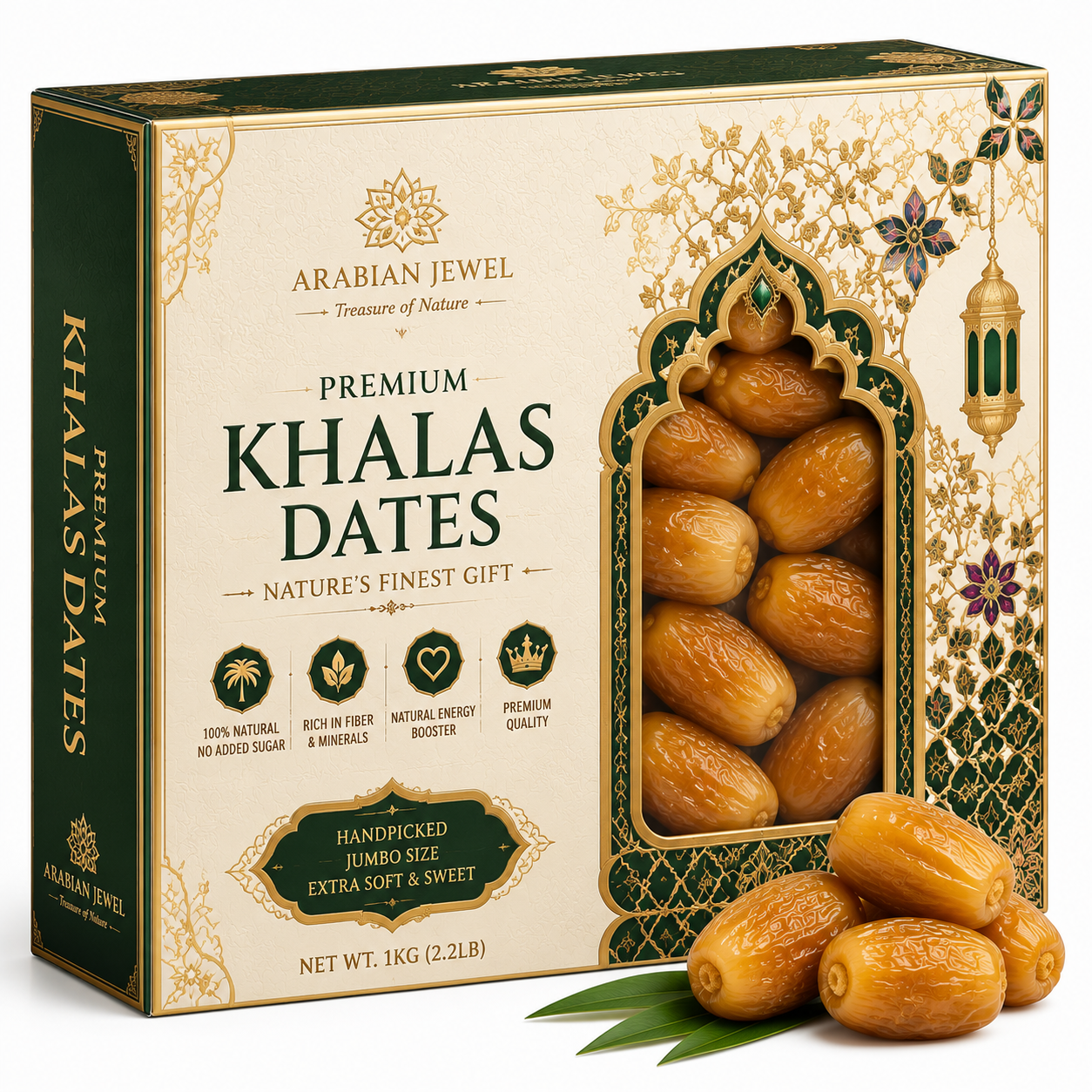
We are also offering finishing options such as glossy and matte look which gives the custom printed candy boxes a final touch. They can add sparkle to your design and also give added protection.
| Feature | Application | Cost Impact |
| Printing: Digital | Small quantities, complex color layouts | Low setup cost, high per-unit cost |
| Printing: Offset | High quantities, precise color matching | High setup cost, low per-unit cost |
| Finish: Gloss Lamination | For a bright, eye-catching look; it also protects | Low-Medium |
| Finish: Matte Lamination | For an elegant, classy, modern look | Low-Medium |
| Finish: Spot UV | To show a logo or highlight a specific design | Medium |
| Finish: Foil Stamping | For products with luxury and a premium feel (gold, silver) | High |
| Finish: Embossing/Debossing | Creating the feel of texture and the 3D effect | Medium-High |
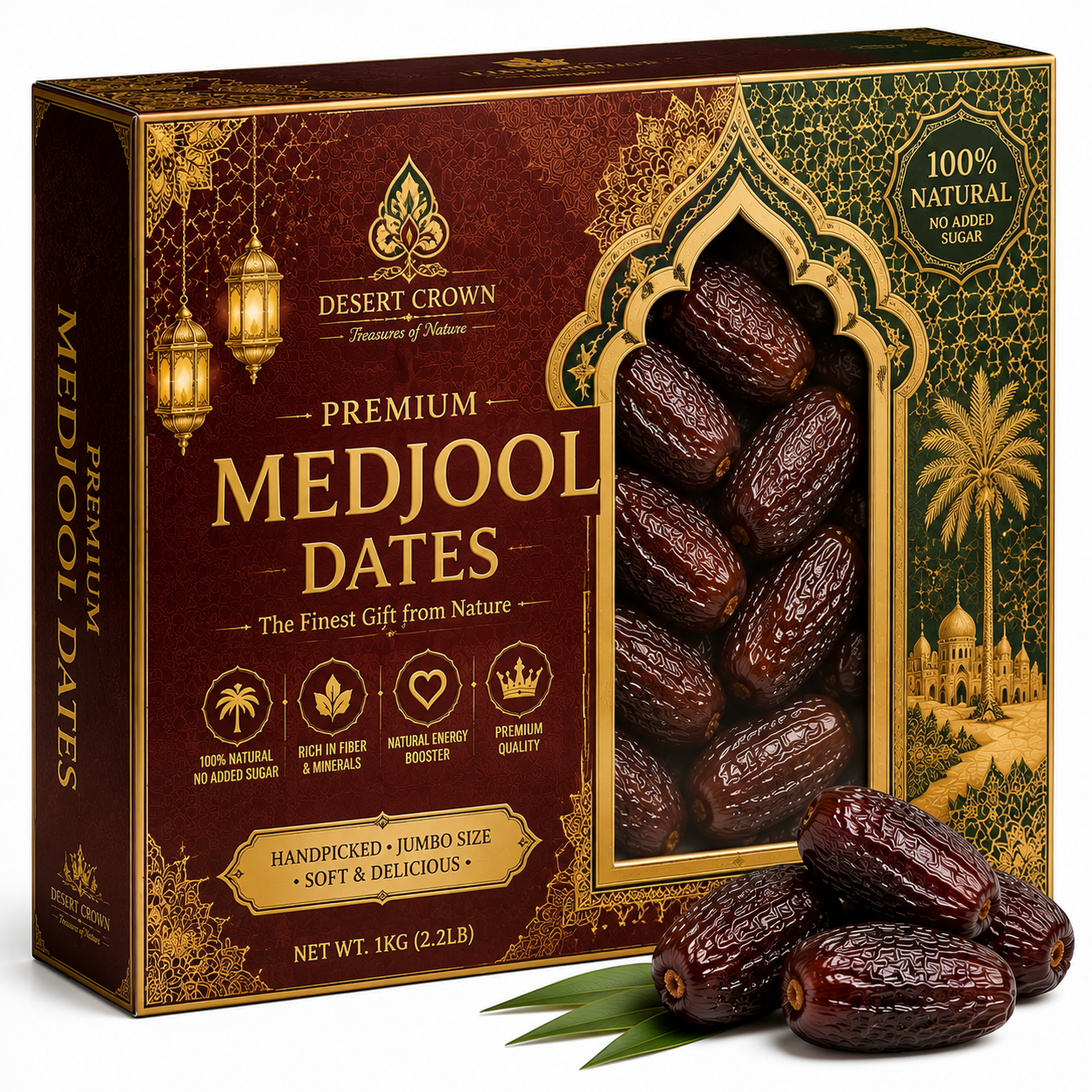
If you're exporting dates, your packaging has to work across cultures. A design that resonates in Riyadh might fall completely flat in Toronto. This is where custom printed dates boxes become genuinely strategic.
Color is a good place to start. Deep golds, rich burgundies, and emerald greens signal luxury and tradition across Middle Eastern markets. But Western health-conscious shoppers often gravitate toward earthy tones, kraft textures, and minimalist design that suggests naturalness and purity. A smart custom box can bridge both worlds. Think a clean, modern layout with one traditional pattern element—geometric tilework subtly embossed into a kraft background, for example. It reads as authentic without feeling foreign or overwhelming.
Language matters enormously for export packaging. Your custom printed box needs to accommodate multiple scripts clearly and beautifully. Arabic calligraphy alongside English typography, both integrated into the design rather than one looking like an afterthought. If you're shipping to markets with different labeling laws—EU allergen declarations, FDA nutrition panels, Gulf halal certification marks—your printing setup should allow for variable data fields that can be swapped without redesigning the entire layout.
One of my favorite export branding strategies: print serving suggestions tailored to the destination market. For a box going to France, suggest pairing dates with Roquefort cheese. For the UK, with a cup of Earl Grey tea. For the US, chopped into a smoothie or oatmeal. These little localized touches make the product feel made for that market specifically.
Beautiful printing on flimsy board is a waste of money. Dates are heavy. They're sticky. They're full of natural oils that leach into paperboard. Your custom printed dates boxes need a material foundation that performs as well as the design looks.
The board grade matters more than you might think. Rigid chipboard wrapped with printed art paper is the premium choice for gift boxes and high-end retail. It's heavy, substantial, and gives that satisfying "thunk" when set on a table. For everyday retail and value packs, a high-gauge folding carton board with a grease-resistant barrier coating will protect against oil migration without the cost of rigid construction.
Speaking of barriers—this is non-negotiable for dates. Water-based barrier coatings work well for shorter shelf lives. For longer export cycles or particularly oily varieties, a thin PET liner or specialized greaseproof board is worth the extra cost. Test your packaging with actual dates stored inside for two weeks minimum before approving production. I've seen beautiful designs ruined by grease spots bleeding through within days because someone skipped this step.
For the eco-conscious buyers that are driving more and more purchasing decisions, materials like FSC-certified board, soy-based inks, and compostable window films (PLA instead of PVC) are increasingly expected rather than optional. The good news is these materials don't compromise print quality at all. You can get vivid, crisp printing on recycled board with eco-friendly inks that looks every bit as premium as conventional options.
I've seen the same mistakes trip up smart business owners repeatedly. Let me save you the headache.
Mistake one: approving the design without checking the dieline. A dieline is the flat template that shows exactly where your box will be cut, folded, and glued. If your artwork crosses a fold line incorrectly, your logo ends up split across two panels. Print a dieline template, fold it into a box shape yourself, and physically check where everything lands.
Mistake two: not specifying color matching standards. Saying "gold" is meaningless—one person's gold is another person's mustard yellow. Use Pantone color codes for anything that needs to be exact, especially brand colors. And ask for a color drawdown sample showing how your chosen Pantone prints on your actual chosen board material. Color shifts depending on the substrate.
Mistake three: forgetting about the barcode. Your barcode needs a specific amount of white space around it and has to print on a flat, non-reflective surface to scan reliably. I've seen gorgeous, expensive boxes that looked perfect but wouldn't scan at supermarket checkouts. Make sure your designer accounts for barcode placement and contrast early in the process, not as an afterthought.
It depends on the printing method. Digital printing lets you order as few as 200-300 units per design without crazy setup fees. Offset printing typically starts making financial sense around 500-1,000 units. If you're just testing a design or entering a new market, start with digital, validate that the packaging works, then scale up. Any decent supplier should offer both options
Most established packaging manufacturers have in-house design teams. Send them your logo files, some reference images of styles you like, and a clear description of what you're after. They'll create mockups for your approval. Some offer this service free with an order commitment; others charge a flat design fee. Either way, make sure you get the original design files (AI, PDF) at the end so you own your artwork.
Specify a Pantone metallic code or a specific foil color from the supplier's swatch book. "Gold" varies wildly between manufacturers. Also, ask how the foil looks on your chosen board material. The exact same foil can appear bright and reflective on coated paper and dull and muted on uncoated kraft board. A physical sample removes all the guesswork.
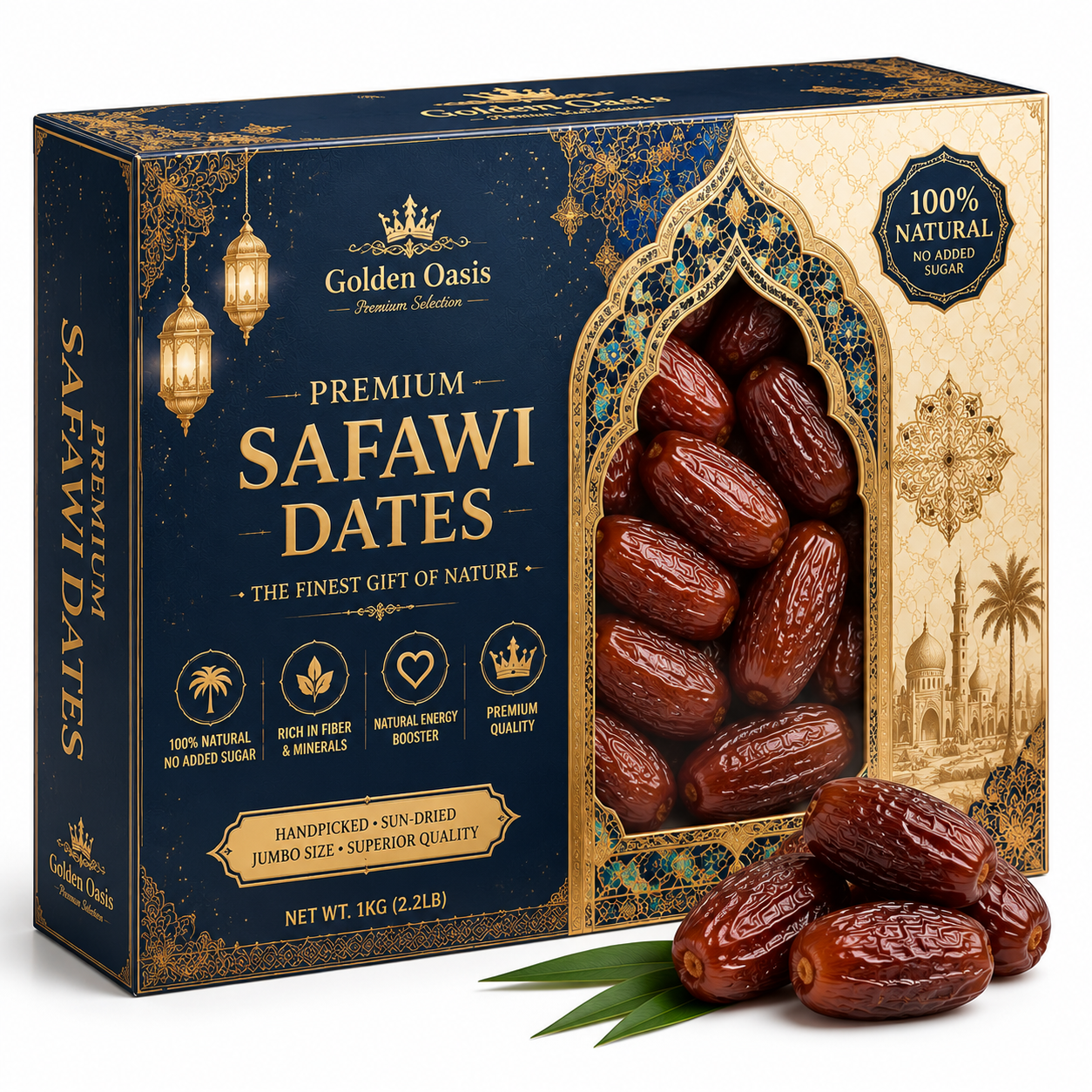
Yes, and this is actually a smart way to manage costs. Keep the box structure identical—same dieline, same insert, same assembly process—but change the printed artwork for each variety. Medjool gets one design, Ajwa another, Sukkari a third. Your production line doesn't need to adjust, but your shelf presence feels tailored to each product.
Color variation between the approved proof and the production run. I see this constantly. The fix is insisting on a physical production sample pulled from the actual press run before the full order is manufactured. Yes, it adds a few days to the timeline. Yes, it's worth it. Catching a color shift at this stage means adjusting the press. Catching it when 10,000 boxes arrive at your warehouse means living with it or eating the cost of a reprint.
Post time: Jul-01-2026


