


Running a bakery is hard enough. You're up at 4 AM. The ovens are hot. The croissants need to be flaky, the sourdough needs that perfect crust, and the cupcakes need to look like they belong in a magazine. The last thing you need is to stress about whether your boxes are going to hold up when a customer walks out the door with a dozen pastries stacked in their arms.
But here's the thing I've learned after years in food packaging: most bakery owners don't think about boxes until something goes wrong. A box gets soggy from the heat of a fresh danish. A lid pops open in a customer's car. A stack of boxes collapses in the display case. Suddenly, the packaging is all you can think about.
Buying bakery boxes wholesale is one of those unglamorous decisions that quietly determines your profit margins, your brand perception, and your stress levels. Get it right, and packaging becomes background noise. Get it wrong, and it's a daily headache. Let me walk you through what actually matters.
The obvious reason to buy bakery boxes wholesale is the unit price. Buy 500 boxes from a retail packaging store, and you might pay $0.60 each. Buy 5,000 from a wholesale supplier, and that drops to $0.25 or less. Same box, less than half the cost. If you're moving hundreds of pastries a day, that gap adds up to thousands of dollars a year. Simple math.
But there's a less obvious benefit that I think matters even more: consistency. When you buy small quantities from whatever supplier happens to have stock, your packaging changes from week to week. Slightly different box dimensions. Slightly different shade of kraft brown. Slightly different window size. Your staff notices. Your regular customers notice, even if they can't articulate what's different. Buying wholesale from a single, reliable supplier means every box matches every other box. Your display case looks intentional. Your brand feels established.
There's also the supply security angle. Running out of boxes on a Saturday morning is a mini-crisis. You're wrapping pastries in parchment paper and hoping customers don't mind. When you buy wholesale, you keep a real inventory. You don't get caught short. You don't have to make emergency runs to the packaging store and pay retail prices. You're covered, and that peace of mind is worth something.
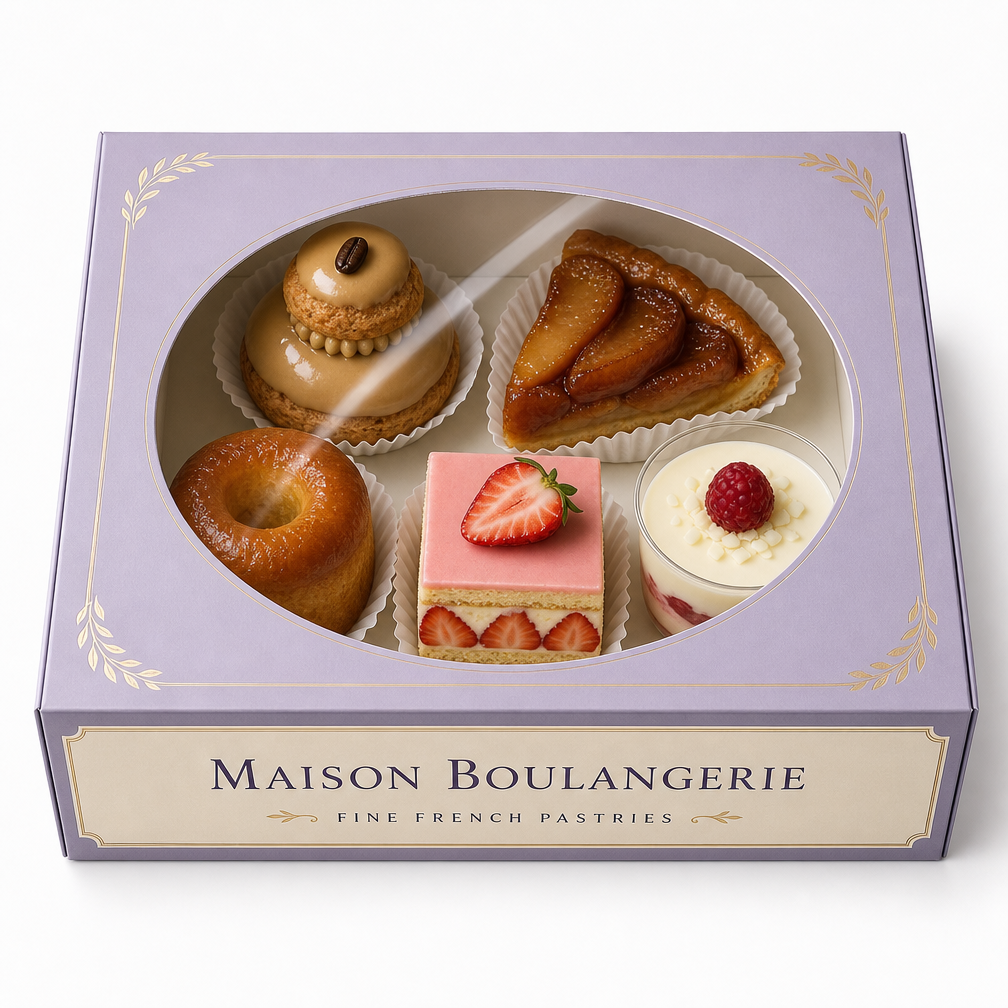
Not every supplier selling bakery boxes wholesale actually understands bakeries. Here's what separates the ones who get it from the ones who just move cardboard.
Grease resistance is the first test. Fresh pastries leak butter. It's what makes them delicious, but it's also what makes cheap boxes look terrible within minutes. A box that shows grease stains looks unappetizing and cheap. A proper bakery box has a grease-resistant coating that keeps the exterior clean and presentable. Ask specifically about this. If the supplier doesn't know what you're talking about, find another supplier.
Heat tolerance matters more than people expect. You're putting warm pastries into boxes. That heat and steam softens cardboard and weakens glue. A box that works fine for cold cookies might turn floppy with a warm croissant inside. Good bakery boxes are designed to handle some heat and moisture without losing their structure. Test this yourself—put a warm pastry in a sample box and see what happens after 30 minutes.
Window quality is another differentiator. A clear window that shows off your pastries is a selling tool. A fogged-up window hides your product behind condensation. A window that peels off when the box flexes looks cheap. Ask about anti-fog film. Ask about adhesion quality. Get a sample and abuse it a little—bend it, stack it, see how the window holds up.
Ventilation is the detail that separates professionals from amateurs. Hot pastries release steam. Trapped steam makes boxes soggy and pastries soft. Some bakery boxes include small vent holes or use breathable materials. Discuss this with your supplier based on whether you pack warm or fully cooled. A knowledgeable supplier brings this up themselves.
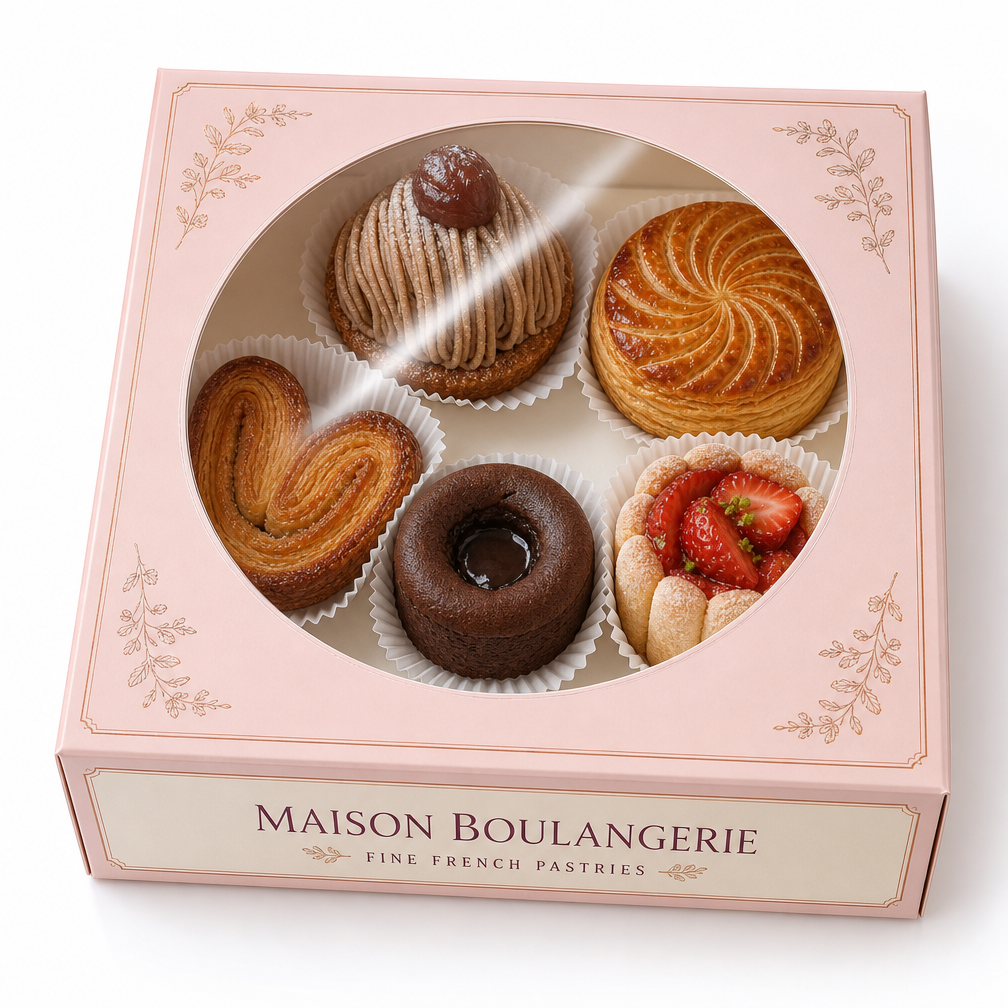
We are also offering finishing options such as glossy and matte look which gives the custom printed candy boxes a final touch. They can add sparkle to your design and also give added protection.
| Feature | Application | Cost Impact |
| Printing: Digital | Small quantities, complex color layouts | Low setup cost, high per-unit cost |
| Printing: Offset | High quantities, precise color matching | High setup cost, low per-unit cost |
| Finish: Gloss Lamination | For a bright, eye-catching look; it also protects | Low-Medium |
| Finish: Matte Lamination | For an elegant, classy, modern look | Low-Medium |
| Finish: Spot UV | To show a logo or highlight a specific design | Medium |
| Finish: Foil Stamping | For products with luxury and a premium feel (gold, silver) | High |
| Finish: Embossing/Debossing | Creating the feel of texture and the 3D effect | Medium-High |
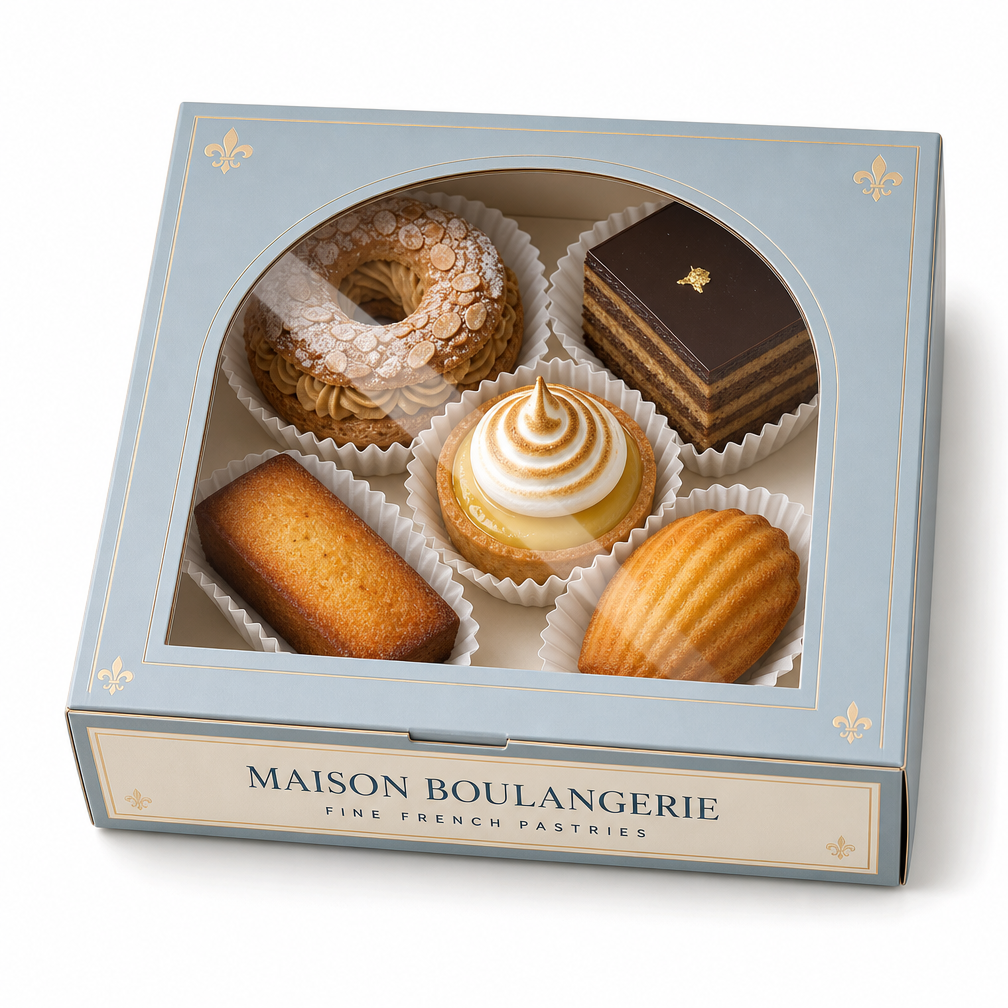
Some bakery owners hear "wholesale" and think "generic." That's outdated thinking. The best bakery boxes wholesale suppliers offer customization that makes your packaging unmistakably yours without pushing costs through the roof.
Printing is the most obvious option. Your logo, your colors, your tagline—printed right on the box. Offset printing delivers beautiful quality at higher volumes. Digital printing works for smaller runs. Some suppliers offer single-color flexographic printing as a budget option that still gets your name out there. The cost add for printing has dropped significantly, and the brand impact is worth it for most bakeries.
Stamps and stickers are the low-tech alternative that's having a moment. A plain kraft box with a custom rubber stamp looks artisanal and intentional. It's also flexible—you can stamp different designs for different seasons without ordering new boxes. A branded sticker seals the box closed and reinforces your identity. These options cost pennies per unit and let you customize on demand.
Insert cards and tissue paper round out the experience. A small card tucked inside with your flavor list, reheating instructions, or just a thank-you note makes the customer feel cared for. Printed tissue in your brand color adds a layer of polish. These details transform a simple transaction into a brand moment that customers remember and share.
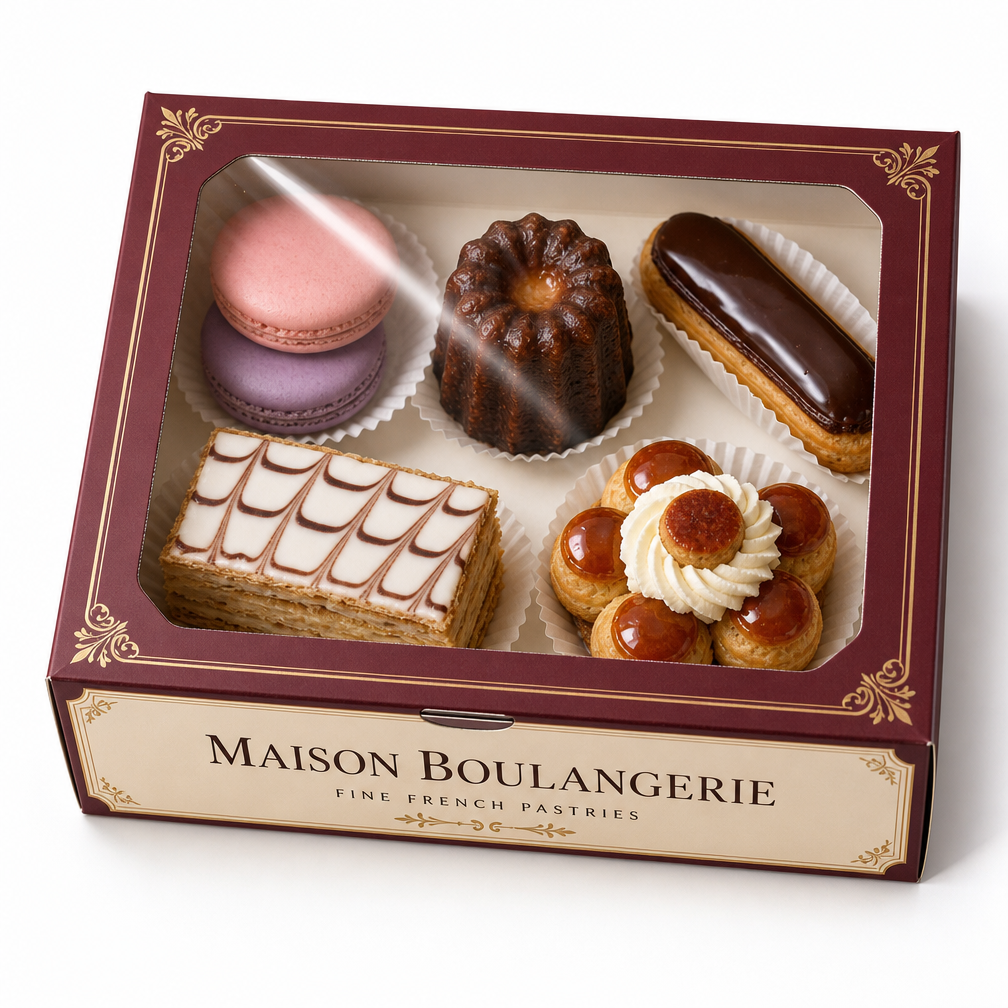
Let's get into the numbers, because understanding the cost structure helps you negotiate better and avoid surprises.
The baseline cost of a standard bakery box depends on size, material, and quantity. A small cookie box at 5,000 units might cost $0.15-0.25 each. A large cake box could be $0.50-0.80. Add a window, add printing, and costs climb incrementally. These are the prices you compare across suppliers.
Tooling costs only apply to custom work. A custom cutting die for a unique box shape runs $50-300 one-time. Printing plates for offset printing add similar setup costs. These get amortized across your order—the bigger the order, the less impact per unit. If you're just starting out with custom packaging, ask about digital printing, which eliminates plate costs entirely.
Shipping is where budgets get blown. Bakery boxes are bulky. A container full of assembled boxes is mostly air, and you're paying for every cubic meter. Flat-packed boxes that assemble quickly at your bakery save significant freight. Ask your supplier about nesting ratios and flat-pack options. Compare the landed cost—unit price plus shipping, duties, and handling—not just the factory price.
Volume tiers are your negotiating leverage. Most wholesale suppliers offer tiered pricing: 1,000 units at X price, 5,000 units at a lower price, 10,000 units at a still lower price. If you're close to a tier boundary, ask about bumping up your order to hit the better rate. Sometimes the additional units cost almost nothing at the lower rate, and you've got inventory for months.
Bakery sales are deeply seasonal, and your packaging needs to keep pace. Working with a bakery boxes wholesale supplier who understands your calendar makes a huge difference.
The holiday season is the big one. From Thanksgiving through Christmas, bakeries do a massive share of their annual business. Pie boxes, gift boxes, cookie boxes—demand spikes across the board. Smart bakery owners lock in their holiday packaging orders in September and October. Waiting until November means paying rush fees or settling for whatever's in stock.
Valentine's Day and Mother's Day are the other big seasonal moments for bakeries. These occasions call for packaging that feels special—maybe a red or pink box, maybe a ribbon, maybe a heart-shaped window. If you plan ahead, these seasonal touches can be ordered alongside your regular packaging at wholesale rates. If you scramble at the last minute, you're paying retail.
Seasonal planning also means managing inventory. Order enough to cover the rush, but not so much that you're storing boxes for months. Talk to your supplier about their production timelines and shipping schedules. Build a buffer into your ordering calendar. And have a backup plan—a second supplier you can call if your primary one runs short during the peak season.
It varies by supplier and box style. Standard stock boxes can be ordered in quantities as low as 100-200 units, though the per-unit price drops significantly at higher volumes. Custom printed boxes typically start at 500-1,000 units with digital printing, or 3,000-5,000 with offset printing. If you're a smaller bakery, look for suppliers offering low MOQs with digital printing—the unit cost is higher but you avoid massive inventory commitments.
You need boxes with a proper grease-resistant barrier. Ask specifically for "grease-resistant" or "oil-resistant" coated board. This barrier prevents butter and oil from migrating into the paperboard. The strength of the barrier matters—bakery items are greasier than most other foods, so standard barriers might not be enough. Test samples with your actual products before committing to a full order.
It depends on your brand and volume. Plain kraft boxes are cheap, flexible, and look artisanal—especially with a custom stamp or sticker added. Custom printed boxes reinforce your brand identity and look more professional, but they require larger order quantities and a design investment. Many bakeries start with plain boxes and custom stamps, then upgrade to printed boxes when volume justifies it. Both approaches work; it's about matching the packaging to your brand stage.
Yes, and demand for eco-friendly options is growing fast. Plain kraft boxes with no plastic lamination are curbside recyclable. For windows, PLA film is industrially compostable and a significant upgrade from PVC. Some suppliers offer entirely plastic-free boxes using die-cut openings instead of window film. These options carry a slight premium, but many bakeries find the customer goodwill is worth far more than the cost increase.
Start the conversation with your supplier in September for Christmas demand. Lead times for wholesale orders typically run 4-8 weeks depending on whether you're ordering stock or custom boxes. Add buffer for shipping delays and unexpected demand. If you're ordering from an overseas supplier, add another 4-6 weeks for sea freight. Waiting until November to order holiday packaging is asking for stress—either you'll pay rush fees or you'll settle for whatever's left in stock.
Post time: Sep-04-2026


