


Here's a truth that took me years in this industry to really internalize: most people don't buy gifts. They buy the moment of giving. The look on someone's face when they receive something beautiful. The anticipation as they untie a ribbon or lift a lid. The pause before they see what's inside. And the packaging? That's what creates that moment before the gift itself even appears.
If you sell products that get given as gifts—chocolates, candles, cosmetics, jewelry, specialty foods—your packaging isn't just a container. It's part of the product. It's part of the experience. And finding the right gift packaging supplier is one of the most consequential business decisions you'll make.
I've seen brands transform their sales by upgrading their packaging. I've also seen brands burn through thousands of dollars on boxes that looked great in photos but fell apart in customers' hands. The difference usually comes down to the supplier. Let me walk you through what actually matters.
It's easy to treat packaging as an afterthought. You've got a great product. You've got your branding dialed in. You just need boxes to put stuff in. Right?
Wrong. Your gift packaging supplier is essentially your brand's silent ambassador. The box they produce is the first physical touchpoint your customer has with your brand. If it feels flimsy, looks cheap, or arrives damaged, that's the impression they carry into their entire experience with your product. If it feels substantial, opens beautifully, and looks stunning on a table, that impression colors everything too.
There's a psychological principle at work here. Researchers call it "sensation transference"—the way physical touch influences how we perceive value. A heavy box with a soft-touch finish makes the product inside feel more valuable. A flimsy box that buckles when you pick it up does the opposite. Your customers can't always articulate why they feel a certain way about your product, but the packaging is doing the work behind the scenes.
Beyond perception, there's practicality. Gift packaging gets handled differently than everyday packaging. It sits on shelves. It gets wrapped. It gets shipped. It gets passed from person to person. It gets photographed. It gets opened slowly and deliberately. A box that works fine for a product someone buys for themselves might completely fail as a gift box. A good gift packaging supplier understands this distinction and designs accordingly.

Let's get specific. What should you expect when you engage a legitimate gift packaging supplier? Not every box maker understands the gift category, and the difference shows up quickly.
A real gift packaging specialist offers more than standard shipping boxes with pretty printing. They offer structural formats designed for presentation. Rigid boxes with magnetic closures that feel substantial in hand. Drawer-style boxes that slide open like a tiny treasure chest. Hinged lid boxes that open like a book. Folded boxes with ribbon ties that feel like wrapping paper and box combined. Each format creates a different kind of opening moment, and a knowledgeable supplier helps you match the format to your brand and product.
They also understand finishing techniques that elevate perceived value. Soft-touch lamination for that velvety feel. Foil stamping for metallic accents that catch light. Embossing and debossing for dimensional texture. Spot UV for contrast between matte and glossy surfaces. These aren't afterthoughts—they're the visual language of gift packaging, and a supplier who knows how to combine them well is worth their weight in gold.
Material guidance is another differentiator. A good supplier tells you when you need a grease-resistant coating because your product is a candle that might soften in heat. They suggest board thicknesses based on how much your product weighs. They recommend window films that won't fog up in humid environments. They think about the unboxing experience from the customer's perspective, not just about getting the order out the door.
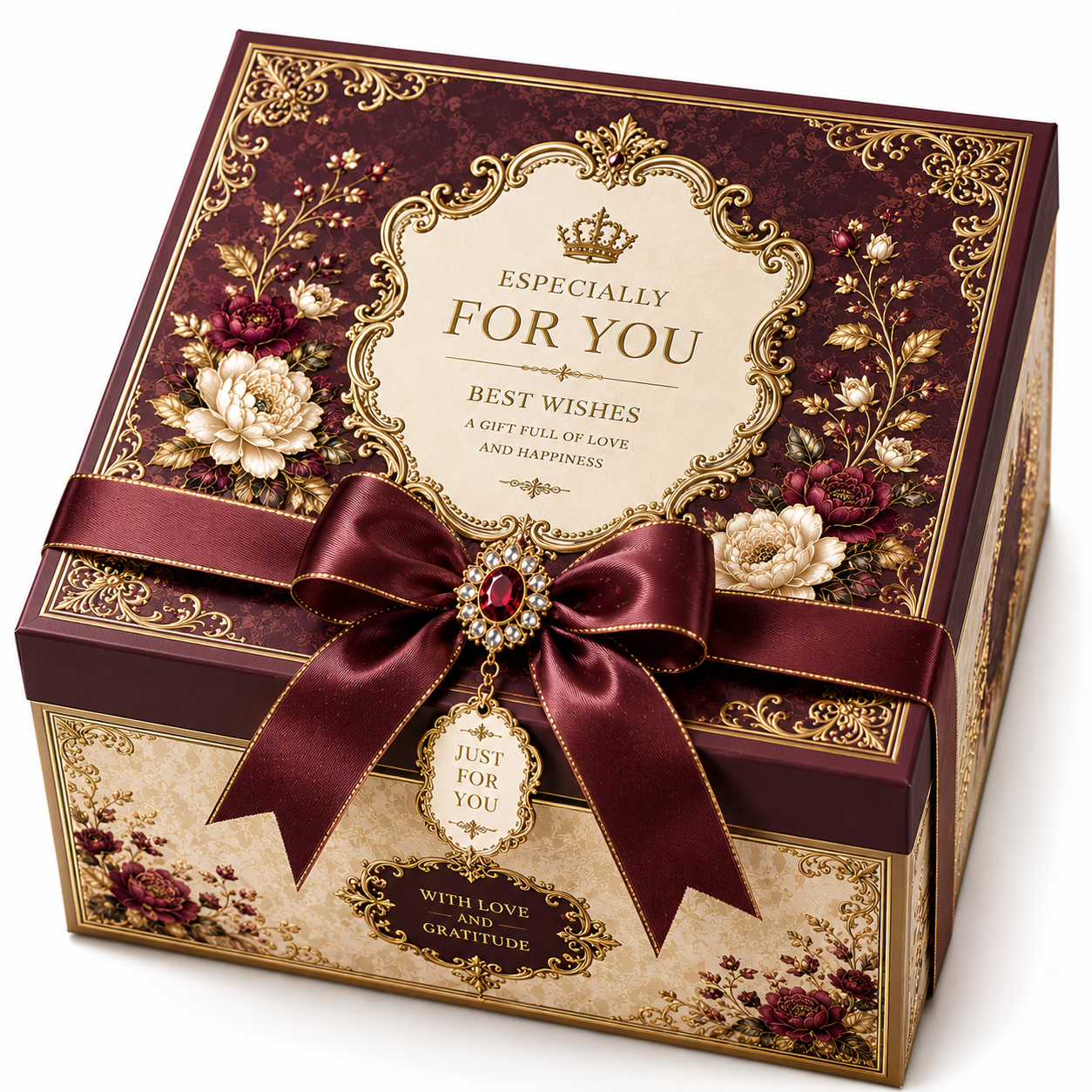
We are also offering finishing options such as glossy and matte look which gives the custom printed candy boxes a final touch. They can add sparkle to your design and also give added protection.
| Feature | Application | Cost Impact |
| Printing: Digital | Small quantities, complex color layouts | Low setup cost, high per-unit cost |
| Printing: Offset | High quantities, precise color matching | High setup cost, low per-unit cost |
| Finish: Gloss Lamination | For a bright, eye-catching look; it also protects | Low-Medium |
| Finish: Matte Lamination | For an elegant, classy, modern look | Low-Medium |
| Finish: Spot UV | To show a logo or highlight a specific design | Medium |
| Finish: Foil Stamping | For products with luxury and a premium feel (gold, silver) | High |
| Finish: Embossing/Debossing | Creating the feel of texture and the 3D effect | Medium-High |
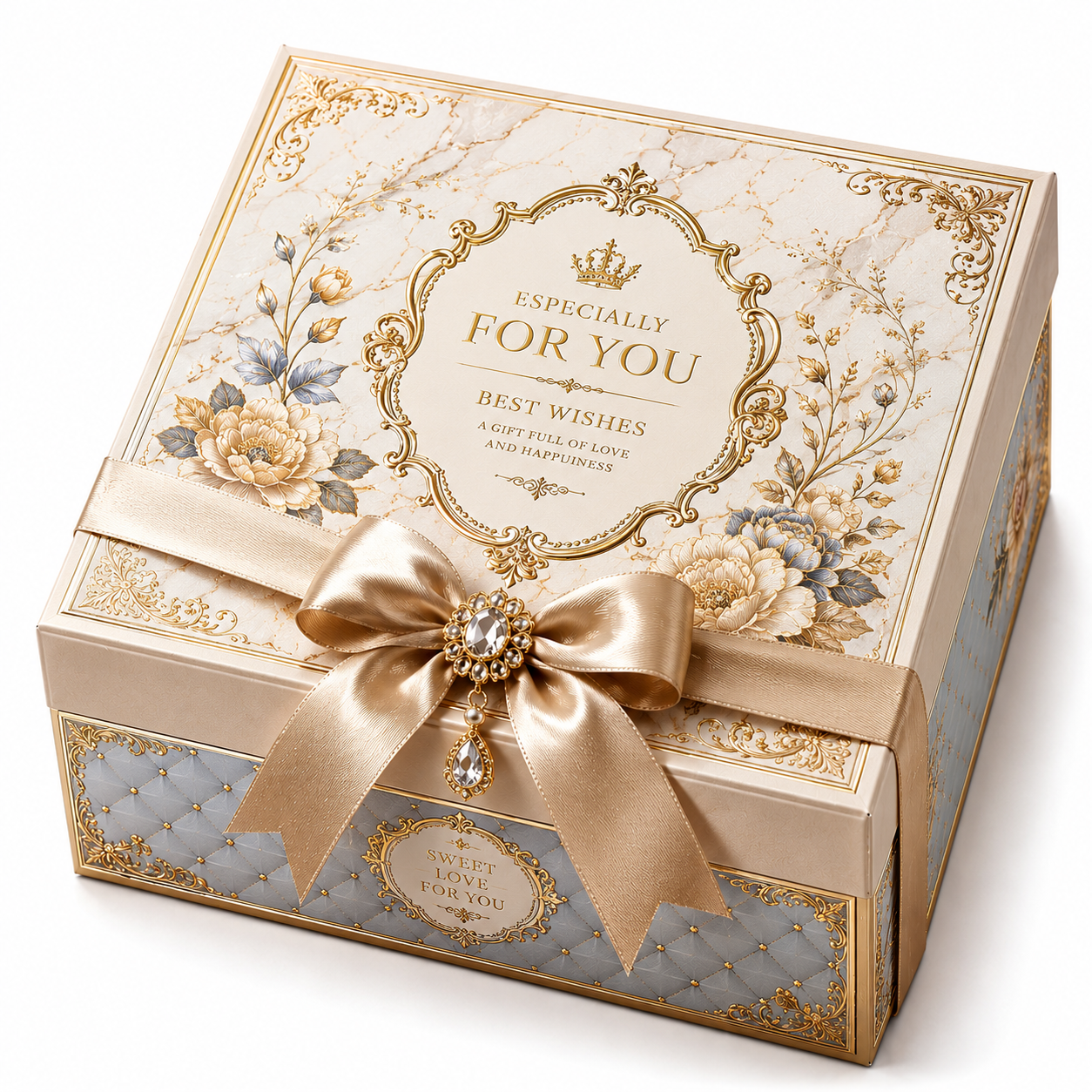
One of the most frustrating things I see is brands settling for generic packaging because they didn't realize what was possible. A quality gift packaging supplier should offer a full spectrum of customization that lets your brand be unmistakably yours.
Custom inserts are huge. A gift box with a perfectly fitted insert that cradles each product separately looks intentional and premium. It prevents shifting during shipping. It creates that "everything has its place" feeling that makes opening the box satisfying. Inserts can be made from cardboard, molded pulp, foam, or flocked materials—each with a different aesthetic and price point.
Interior printing is another underused tool. The inside of the lid is prime real estate. Print a message there—"Handcrafted with care" or "Designed to be reused" or just your brand story in a few elegant lines. Customers notice these details. They photograph them. They mention them in reviews. It's a small cost add that generates disproportionate returns.
Custom sizes matter too. A supplier who only offers standard dimensions forces your product to fit their boxes. A true gift packaging supplier builds the box around your product. That might mean custom die-cutting, which adds a tooling cost upfront but delivers a perfect fit that stock boxes can never achieve.
Don't forget the finishing touches. Ribbon pulls that help lift a tray out. Tissue paper with your logo printed on it. Stickers that seal the box beautifully. Card inserts with care instructions or a personal note. These details complete the gift experience, and a good supplier either provides them or connects you with someone who does.
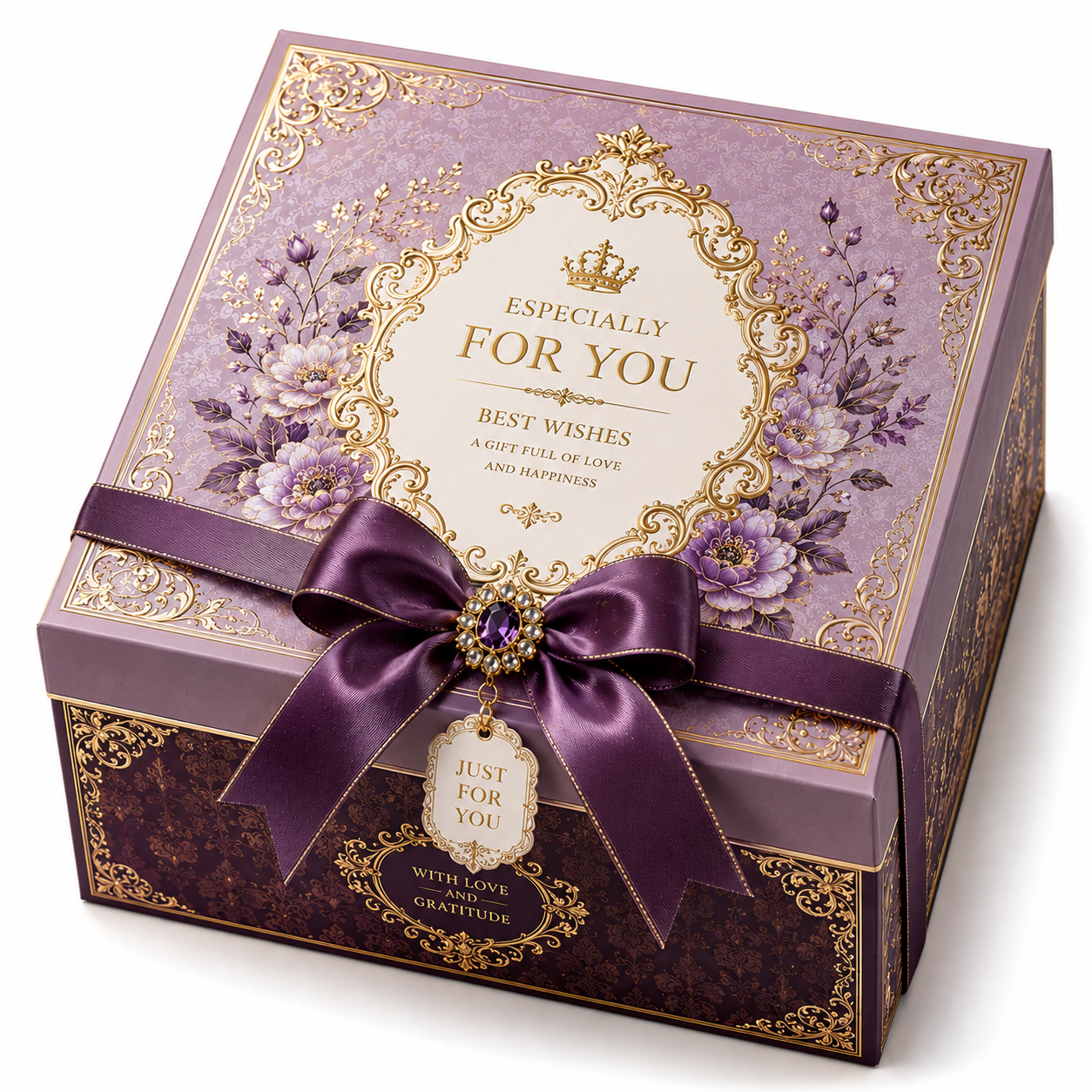
Here's where a lot of brands get into trouble. They find a supplier online, the price looks great, the photos look beautiful, and three months later they're staring at a pallet of boxes that don't match what they approved. Let me save you from that fate.
The first thing to check is samples. Not digital mockups—physical samples. A digital rendering can make any box look stunning. A physical sample tells you the truth. Is the board thick enough? Does the magnetic closure feel strong or wimpy? Are the corners clean or ragged? Does the foil stamping look crisp or blurry? Order samples from multiple suppliers and compare them side by side. The differences will be obvious.
Certifications are the next filter. If your gift packaging touches food products—chocolates, tea, specialty foods—you need food-safe materials. Ask for ISO 22000 or BRCGS certification. Ask about low-migration inks. A supplier who hesitates on these questions is not a supplier you want involved with food products.
Communication quality is a massive predictor of outcomes. During the sampling phase, does the sales team respond promptly? Do they answer your actual questions, or do they give generic reassurances? Do they proactively flag potential issues—"You mentioned this will ship in summer; should we add an anti-fog treatment to the window?"—or do they just process your order and move on? A supplier who communicates well during sales will communicate well when there's a problem. A supplier who's evasive now will be a nightmare later.
Check references. A good supplier has clients who are happy to vouch for them. Ask for references in your industry or your market. Call them. Ask about quality consistency, delivery timelines, and how issues were handled. The answers will tell you more than any sales pitch.
The first order is just the beginning. The real value of finding a solid gift packaging supplier compounds over time as the relationship deepens.
A long-term supplier relationship means priority treatment during busy seasons. When Christmas orders flood in and production slots fill up, your established supplier squeezes you in because you've been a reliable partner. A new supplier might not. That kind of reliability is worth more than a slightly lower unit price.
It also means proactive suggestions. A supplier who knows your brand, your products, and your market will spot opportunities you might miss. Maybe they've developed a new sustainable material that fits your brand's eco-friendly positioning. Maybe they've streamlined a production process that drops your unit cost by 10%. Maybe they've seen a packaging trend emerging in Europe that would resonate with your customers. That insight only comes from a relationship built over time.
How do you build that relationship? It's not complicated. Pay on time. Communicate clearly. Give feedback after orders—what worked, what didn't, what your customers said. Share photos of your products in their packaging, out in the world. And when something goes wrong—because eventually, something will—approach it as a problem to solve together, not a blame game. A supplier who sees you as a partner will move mountains to fix issues. A supplier who sees you as just another account will do the minimum required.
If you can ever visit their facility in person, do it. Walking the production floor, meeting the team, seeing how your boxes are actually made—it builds understanding that no email exchange can replicate. Even a single visit can transform a transactional vendor relationship into a genuine partnership.
It varies significantly by box type and supplier. Folding cartons with digital printing can start as low as 200-500 units, though per-unit costs are higher at those volumes. Rigid boxes typically start at 500-1,000 units because of the tooling involved. Some suppliers specialize in low-MOQ orders for startups and seasonal releases. The key is being upfront about your volume needs from the start—good suppliers will work with you to find a solution.
Ask for documentation. Look for ISO 22000 or BRCGS certification, which cover food safety management systems. Specifically ask about low-migration inks and food-grade adhesives. These ensure that chemicals from the printing won't seep through the board into your product—especially important for fatty or moist foods. A reputable supplier provides these documents without hesitation. If they can't produce them, don't put their packaging in direct contact with food.
Absolutely. FSC-certified board, recycled paper wraps, and water-based coatings all deliver high-end results with reduced environmental impact. Many luxury brands are leaning into sustainability as part of their identity—uncoated recycled papers with debossed logos look beautifully understated. Compostable inner trays made from molded pulp replace plastic inserts. The old assumption that eco-friendly means "brown and boring" is long gone.
Budget 8-12 weeks for a typical project. That breaks down as roughly 2-3 weeks for design and sampling, 3-4 weeks for production after approval, and 3-5 weeks for shipping (sea freight to Western markets). Air freight cuts shipping to about a week but costs 3-5 times more. If you're ordering for a specific season—Christmas, Valentine's Day, Mother's Day—start the process at least four months before your shelf date.
Get a physical pre-production sample. This is non-negotiable. A pre-production sample is made before the full run and represents exactly what you'll receive. Check the board weight, the color accuracy, the finish quality, the fit and assembly. Then, specify in your purchase agreement that the bulk order must match the approved sample. For extra protection, request a production sample pulled from the actual run, and consider third-party inspection before the goods leave the factory. These steps cost a little upfront but prevent expensive disasters later.
Post time: Aug-18-2026


