


If you run a bakery, a café chain, or a wholesale pastry business, you already know the packaging headache. Those cute window boxes that show off your croissants perfectly? They cost a fortune from local suppliers. And when you're moving hundreds of pastries a day through a busy shop, packaging costs add up fast. That's exactly why so many bakery owners I've spoken with end up searching for a pastry box supplier China.
But here's the thing. Typing "pastry box supplier China" into Google gets you thousands of results, and most of them look identical. Glossy websites. Stock photos of bakeries. Promises of "best quality, best price." How do you actually sort through the noise and find a supplier who delivers what they claim? I've been on the packaging side of this industry for years, and I'll walk you through exactly what to look for, what to avoid, and how to build a sourcing relationship that actually makes your life easier.
Let's start with the obvious question. Why deal with the hassle of importing when there's probably a packaging distributor an hour from your bakery? The answer, in most cases, comes down to simple math.
A decent quality pastry box with a clear window, bought domestically in the US, UK, or Australia, might run you $0.40 to $0.80 per unit at moderate volumes. That same box from a pastry box supplier China often lands at $0.15 to $0.35, even after shipping and duties. When you're ordering 10,000 or 50,000 boxes a year, that gap represents real money—money that goes straight to your bottom line or lets you upgrade to a nicer box without raising your retail prices.
But price isn't the only reason. Chinese factories offer customization options that domestic suppliers often can't match at comparable volumes. Want a box with a specific window shape that echoes your logo? Done. Need a grease-resistant coating because your butter croissants leave stains on standard cardboard? Standard request. Want a particular shade of kraft brown that matches your brand's aesthetic? They'll work with paper mills to match it.
The other factor is specialization. A domestic packaging distributor might serve bakeries, electronics companies, and toy manufacturers all from the same catalog. A dedicated pastry packaging factory in China handles pastry boxes all day, every day. They understand that your boxes need to vent steam so pastries don't get soggy. They know that windows need to be food-grade and firmly attached. These aren't niche concerns—they're baseline requirements.
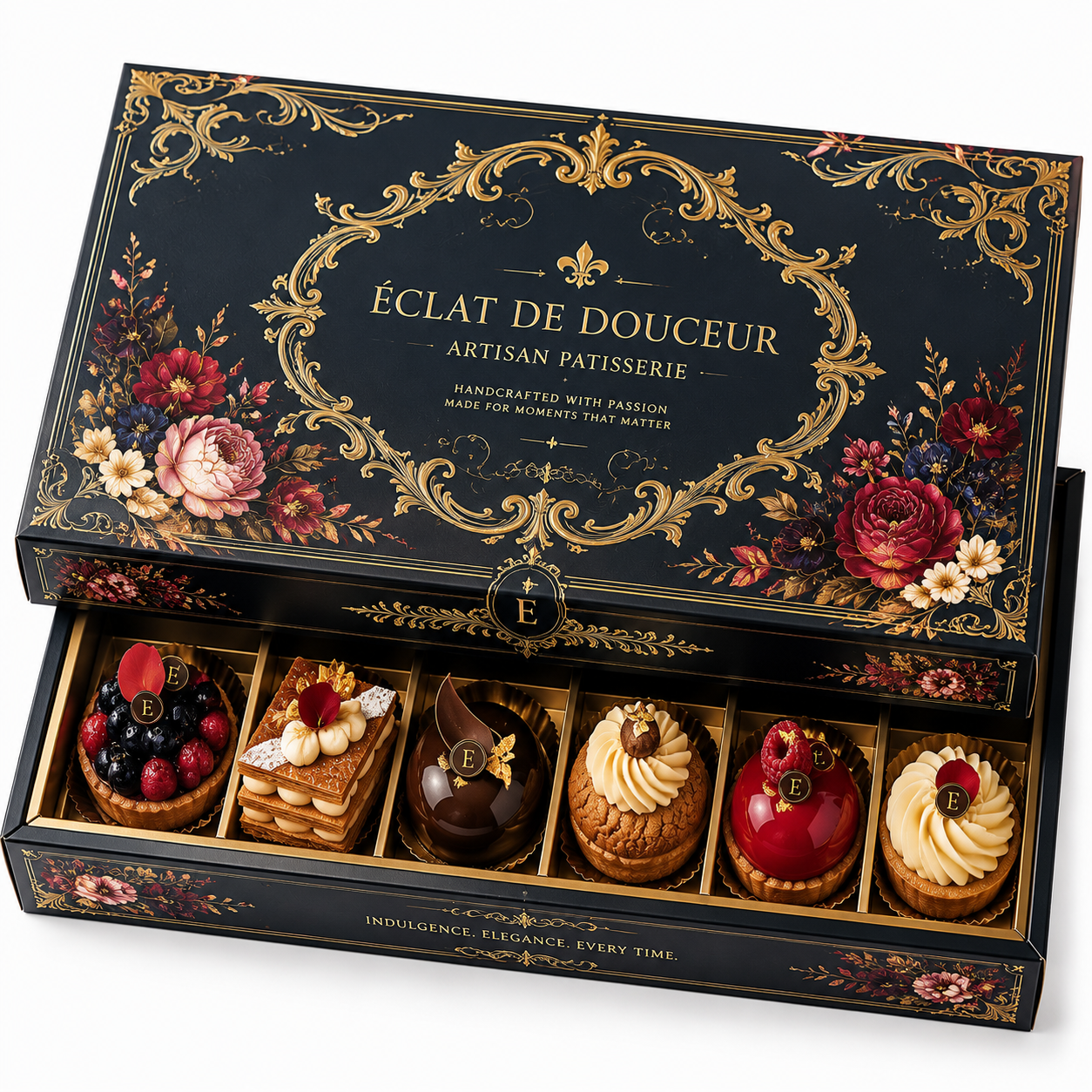
If you've never sourced from China before, the communication flow can feel unfamiliar. Let me walk you through how a typical engagement with a pastry box supplier China actually unfolds, so you're not caught off guard.
Your first email should include clear specifications. Box dimensions in millimeters, not inches. Preferred material—kraft, white cardboard, corrugated. Window size and placement. Quantity and desired delivery timeline. The more specific you are upfront, the more accurate the initial quote will be. Vague inquiries get vague quotes.
A responsive supplier replies within 24-48 hours with questions and a preliminary price. They might ask about your pastry type—croissants behave differently than muffins in a box, and a good supplier wants to recommend the right structure. They'll probably request reference photos of packaging you like. This is all normal and actually a positive sign.
The quoting process typically includes the unit price at your requested quantity, tooling costs for custom dies if needed, and estimated shipping. Pay attention to how the quote is structured. Some suppliers quote FOB (Free On Board), meaning the price covers the goods delivered to the port. Others quote EXW (Ex Works), where you arrange and pay for everything from the factory gate onward. If you're new to importing, ask for FOB pricing—it's simpler.
After you approve the quote, the supplier creates a digital mockup or 3D rendering. This is your chance to check every detail. Window position, fold lines, glue tabs, print placement. Changes at this stage are cheap. Changes after production starts are expensive or impossible.
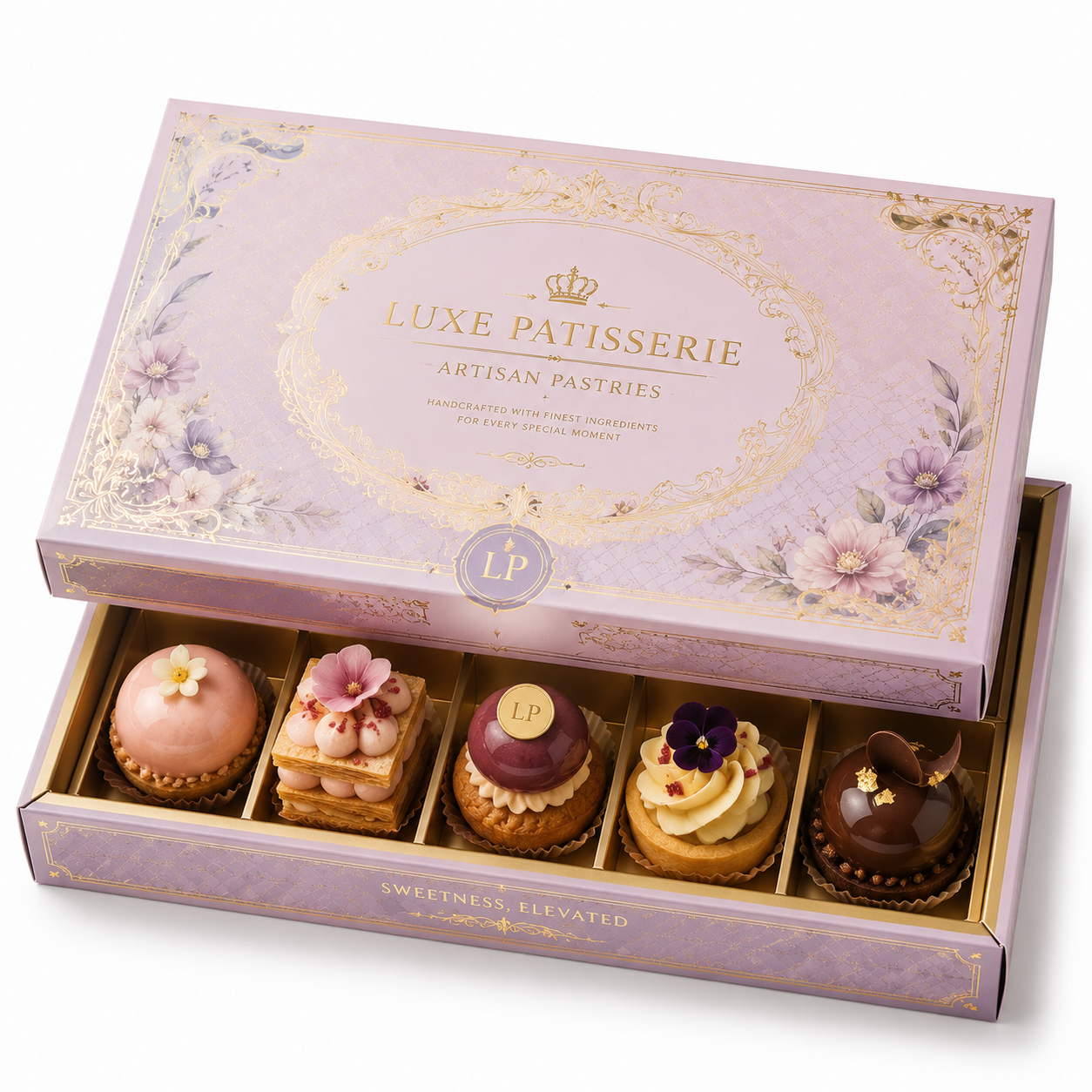
We are also offering finishing options such as glossy and matte look which gives the custom printed candy boxes a final touch. They can add sparkle to your design and also give added protection.
| Feature | Application | Cost Impact |
| Printing: Digital | Small quantities, complex color layouts | Low setup cost, high per-unit cost |
| Printing: Offset | High quantities, precise color matching | High setup cost, low per-unit cost |
| Finish: Gloss Lamination | For a bright, eye-catching look; it also protects | Low-Medium |
| Finish: Matte Lamination | For an elegant, classy, modern look | Low-Medium |
| Finish: Spot UV | To show a logo or highlight a specific design | Medium |
| Finish: Foil Stamping | For products with luxury and a premium feel (gold, silver) | High |
| Finish: Embossing/Debossing | Creating the feel of texture and the 3D effect | Medium-High |
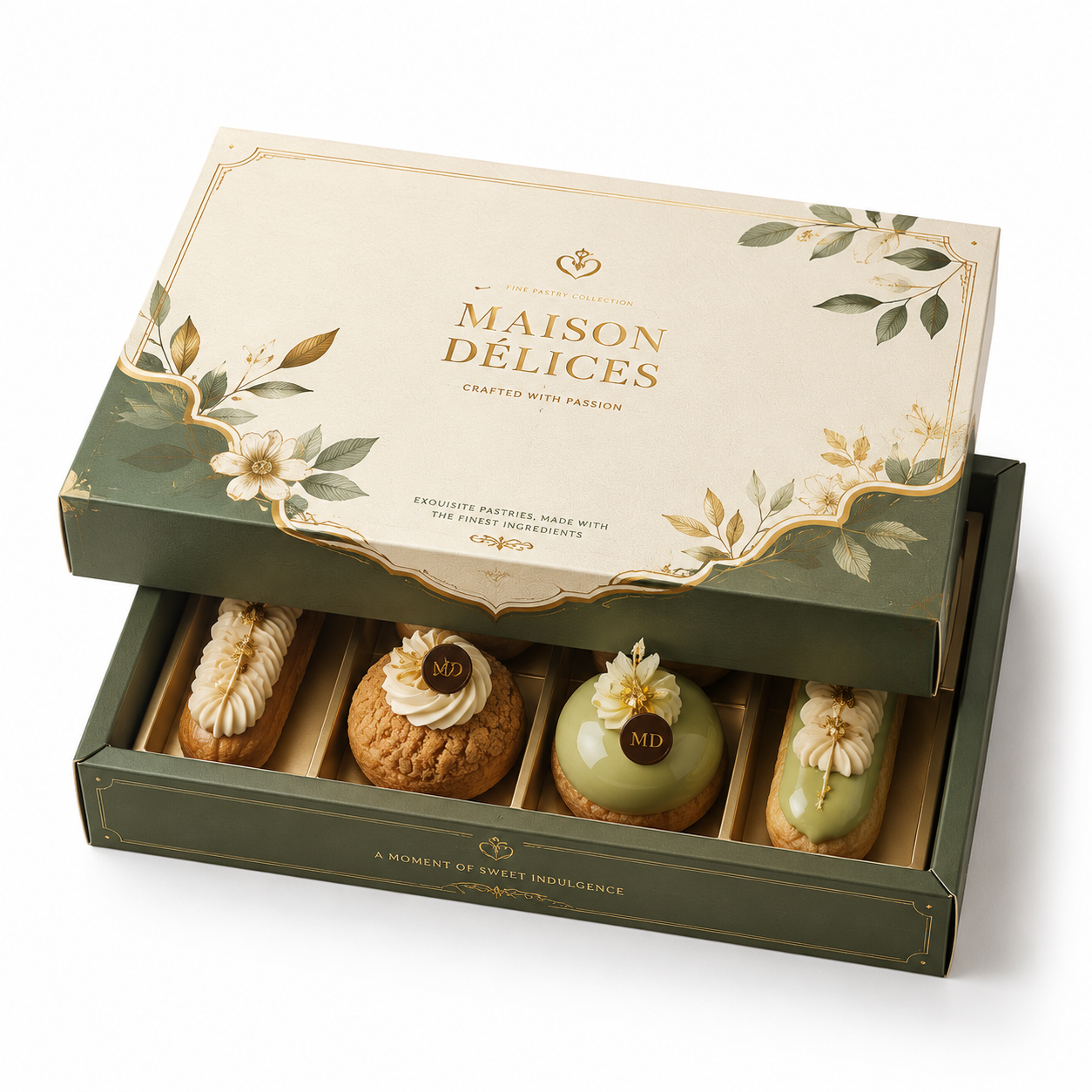
Not all pastry boxes are created equal, and bakery owners learn this the hard way when a batch of boxes fails on a busy Saturday morning. Here's what to insist on when dealing with a pastry box supplier China.
Grease resistance is non-negotiable. Pastries leak butter. It's what makes them delicious, but it's also what makes cheap boxes look terrible within minutes. Ask specifically about grease-resistant coatings or barrier boards. A quality supplier will offer options ranging from water-based coatings for light pastries to PE or PLA linings for heavier, oilier items like danishes and croissants.
Window quality separates good boxes from great ones. The window film should be food-grade and firmly adhered—nothing ruins a customer's experience like a window that peels off when they pick up the box. Anti-fog properties matter too, especially if your pastries are still slightly warm when packed. A fogged-up window hides your beautiful product behind condensation.
Structural integrity matters more than you might think. A pastry box needs to hold its shape when a customer carries it by one corner. It needs to stack without collapsing. The locking mechanism—whether it's a tuck top, a tab lock, or a separate lid—should be secure but easy to open. Ask the supplier about board thickness in GSM (grams per square meter). For standard pastry boxes, 300-350 GSM is typical. For larger boxes holding heavier items, 350-400 GSM provides better support.
Ventilation is a detail that separates experts from amateurs. Fresh pastries release steam. Trapped steam makes boxes soggy and pastries soft. Some boxes incorporate small vent holes or breathable paper panels. Discuss this with your supplier based on whether your pastries are packed warm or fully cooled.
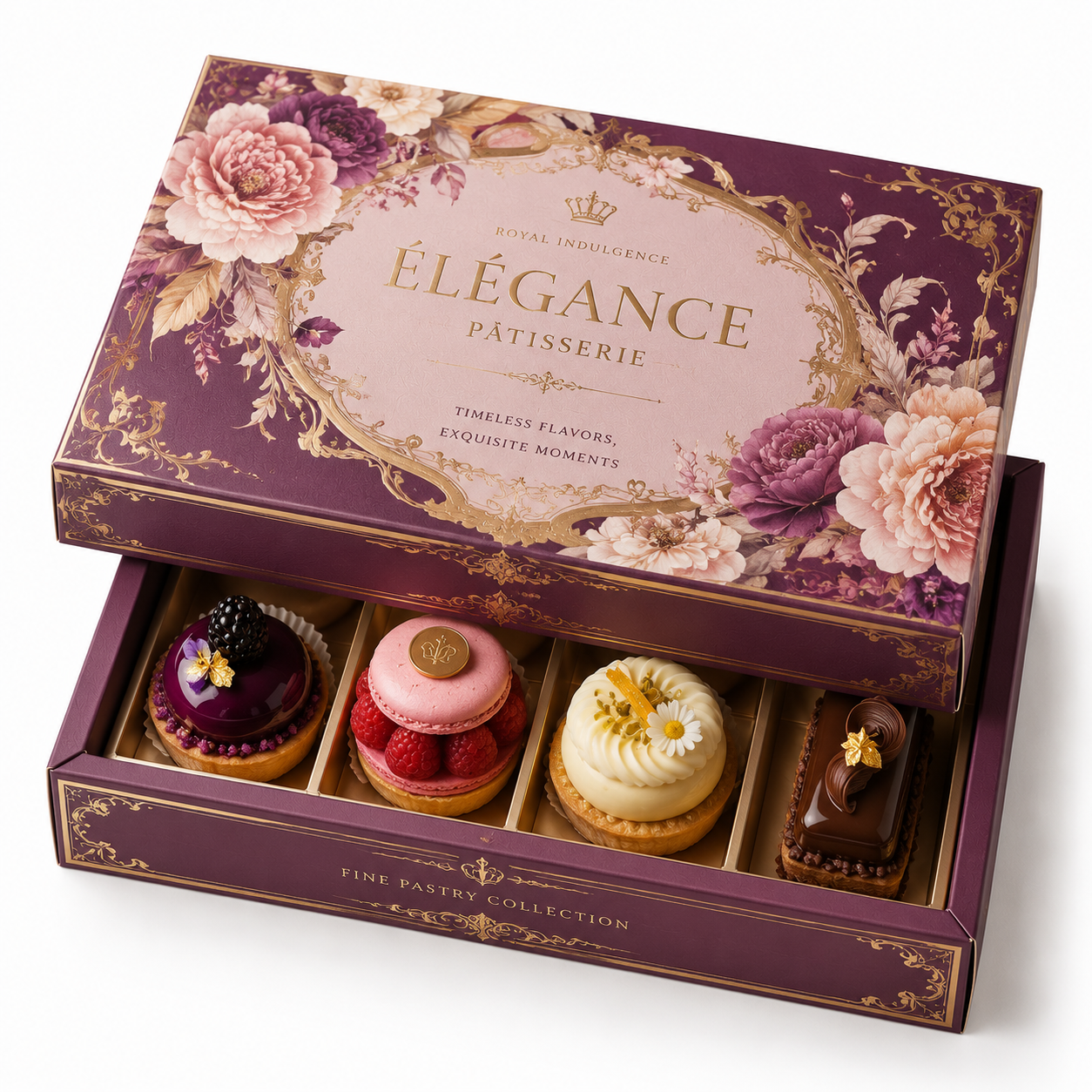
I've seen smart bakery owners make avoidable mistakes that cost them weeks of stress and thousands of dollars. Let's cover the big ones so you can sidestep them entirely.
Mistake one: skipping the physical sample. Digital proofs look perfect on screen. Physical samples reveal everything—flimsy board, misaligned windows, colors that look different under real lighting. Always get a physical sample. Yes, you'll pay for courier shipping. Yes, it's worth it. Test the sample with your actual pastries. Pack them. Stack the boxes. See how they hold up after sitting on a counter for six hours.
Mistake two: not clarifying the production sample versus the pre-production sample. A pre-production sample is made before the full run and represents what you'll receive. A production sample is pulled from the actual manufacturing batch. Ask for both, and specify in your purchase agreement that the bulk order must match the approved pre-production sample in material, print quality, and construction.
Mistake three: underestimating shipping costs and timelines. A box quoted at $0.20 FOB might land at $0.45 per unit after sea freight, customs duties, port handling, and inland trucking. Ask for a landed cost estimate before committing. And plan your timeline backward from when you need boxes on your shelf, not forward from when you're ready to order. Sea freight takes 3-6 weeks depending on route. Customs clearance adds days. Trucking adds more days. A three-month lead time from order to delivery is comfortable. Two months is tight but doable. Six weeks is asking for trouble.
Mistake four: ignoring Chinese holidays. Chinese New Year shuts down factories for 2-3 weeks, and the weeks before and after are chaotic. If your order deadline falls anywhere near late January through mid-February, build in extra buffer. The same applies to the October Golden Week holiday.
The first successful order is just the start. The real value of finding a solid pastry box supplier China accumulates over time, as the relationship deepens and they become an extension of your business.
A good supplier relationship means priority treatment when you have a rush order during holiday season. It means they'll proactively suggest cost-saving tweaks—maybe a slightly different box structure that uses 10% less board without sacrificing strength. It means they'll hold safety stock of your materials so reorders turn around faster.
How do you build that kind of relationship? Simple stuff that too many buyers overlook. Pay on time, every time. Communicate respectfully, even when problems arise. Give feedback after an order—what worked, what didn't, what your customers said. Share a photo of your pastries in their boxes on your bakery shelf. Suppliers take genuine pride in seeing their work in action.
If something goes wrong with an order—and eventually, something will—approach it collaboratively. "The window adhesion on this batch seems weaker than the last run. Can we troubleshoot this together?" lands completely differently than "Your boxes are defective and I want a refund." The first approach gets you a partner who moves mountains to fix the issue. The second gets you adversarial email chains and a supplier who's counting down until they don't have to deal with you anymore.
One other thing. If you can ever visit the factory in person, do it. Walking the production floor, meeting the team, sharing a meal—it builds trust that no video call can replicate. Even a single visit can transform a transactional vendor relationship into a genuine partnership.
Communication quality is a massive tell. Does the sales contact respond clearly and promptly? Do they answer the specific question you asked, or do they dodge and give generic reassurance? A supplier who communicates well during the sales process will probably communicate well when issues arise. A supplier who's vague or evasive now will be a nightmare when something goes wrong.
Ask for client references in your market. A supplier who's successfully shipped pastry boxes to the UK or US or Australia understands those countries' expectations for quality and food safety. If they can connect you with a current customer for a brief reference call, that's a strong positive signal.
Order a sample from their existing catalog before you develop anything custom. This tells you about their baseline quality, print registration, glue application, and attention to detail. If the sample box is sloppy, a custom order won't be better.
For digitally printed boxes, you can find suppliers offering MOQs as low as 200-500 units per design. Offset printing typically starts at 1,000-3,000 units because of the plate setup costs. If you're a small bakery testing a new design, ask specifically about digital printing options. The per-unit cost will be slightly higher than offset, but you won't be stuck with 5,000 boxes you can't use.
Ask the supplier about anti-fog PET or PLA film for the window. Anti-fog properties prevent condensation from obscuring your pastries. For adhesion, request a window attachment test—the film should survive reasonable handling without peeling. When your sample arrives, test it yourself with warm pastries inside and see how it holds up after a few hours. This catches weak spots before production.
Yes, and demand for this is growing fast. Kraft board boxes with no plastic lamination are widely recyclable in curbside programs. For the window, PLA film is industrially compostable and a big step up from PVC. Some suppliers now offer entirely plastic-free boxes with a die-cut open window or a grease-resistant paper barrier instead of film. These options cost slightly more but strongly appeal to eco-conscious bakery customers.
Expect 3-4 weeks for production after sample approval, plus 3-6 weeks for sea freight depending on your port. Air freight cuts shipping to about a week but costs 3-5 times more. Add another week for customs clearance and inland delivery. Realistic total timeline for sea freight: 8-10 weeks from order confirmation to boxes arriving at your bakery. Order accordingly, especially before Christmas and other peak seasons.
Ask for a landed cost breakdown that includes: unit price, tooling/die charges if any, sea freight estimate, customs duties for your country, port handling fees, and inland trucking to your final destination. Also ask about packaging for shipment—will the boxes be flat-packed on pallets to minimize freight volume? What's the pallet count? A good supplier provides this breakdown without hesitation. If they're cagey about anything beyond the unit price, proceed with caution.
Post time: Jul-27-2026


